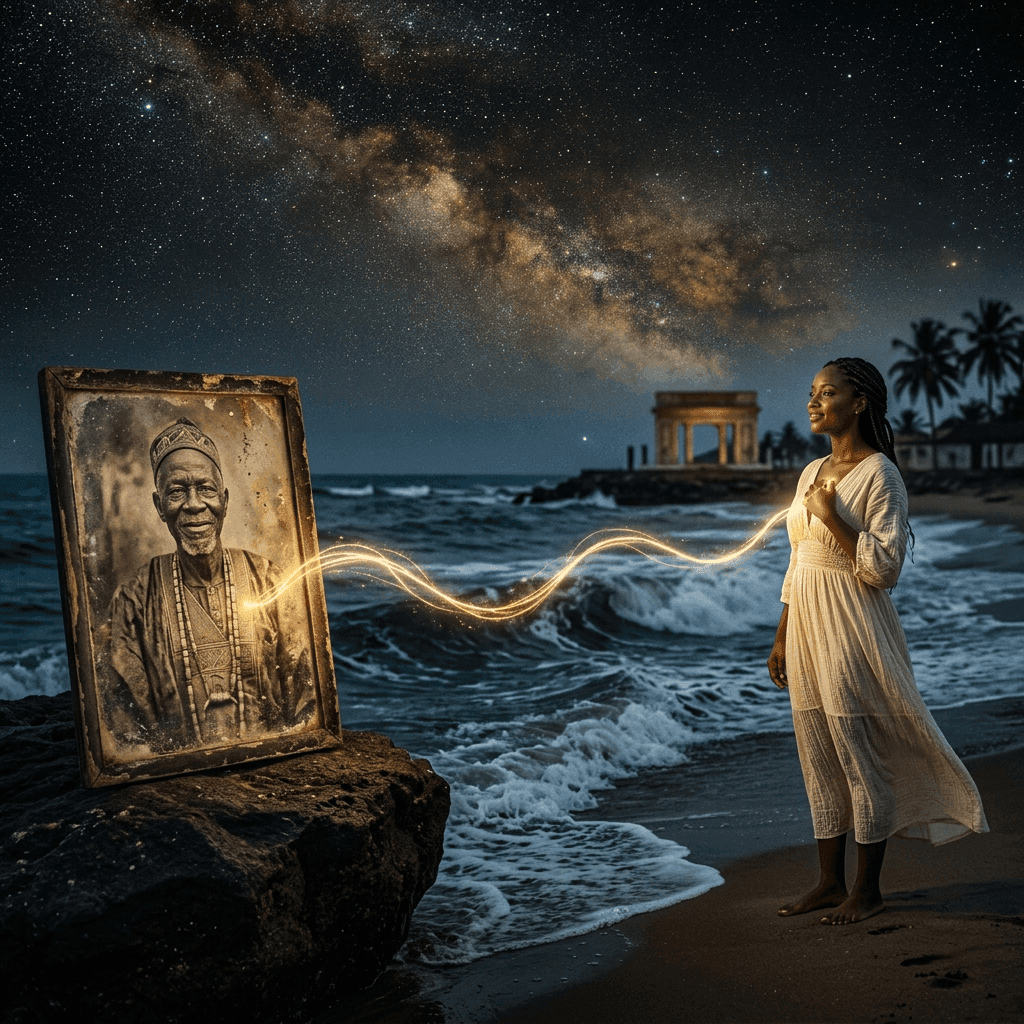
Fatima, from New York, set out on a journey loaded with meaning. With a DNA test result in her bag and deep questions about her identity, she walked the Slave Route in silence. At the Door of No Return, she stopped, eyes full of tears, and said: "I feel like something has come loose."
This experience is not unique. For thousands of Afro-descendants, the trip to Ouidah represents a form of healing, not merely as a tourist act, but as a process deeply rooted in the body, the place, and ritual. This path toward healing is an active undertaking, in which each person commits to exploring and understanding their heritage.
Why Benin?
Benin is at the heart of a complex history, where the wounds of the past meet living healing traditions. Ouidah, as the largest slave port on the coast, is the place where the pain was inflicted, but it is also here that healing practices such as Vodun and Fa have endured. This place of suffering is also a space of reconciliation and remedy.
To go deeper, see our guide on Vodun and health.
What happens during the trip
The Slave Route
Walking the 4 km of this historic route is a bodily experience. Every step, every drop of sweat and every tear is an expression of a collective history. Silence becomes a language, a communion with the ancestors.
The Fa oracle
A consultation with a bokonon can reveal family patterns and inherited blockages. This encounter with Fa offers a distinct perspective on personal struggles, functioning as a form of traditional psychotherapy. Learn more in our guide on Vodun and health.
Vodun ceremonies
Taking part in a Vodun ceremony, even as an observer, is a transformative experience. Drums resonate, chants rise, and a person feels a deep sense of belonging. It is a moment of reconnecting with one's roots, an affirmation of identity.
A path of healing
Healing is not a linear process. A week in Ouidah cannot erase centuries of pain, but it can set a meaningful change in motion. For many, this trip is the start of a transformation that can redefine their relationship with their history and their identity.
Restitution 2.0
Ouidah Origins is more than a travel resource; it is an infrastructure for memory. Read our manifesto on why we believe the Slave Route is not a tourist attraction.
Read the Manifesto