The Woman King (2022), starring Viola Davis, did something extraordinary: it made the Agojie — the all-female warriors of Dahomey — globally famous. It also did something problematic: it rewrote history to fit a Hollywood narrative.
Here's what's true, what's fiction, and why the real story is more complex — and more interesting.
Who were the Agojie?
The Agojie were an elite military corps of the Kingdom of Dahomey. At their peak under King Ghezo (1818-1858), they numbered several thousand. They were not auxiliaries or palace guards — they were front-line troops. European observers called them "Amazons" because they reminded them of the mythical Greek warriors. The Agojie called themselves Mino — "our mothers."
What the movie got right
- The Agojie were real, fearsome, and respected.
- They trained relentlessly.
- King Ghezo was their patron.
- The kingdom of Dahomey was a sophisticated state.
What the movie got wrong
The slave trade. The film presents Ghezo as wanting to end the slave trade. In reality, while Ghezo shifted the economy toward palm oil, he continued selling captives from enemy kingdoms, and the Agojie were instrumental in capturing them. Dahomey profited from slavery. The movie erases this.
Nanisca. The Viola Davis character is a composite, not a historical figure.
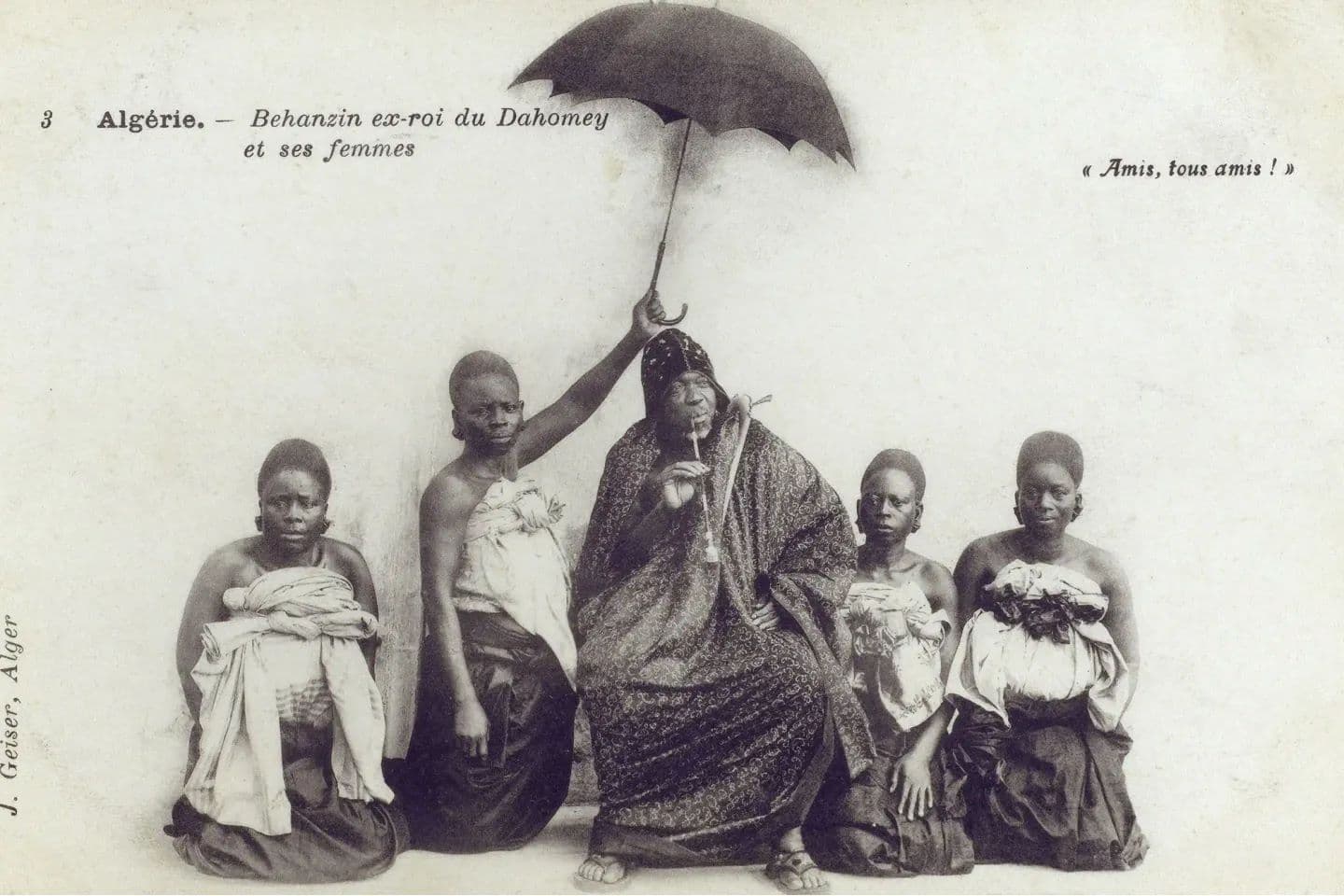
The ending. The film implies Dahomey defeated the slave trade. In reality, the kingdom fell to France in 1894 under King Behanzin. Read: Ghezo, Glele and Behanzin.
Why it matters
The Agojie deserve to be known. But sanitizing Dahomey's history does them — and history — a disservice. They were warriors of a kingdom that was complex, powerful, and deeply implicated in the slave trade. That's the real story. It doesn't need Hollywood to make it extraordinary.
Restitution 2.0
Ouidah Origins is more than a travel resource; it is an infrastructure for memory. Read our manifesto on why we believe the Slave Route is not a tourist attraction.
Read the Manifesto