Visitors to Ouidah often ask for a list: which god does what. The answer is less tidy than a list, and it depends on who you ask. What follows is a first map, limited to what the sources we could read establish.
What "Vodun" means
Vodun is a word of the Fon language, one of the languages of Benin, according to the Encyclopedia of African Religion. It means "spirit" and is used for African deities. The same encyclopedia says that Vodun and Benin, formerly Dahomey, are inseparable.
The Fondation Zinsou, citing the historian Gabin Djimassè, traces the word to the expression Yèhwé Vodoùn: the invisible spirit, set apart, of someone who lived on earth and was transformed. It places the roots of Vodun in Yoruba, Fon, Ewe and Ashanti traditions, in the area of today's Nigeria, Benin, Togo and Ghana.
A creator, then intermediaries
At the top is Mawu-Lisa, the creator. According to the Encyclopedia of African Religion, Mawu-Lisa is the first among the primary deities of the Dahomean pantheon, a creator couple of Heaven and Earth. Mawu is the female principle, linked to the moon, to night, fertility and motherhood. The Fondation Zinsou describes a single creator, both masculine and feminine, commonly represented by the moon and the sun.
From the creator come intermediary divinities who connect humans to the elements, says the Fondation Zinsou:
- Sakpata, earth.
- Tohossou, water.
- Heviosso, fire, master of lightning.
- Dan, air and perpetual movement, the sacred python.
The foundation also names Gou, god of iron; Legba, a protective and mediating divinity; Aziza, spirit of the forest; and Mami Wata, goddess of the sea, "among many others".
You can meet some of them in Ouidah. Dan is linked to the Python Temple, and our page on Mami Wata covers the sea deity.
The ancestors are part of it
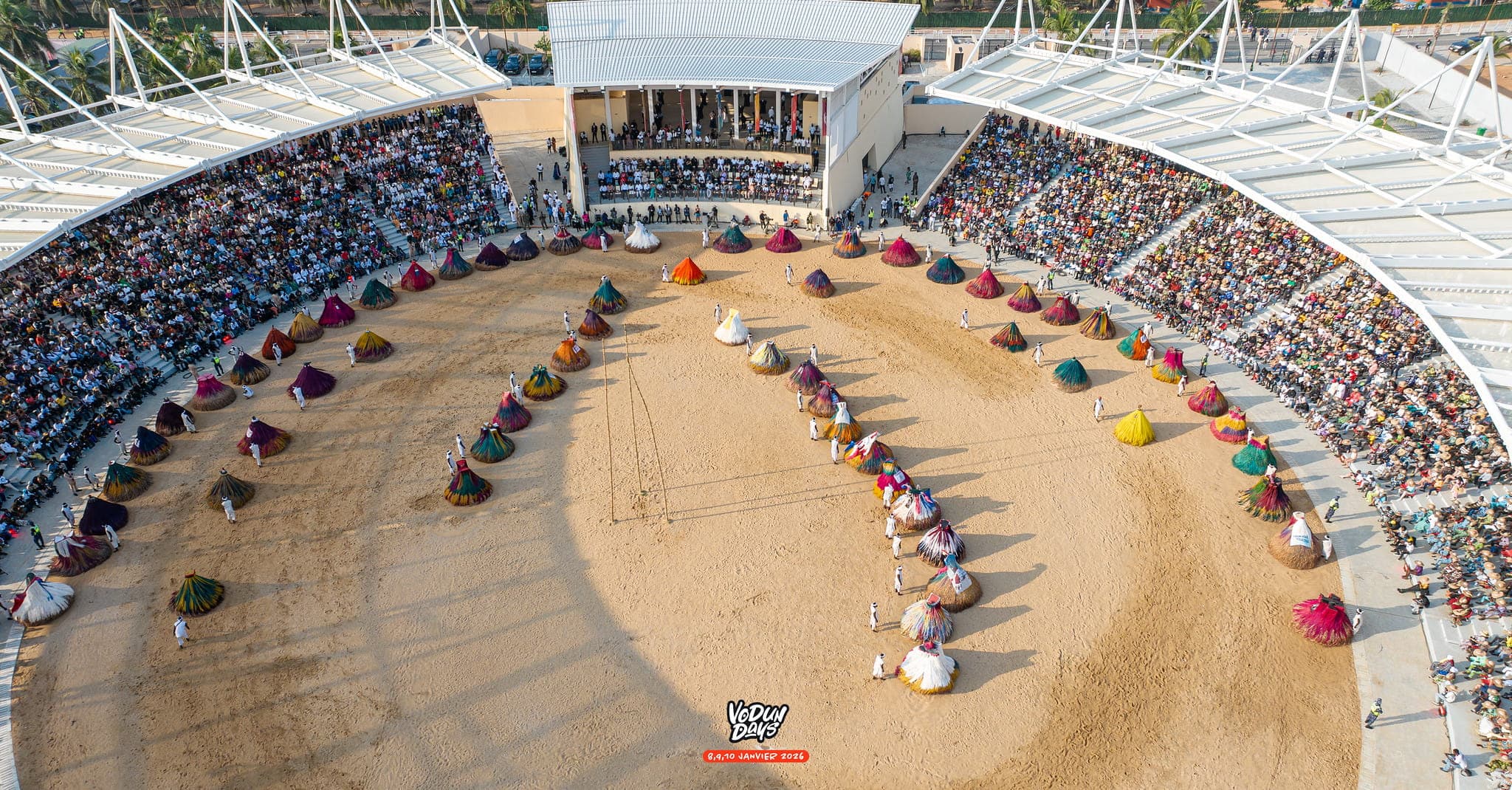
The Fondation Zinsou stresses that the dead "are not dead": they watch over the living. The Egungun are ancestors returned among the living, and the Zangbeto are guardians of the night. See our pages on the Egungun and the Zangbeto. Fâ divination, which the foundation calls a cornerstone of Vodun in Benin, has its own page: the Fâ oracle.
What we do not claim
Names, domains and family ties between deities vary by region, lineage and convent. We do not give a family tree of the deities, nor a ranking, because the sources we could read do not establish one. Several details we are often asked for, such as the exact relationship between Sogbo and Heviosso, or between Dan and Mami Wata, are À VÉRIFIER and left out.
If you want to understand a deity, ask a priest or a guide who belongs to the tradition. Vodun is a living religion, not a catalogue. See our etiquette guide before attending a ceremony.
Sources
- Fondation Zinsou, "Yehwe Vodoun", Sophie Douay: creator, intermediaries, ancestors, etymology.
- Encyclopedia of African Religion, "Mawu-Lisa", Asante and Mazama (SAGE): place of Mawu-Lisa in the pantheon. Only the preview was readable.
- Encyclopedia of African Religion, "Vodou in Benin" (SAGE): meaning of the word Vodun. Only the preview was readable.
Last verified on 10 November 2026. If you spot a mistake, tell us.
Restitution 2.0
Ouidah Origins is more than a travel resource; it is an infrastructure for memory. Read our manifesto on why we believe the Slave Route is not a tourist attraction.
Read the Manifesto