

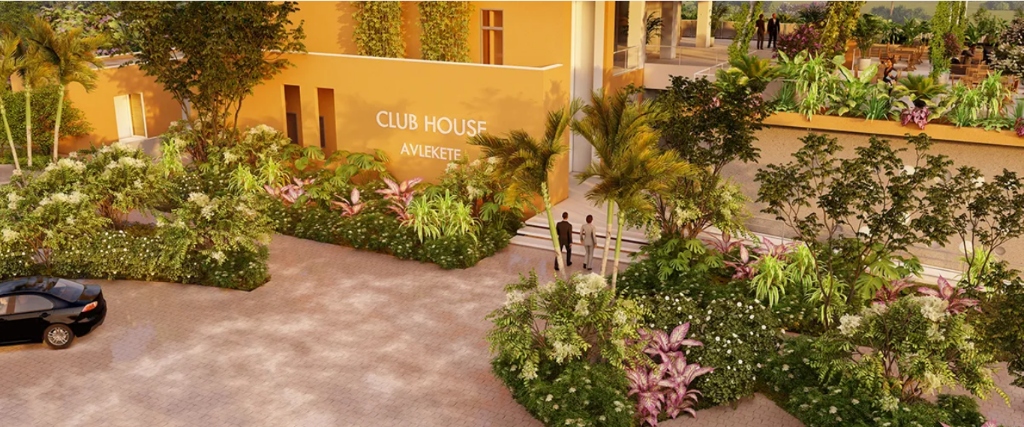
First, we must say what it is.
The Dhawa Ouidah is a 4-star, 132-room hotel managed by the Banyan Group—a Singaporean hospitality group present in about forty countries—under its Dhawa brand, positioned as the group's lifestyle and contemporary label. It is located on the La Marina site in Djègbadji, a few hundred meters from the Door of No Return.
It is funded by the Beninese government, of which it is an investment, and operated by the Banyan Group under a concession. it has just opened its doors in 2026, for its first full season.
So much for the facts. Now, the question.
The Question Everyone Asks Without Asking It
What does it mean to build a luxury hotel fifty meters from the Door of No Return?
This is not a rhetorical question. It is a real question, to which real answers can be given—and which deserves to be asked before looking at the restaurant menus or the suite rates.
The Door of No Return is the terminus of the Slave Route—the four kilometers that captives destined for slave ships traveled in chains. Djègbadji beach, on which the Dhawa was built, is the boarding beach. It is where the crossing began. It is where, for most, any possibility of return ended.
The Beninese government has an answer to this question. it fits in a few words: development and memory are not enemies. For millions of people from the diaspora to come to Ouidah to understand this history, decent reception infrastructures are needed. A quality hotel near memorial sites makes the stay possible for visitors who would otherwise spend the night in Cotonou and only do a day trip.
This reasoning is solid. It doesn't answer everything, but it answers something real.
What the Hotel Offers
132 rooms divided between standards, family rooms, and suites. Two restaurants: La Nonna, presented as a "tribal" trattoria marrying Italian cuisine with Beninese flavors; and Alyzée, a Mediterranean restaurant focused on seafood from the Gulf of Guinea.
The Dhawa design—characteristic of the brand in all group establishments—aims for a contemporary aesthetic that integrates local cultural elements. In Ouidah, this translates into visual references to Vodun cosmology and Beninese craftsmanship integrated into common spaces.
The Banyan Academy—the group's training program—is supposed to apply here, with a commitment to training local talent. This is a recurring commitment in press releases from large hotel chains in Africa. What is worth observing over time is how many employees are trained, at what level, and if management positions are held by Beninese nationals.
For Which Traveler?
The Dhawa Ouidah is clearly positioned for an international traveler who does not want to choose between comfort and cultural experience. It is the African diaspora traveler with European or American purchasing power, the business traveler in transit through Cotonou, the high-end tourist combining Ouidah and the future Avlékété golf club.
For the diaspora traveler coming primarily for memorial sites, the question is different: does sleeping in a 4-star at Djègbadji add anything to the experience, or does the hotel interpose a comfortable mediation between the visitor and what they came to feel?
There is no universal answer. Some visitors need comfort to digest an emotionally heavy experience. Others find that luxury creates a distance from the reality of the place. Both are valid.
What is certain: the Dhawa Ouidah is, to date, the most comfortable accommodation available in Ouidah itself—a few minutes' walk from the Door of No Return, the Bateau du Départ, and Djègbadji beach.
The Broader Context
The arrival of the Banyan Group in Ouidah is not an isolated decision. It is part of a larger movement: large international hotel chains are starting to look at West Africa as a serious market for high-end hospitality. Accor, Marriott, Radisson—all have opened or announced establishments in West Africa over the past five years.
What distinguishes Ouidah from Lagos or Accra in this logic is that its attractiveness is based not on a business market, but on cultural and memorial significance. The Banyan Group knows this. Its general manager for the establishment said it explicitly: "The Door of No Return, the Vodun Days, and the Slave Route give the city an exceptional memorial and symbolic dimension."
When hotel luxury says this, it must be heard for what it is: a recognition that memory has become a tourism asset. This is neither automatically good nor automatically bad. It requires continuous vigilance on what the city chooses to do with this attention, and for whom.
Practical Information Location: La Marina Site, Djègbadji, Ouidah Category: 4 stars, 132 rooms Managed by: Banyan Group (Dhawa brand) Opening: 2026
Sanctuaries & Refuges
Curated stays in Ouidah
Le Jardin Secret
A colonial guesthouse with a lush garden and a timeless, melancholic atmosphere. Perfect for historians and quiet seekers.
Casa Del Papa Resort
The premier seaside resort in Benin, nestled between the lagoon and the Atlantic. Eco-chic bungalows and a world-class spa.
Djegba Hôtel
Located 100m from the Door of No Return. A peaceful sanctuary with a pool, ideal for reflecting after visiting historic sites.
Partnering with Booking.com to support heritage preservation. (Affiliate)
Restitution 2.0
Ouidah Origins is more than a travel resource; it is an infrastructure for memory. Read our manifesto on why we believe the Slave Route is not a tourist attraction.
Read the Manifesto- The Dhawa Ouidah by Banyan Group has just opened—132 rooms, four stars, just meters from the Door of No Return
- What it is, what it's worth, and the question no one is asking