 LoadingLoading
 Loading
I want to start with what Ouidah actually is.
Not the tourist version. Not the cultural heritage brochure. What it actually is.
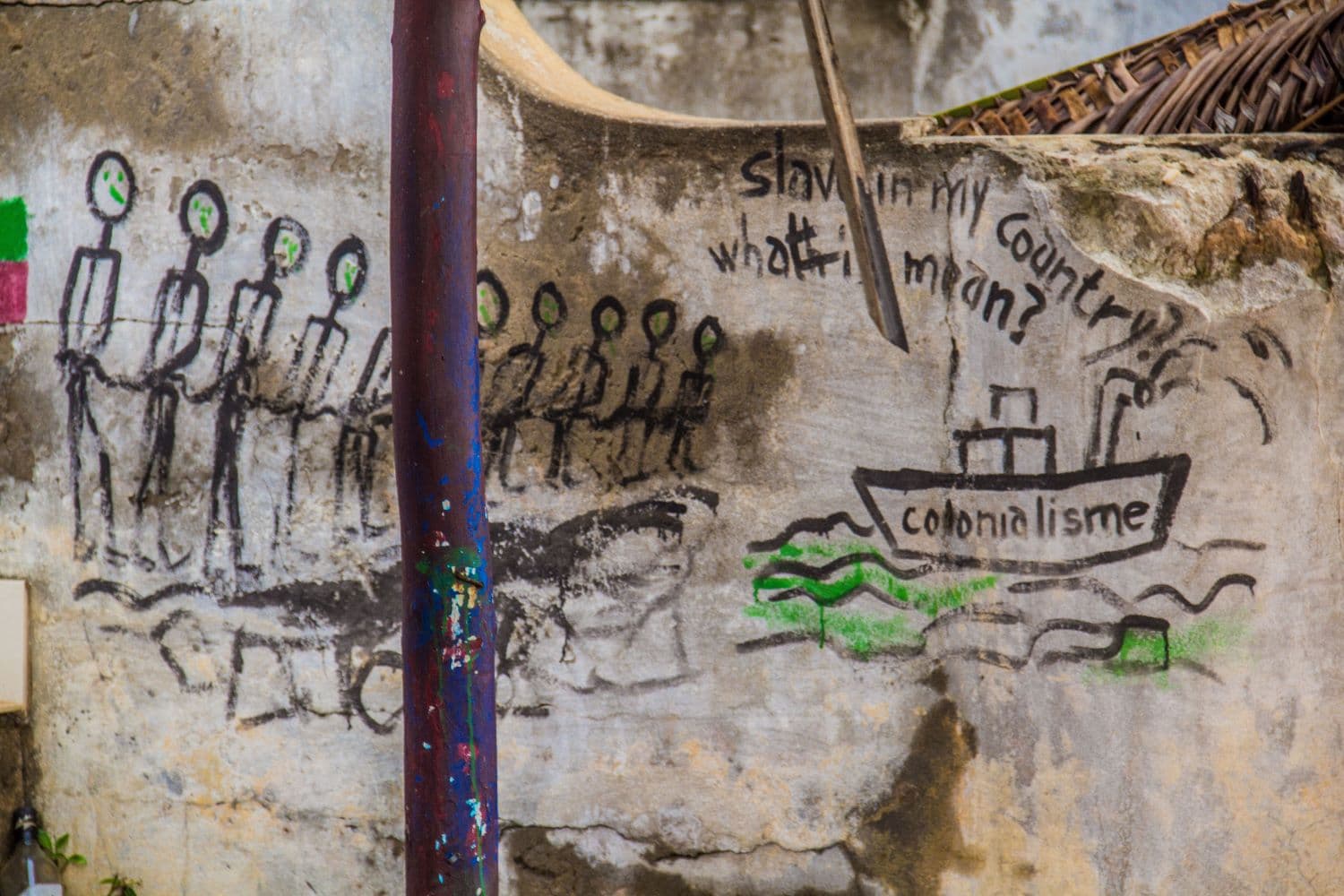
Ouidah is a city in Benin where an estimated one million people were processed for deportation across the Atlantic between the seventeenth and nineteenth centuries. They walked the Route of the Kings, passed through the Tree of Forgetfulness, crossed the beach, and boarded ships. The Door of No Return isn't a monument someone built to commemorate tragedy. It's the exact location where the last land touched their feet.
This isn't ancient history in the way that phrase usually functions, as a way of putting distance between us and the events. Many descendants of those people are alive. They have passports. Some are my age and live in Paris, Brooklyn, São Paulo. The timeline is short enough that the connection is felt, not just known.
This is the place for which I am building a travel resource. And it took me a long time to understand what that actually meant.
If I am here, building this digital sanctuary, it isn't by accident. It's a matter of family, blood, and energy. My uncles are from Ouidah. I grew up with the echoes of this city in my ears long before I could walk its sandy streets. Every time I return, I feel a particular vibration, a density that you can't find anywhere else. It isn't just an emotion. It's a physical force.
Ouidah possesses what I can only call a threshold energy. It is a place where worlds touch: the world of the living and that of the ancestors, the solid ground and the infinite ocean, documented history and spiritual memory. To work on Ouidah is to accept working through this permanent tension. You do not resolve it. You learn to build inside it.
My relationship with Ouidah was built in successive layers. Twelve or thirteen years ago, I was working in tourism. I organized tours, traced circuits, guided people through these same streets. Back then, I already saw the limits of the transactional model of travel. I saw what people came to consume, and what they systematically missed. Nobody was walking away with the weight the place is supposed to carry.
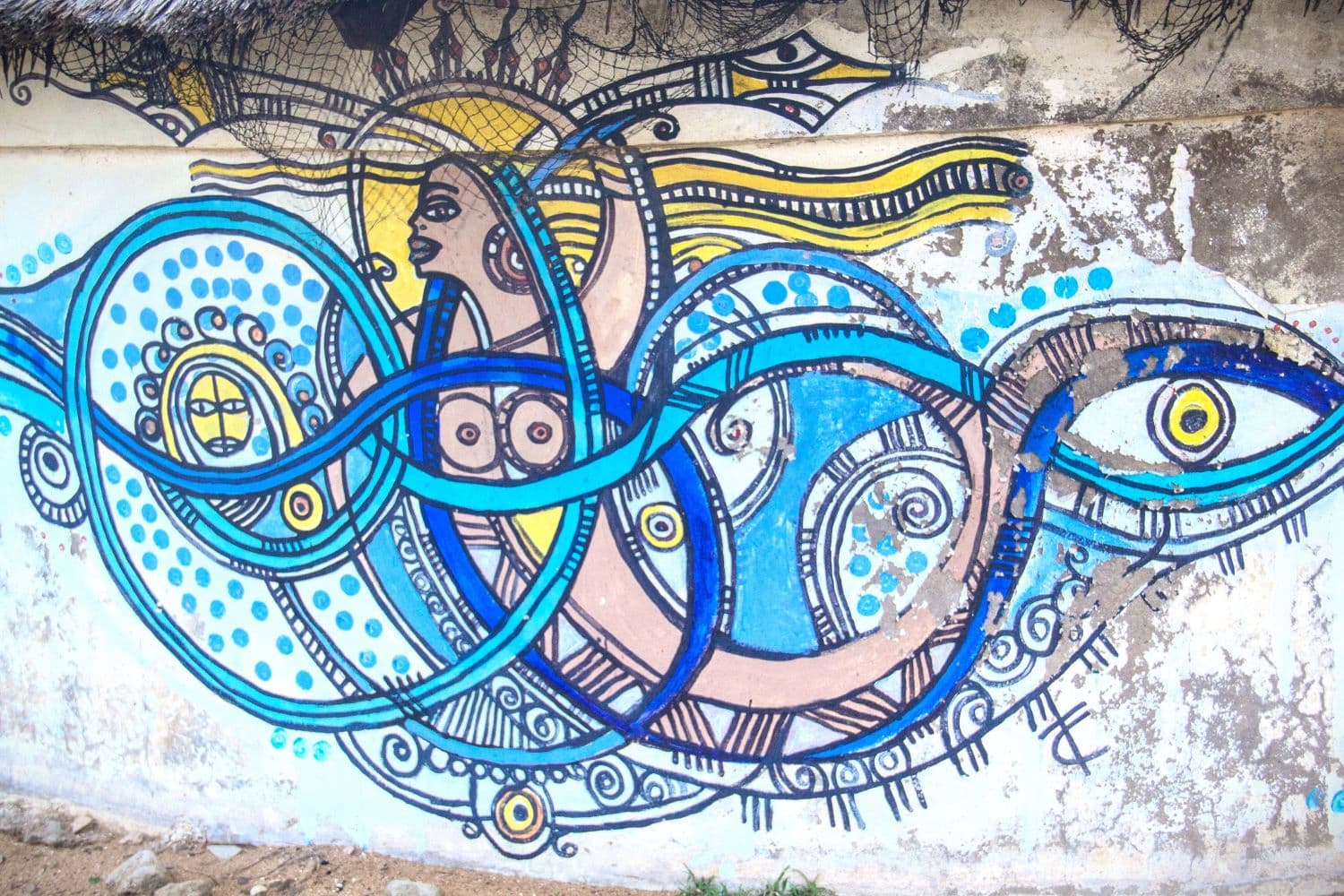
Over the following ten years, my approach became more visceral, more creative. I carried out artistic projects for Effet Graff, using the city walls as parchments to tell other stories. I had the privilege of working with the Centre CIAMO, the International Center for Arts and Crafts of Ouidah, as a trainer for several years.
It was there, in the workshop and on the ground, that my vision expanded. I worked alongside colleagues from Benin, Togo, Ghana, and also from Finland, France, Italy, the United States, and Brazil. This international collaboration, this mix of expertise and perspective, made me realize that Ouidah is a global crossroads of memory. You cannot understand this city while remaining locked in a single point of view. It requires the input of Ghana, of Brazil, of Europe, to grasp the scale of what was played out here and what continues to be played out.
I've been thinking a lot lately about why I work in both speculative fiction and heritage tourism, and why they don't feel like separate things to me.
In the book I am finishing, titled TADOW, echoing the Kingdom of Tado, the original source, the first African colony on Mars makes very deliberate decisions about what to carry forward. You can explore this universe at tadowuniverse.com. In that fiction, as in the reality of OuidahOrigins, the message is the same. Culture isn't a decoration. It's the operating system.
Ouidah is a case study in what happens when a culture is forcibly interrupted. The diaspora communities that emerged from that interruption have, over centuries, rebuilt operating systems out of fragments. The journey back, physical or metaphorical, isn't nostalgia. It is maintenance. It is people returning to the source to understand what they have been working with all along, often without knowing it.
Tourism is a transactional category. You arrive. You consume experiences. You leave.
That framework is inadequate for what happens when someone from the diaspora walks the Slave Route. It isn't consumption. It is something closer to witnessing, being physically present in a place that explains something about your own existence that no document could explain as completely.
The term Roots Tourism is used for this, and it's better. But it still centers the activity on the movement and the discovery, when what many people are actually seeking is confirmation. Proof that the life they've been living in another country wasn't, in fact, the original story. Proof that the gap they've felt has a name and a location.
Something happens when you understand Ouidah fully, not just the facts, but the scale. It isn't comfortable. It isn't the feeling you get at a nice beach. It's closer to the feeling of having a gap in your family history explained in a way that simultaneously answers questions and opens new ones.
Diaspora travelers coming to Ouidah didn't end up there by accident. They saved for the trip. They made decisions. They don't want to be protected from the weight of the place. They want the whole truth, told plainly, by someone who knows it and who will stand next to them while they carry it.
Two years ago, I began building what has become the engine of the Remanences section of this site. I wanted academic knowledge about Ouidah, often locked away in dusty theses or inaccessible PDFs, to be available to everyone, not only to researchers with institutional access.
I implemented an automated pipeline: a scraping system that retrieves theses on specific topics from the HAL platform, then passes them through a processing chain I designed to summarize, format, and disseminate these works in a readable form, without losing their scientific rigor. This is the pipeline I connected to OuidahOrigins. It is not just data aggregation. It is an act of digital restitution, taking knowledge that was technically public but practically inaccessible, and putting it back where it belongs.
Ouidahorigins.com is the culmination of these years of tourism, art, training, and speculative reflection. It's a personal project I have carried within me for a long time. It will eventually be a bilingual resource for diaspora travelers visiting Benin, Togo, and Ivory Coast.
I am one person building this with no financial budget, but not without resources. To compensate for the absence of a large team, I have mobilized a set of AI agents to help me with maintenance and development. These aren't generic tools. They are agents I have fed and trained with the resources, texts, and archives I have consumed about Ouidah for over ten years. They have become the digital guardians of this knowledge, and they periodically scan what's being said in the wider world about Ouidah, reporting back to me every week. It's practical, even if they sometimes make mistakes I strive to catch as soon as possible.
This is a design constraint that has forced good decisions. When you can't compete on production value, you compete on depth, honesty, and technology used with intent rather than for show.
While waiting to have the means to sustain this project properly, I keep moving forward. That said, I'm not against support or collaborations from those who resonate with this vision. Otherwise, we can just have a coffee together if our schedules permit. Sometimes I organize tours for friends. If you're interested, contact me. But I warn you: it will be particular.
None of this makes the history mine. I am building the room. The history was already here, waiting for someone to stop treating it as a stop on an itinerary. When this project has done its work, it will not be because people remember my name. It will be because Ouidah no longer needs anyone standing between it and the people looking for it.
— Contact the Concierge — or send a missive to open the circle.
— Visit ouidahorigins.com — the resource is live and growing.