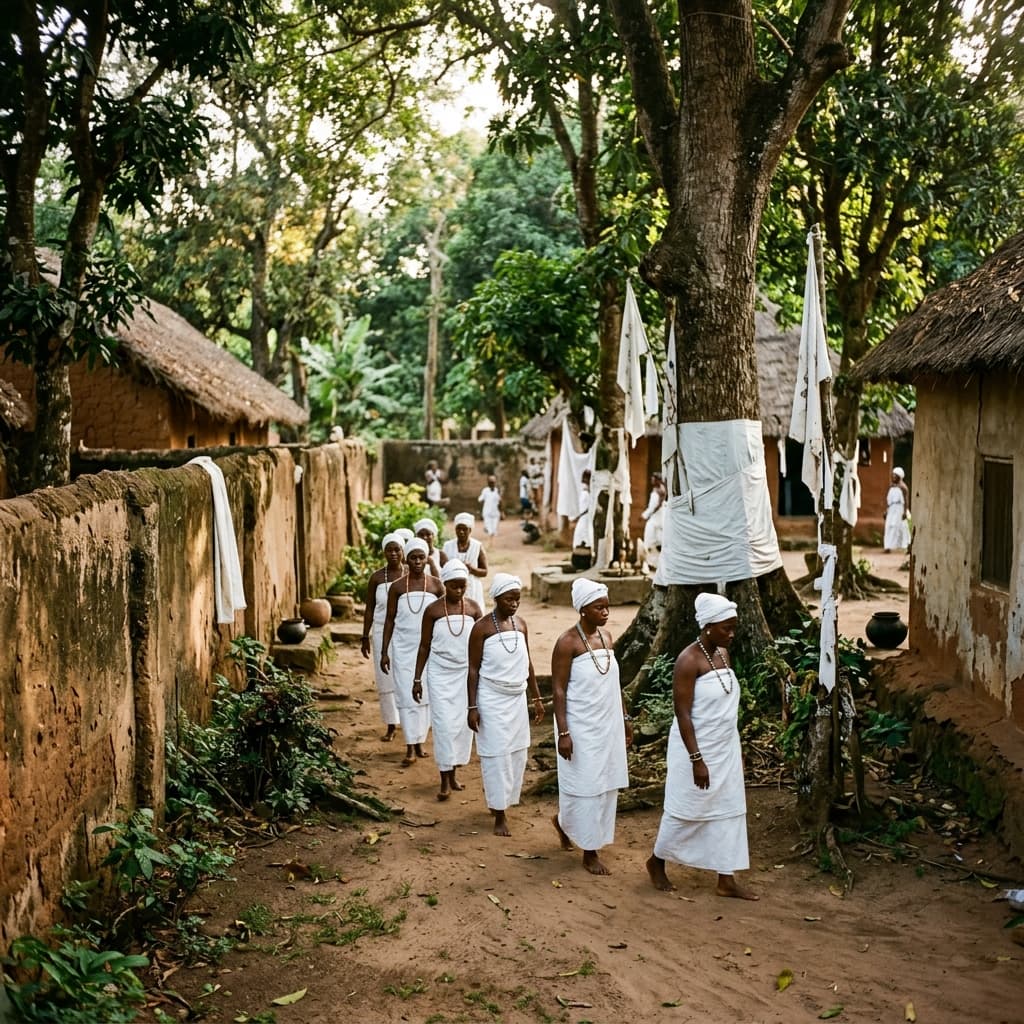
They are easy to miss if you do not know what you are looking at.
A walled compound, set back from the street. A painted entrance — colors specific to the deity housed within, symbols that communicate information to those who can read them. The sound, sometimes, of drums or singing. Women in white moving through a courtyard. A smell of offerings, of incense, of earth.
These are the convents of Ouidah — hounfors — and they are the living heart of the city's spiritual life. Not museums. Not performances. Active religious institutions that have been functioning, in some cases, for centuries.
What a convent is
A Vodun convent is a religious compound dedicated to a specific deity or family of deities. It houses the priests and initiated devotees who serve that deity, provides the space for ceremonies and initiations, and maintains the material objects — altars, sacred items, the physical presence of the vodun — through which the deity communicates with the living.
Initiation into a Vodun convent is a serious commitment. It typically begins in childhood, when a spirit is understood to have chosen a person. The training period — during which the initiate lives within the convent, separated from ordinary life — can last months or years. Initiation cannot be undone. The relationship between a devotee and their vodun is lifelong.
In Ouidah, the convents are organized around the major Vodun deities: Sakpata (earth, disease, purification), Héviosso (thunder, lightning, justice), Dan (the rainbow serpent), Mami Wata (water, prosperity, healing), and the Egungun (the ancestors).
What is and isn't accessible to outsiders
This is the question most visitors want answered. The honest answer is: it depends, and it changes.
Some convents in Ouidah welcome respectful outside visitors, particularly during the Vodun Days festival when convent exits form part of the official program. The Grand Vodun Ceremony on January 10th, held in public spaces, is open to all attendees.
The Python Temple, though it functions as a Vodun sacred space, is specifically designed to receive visitors. The sacred pythons — living embodiments of the deity Dan — move freely through the compound. This is a genuine religious site, not a reconstruction.
The Sacred Forest of Kpassè is accessible to visitors during daylight hours. Guides are available and recommended. There are areas within the forest that require specific permission to enter.
The interior ceremonies of most convents — initiations, specific ritual events, ceremonies not intended for public viewing — are not accessible to outsiders. This is not a matter of gatekeeping for its own sake. These ceremonies involve people at spiritually vulnerable moments and require protection.
How to approach these spaces
Several principles apply across all Vodun sacred sites in Ouidah:
- Arrive through a human relationship. The best access comes from arriving in the company of someone who is known to the priests. A local guide with genuine community connections changes the quality of every interaction.
- Dress is communication. Entering a sacred compound in shorts and a sleeveless top communicates that you do not understand where you are. Wear long clothing, nothing revealing.
- Do not photograph without explicit permission. Accept "no" for an answer. Some ceremonies and objects are genuinely not intended to be captured by an outside eye.
- Attend to the offerings. Do not move through spaces with altars or ritual arrangements carelessly. These are active communications between the living and the spirits.
- Bring something. It is appropriate to bring a small gift or offering — kola nuts, palm wine, or a respectful monetary offering to the priest. It acknowledges that the relationship is not one-directional.
The convents of Ouidah are not part of a heritage trail. They are living institutions embedded in the daily life of a community that has been practicing this religion continuously for centuries. Approaching them with the recognition that you are the visitor, not the authority, makes the encounter a genuine meeting with something old and still alive.
Experience History
Beyond words, Ouidah is a physical experience. Contact us to organize a private immersion behind the scenes of our chronicles.