
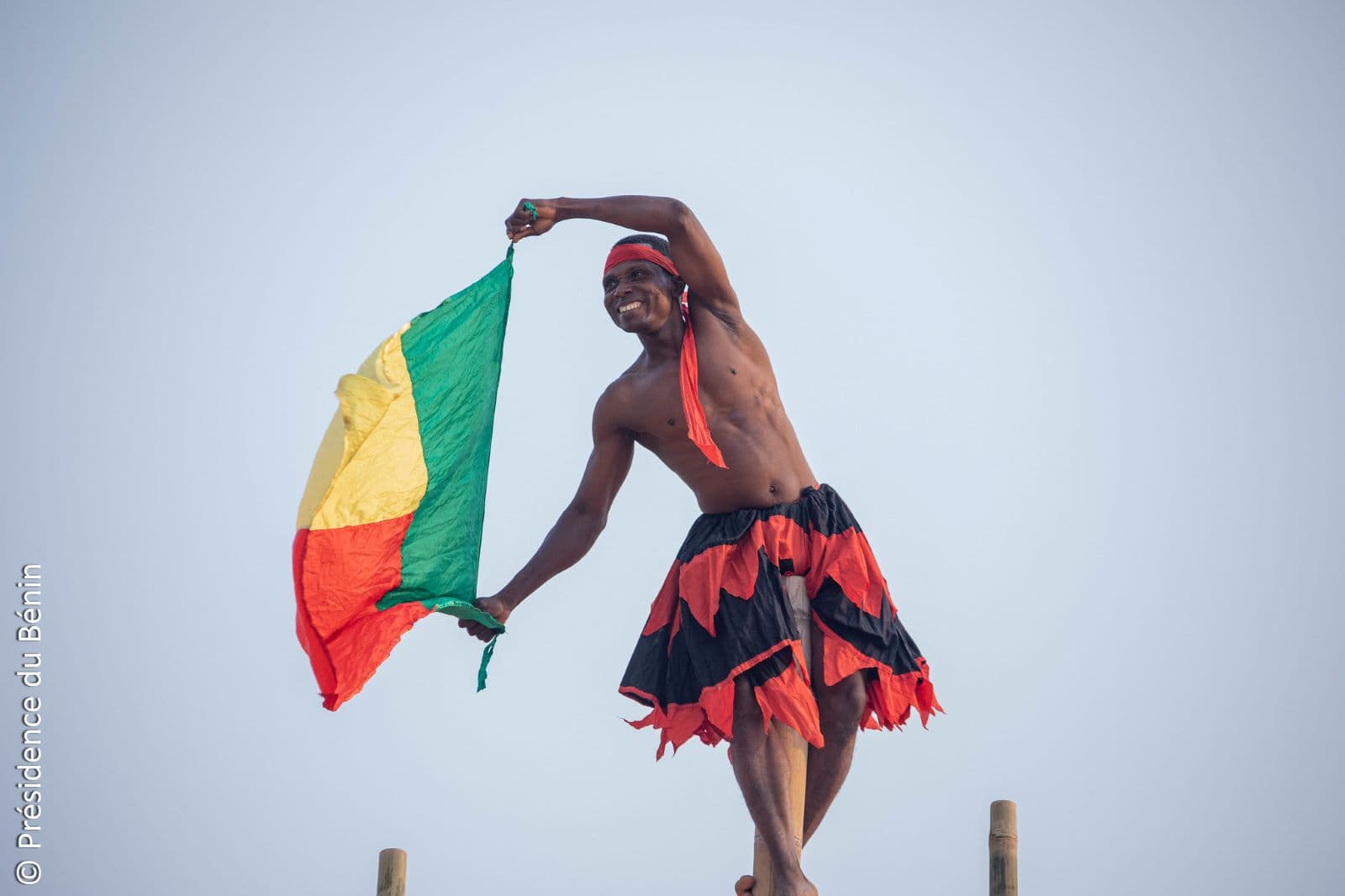
- First official edition. 97,000 people.
2025: 435,250. Certified by the INStaD.
2026: 740,668. A 70.2% increase in twelve months.
These numbers are not marketing figures. They are verified by Benin's National Institute of Statistics and Demography. And they describe something that numbers alone cannot capture: a shift in how the world looks at Ouidah. And in how Ouidah looks at itself.
The 2027 edition of Vodun Days is not simply another point on an upward curve. It arrives at a moment when several projects launched simultaneously, over more than a decade, reach their conclusion in the same city, the same week, under the same drums.
If you are considering attending, whether from France, Brazil, Haiti, the United States, or anywhere else, here is what the other guides are not telling you yet.
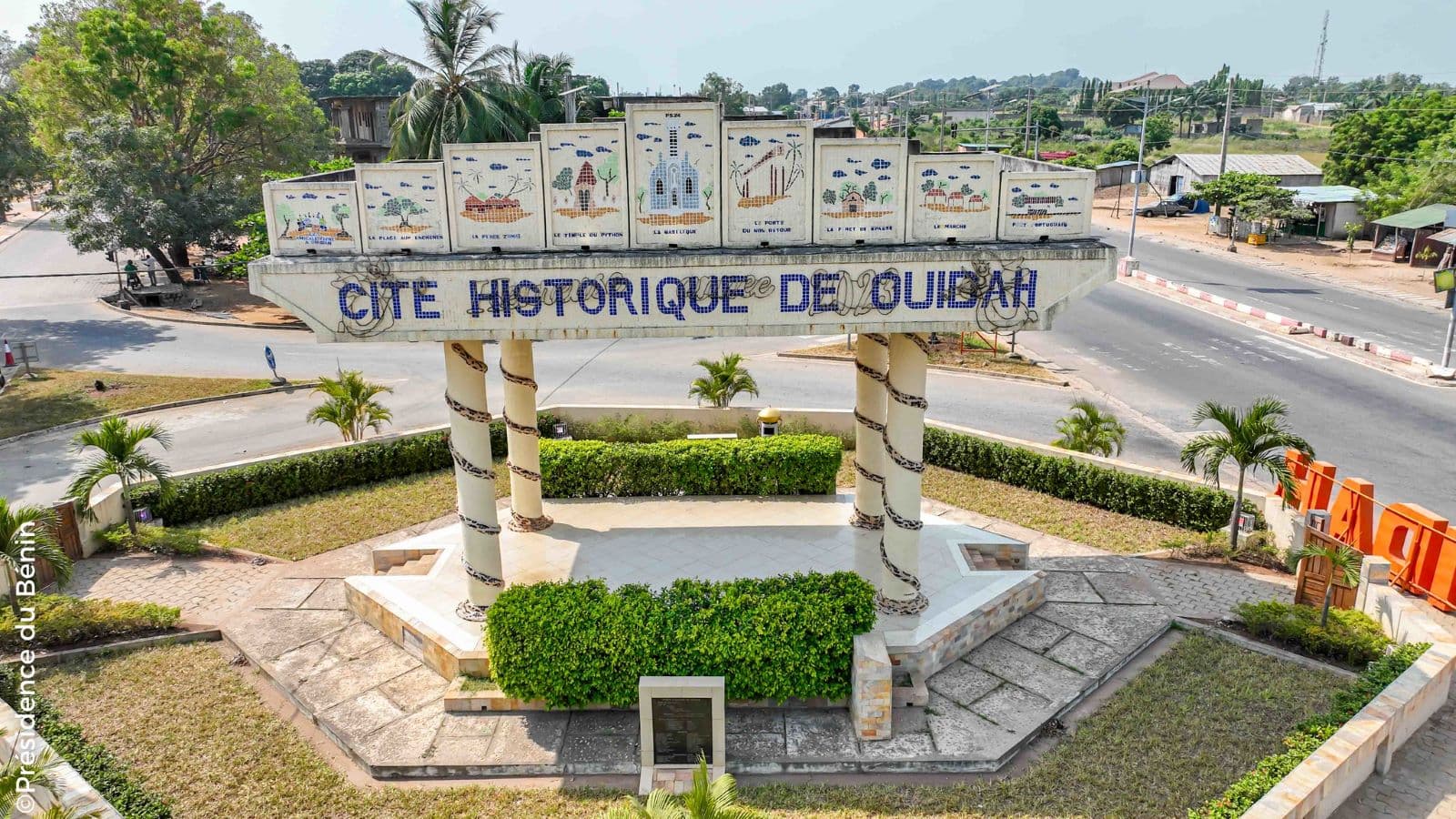
Vodun Days 2027 dates: a festival that grows from 3 to 8 days
This needs to be stated clearly, because it has changed twice since the law was passed.
Many sources are still circulating with outdated dates. This is not a minor detail: getting it wrong can mean missing the first week of festivities, or arriving after the Grand Ceremony.
A law passed by Benin's National Assembly on July 30, 2024 first set the official calendar. National Vodun Day is no longer fixed on January 10th. It falls on the second Friday of January, with the preceding Thursday as a national public holiday. Based on that law alone, the 2027 edition would have been limited to January 7, 8 and 9.
Then, on August 5, 2026, Benin's government announced an exceptional extension. Government spokesperson Minister Wilfried Léandre Houngbédji explained it at a press briefing in Cotonou: with January 1, 2027 falling on a Friday, diaspora members and Beninese living abroad who came home for the New Year holidays would normally have to leave before the second week of January, unable to stay for Vodun Days. To fix that, the festival is being extended, starting as early as January 2, 2027.
The official 2027 calendar:
- Saturday, January 2 to Wednesday, January 6: extended cultural programming, regular working days (no holiday)
- Thursday, January 7: paid public holiday, eve of the main celebration
- Friday, January 8: paid public holiday, main day, Grand Ceremony on the beach
- Saturday, January 9: festival closing
Important detail: only January 7 and 8 remain paid public holidays, per the 2024 law. January 4, 5 and 6, 2027 are regular working days in Benin — administrations, businesses and services operate normally. The government has clarified that this 8-day reorganization is specific to the 2027 edition and does not change the public holiday regime for future years.
In practice, for a visitor: the festival now offers a full week of activities before the Grand Ceremony weekend, instead of 3 concentrated days. This changes how you should plan a trip, especially for diaspora travelers coming from far away.
Book your flights accordingly.
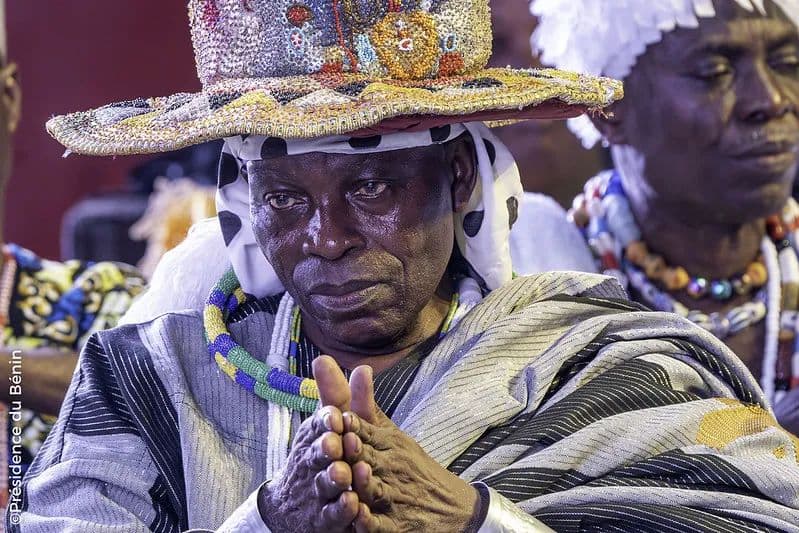
The Dagbo Hounon is the supreme high priest of Vodoun, an authority that extends well beyond Benin's borders. He has presided over the Grand Ceremony since the festival's beginning. His presence gives the event a dimension that has nothing to do with cultural spectacle. It is a ritual act. A meeting between the tradition and its heirs, wherever they were born.
The spelling "Vodoun Days" (with an extra o) remains common in Francophone sources. Both spellings refer to the same event. The official form adopted since 2024 is Vodun Days.
From 97,000 to 740,668: what the numbers mean for you
The 2026 figure is not abstract.
It describes a precise logistical reality, and it directly affects how you need to prepare for this trip.
To put the 740,668 participants in perspective: the festival's various sites accumulated nearly 1,942,949 visits over three days. Of all participants, 80.5% were Beninese. The remaining 19.5% represent nearly 144,430 international visitors. France led the foreign delegations (36%), followed by Togo (20%), Nigeria (14.9%), and the United States (12%).
Accommodation books up early. In 2024, reserving two months ahead was enough. In 2026, travelers who waited six weeks were arriving in Cotonou because nothing was left in Ouidah. For 2027: if you are reading this before the end of 2026, the window is not closed. But it is closing.
The ceremonies do not get diluted. This is counterintuitive. The more visitors there are, the more delegations the convent exits attract. The Grand Ceremony gains intensity each year. The crowd does not diminish the depth of the ritual moments. It is part of them.
The logistics improve. The Beninese government deploys more shuttle services from Cotonou, more parking, and more official circuits each year. The 2027 setup will be that of an organization that has already managed 740,000 people in one day. This is not a small festival.
The Ouidah Arena: the festival's beating heart
The Arena is the main infrastructure built for Vodun Days.
It stands on the beach, a few hundred meters from the Atlantic. Capacity for tens of thousands. On concert nights, it hosts artists from across Africa.
Before you even get close, you hear the bass. From a distance, it sounds like heavy rain on a tin roof. Up close, it changes something in how you breathe.
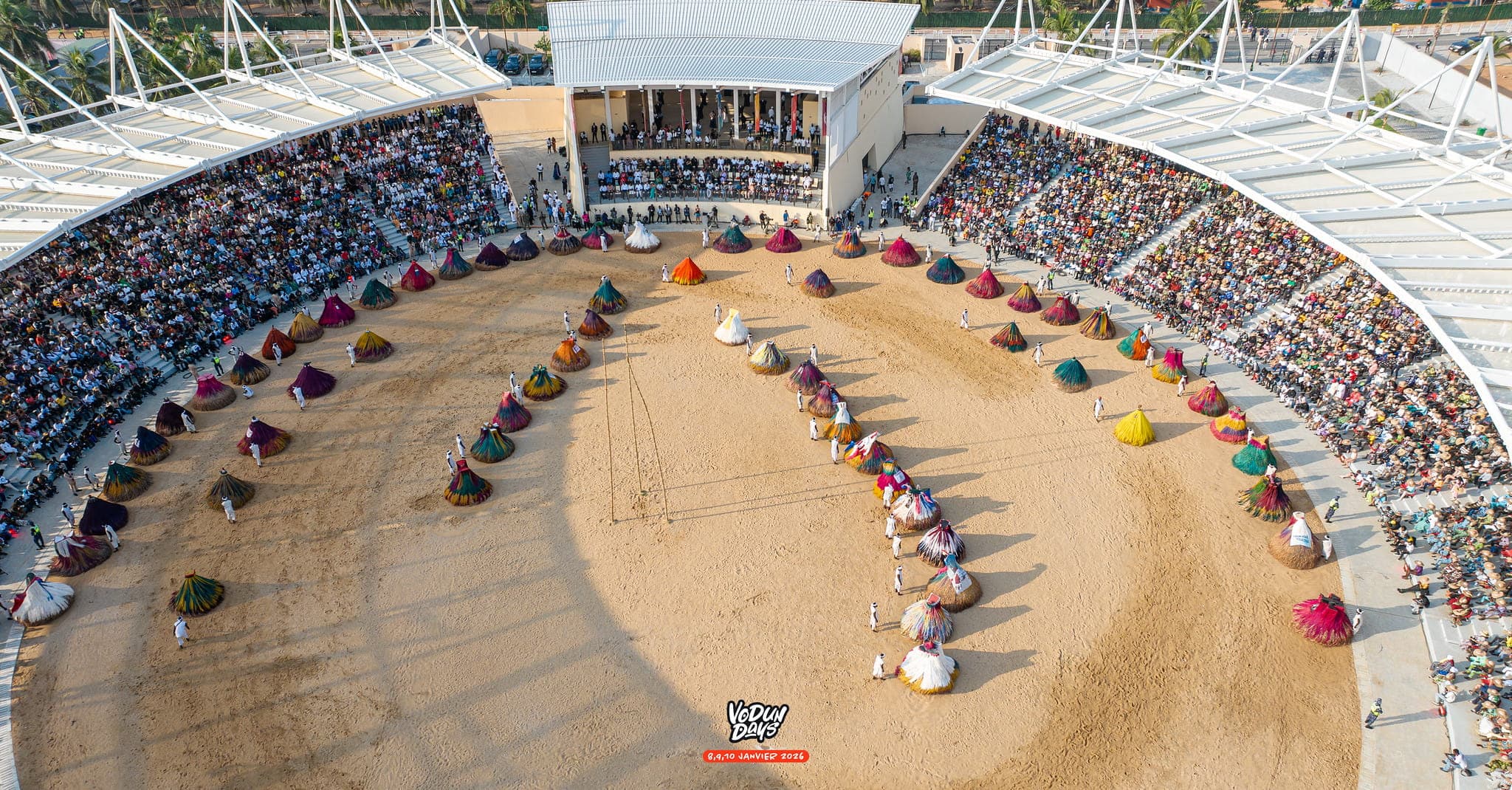
During the day, the space shifts in character. Sports competitions, traditional dance demonstrations, and institutional gatherings follow one another. The atmosphere is closer to a popular forum than a festival stage.
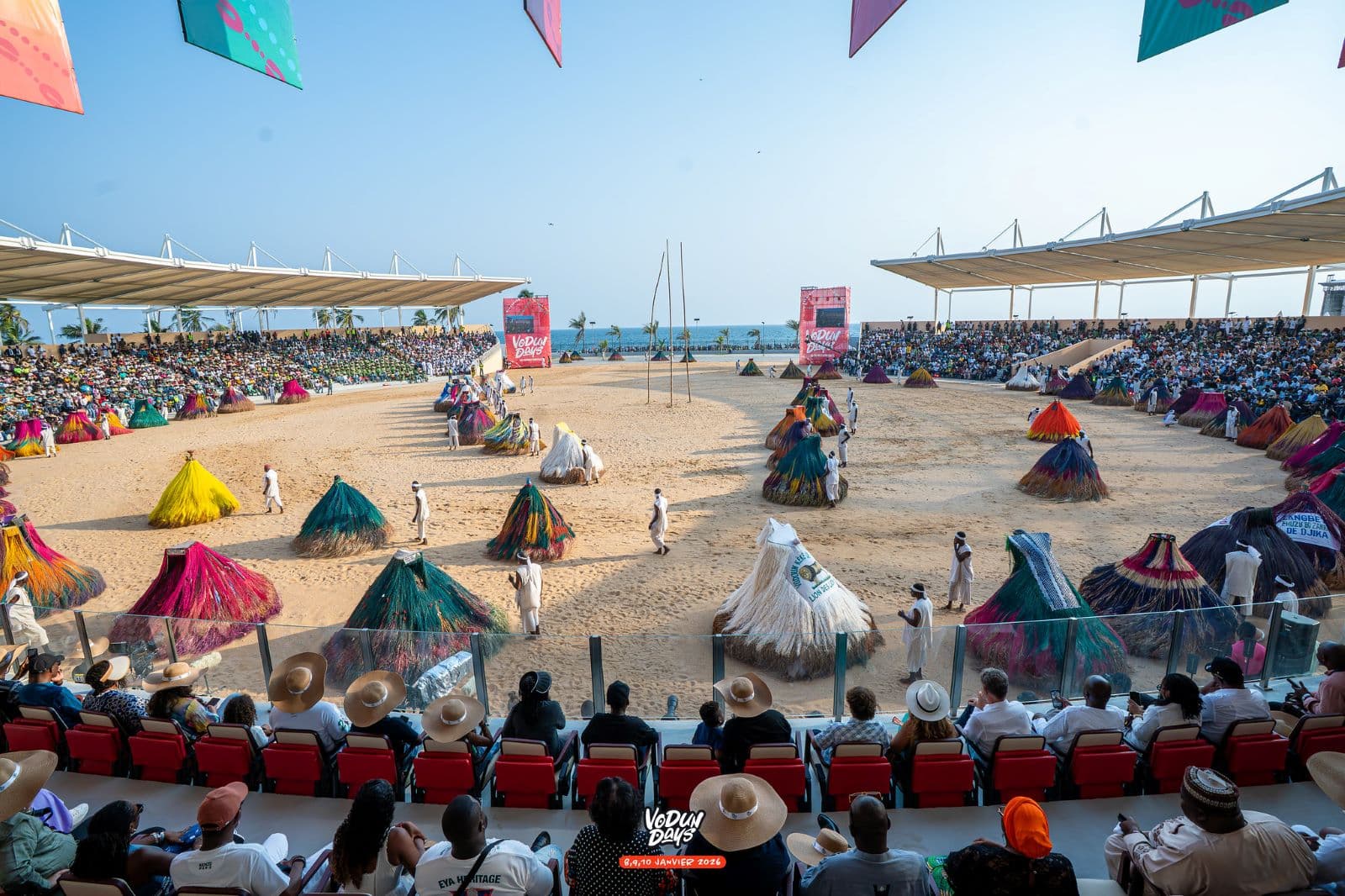
The Friday Grand Ceremony is the edition's central moment. Vodoun dignitaries take their places at the front. The Dagbo Hounon presides. Heads of state and diplomatic representatives attend. And around them, tens of thousands of people from across West Africa and the Atlantic diaspora.
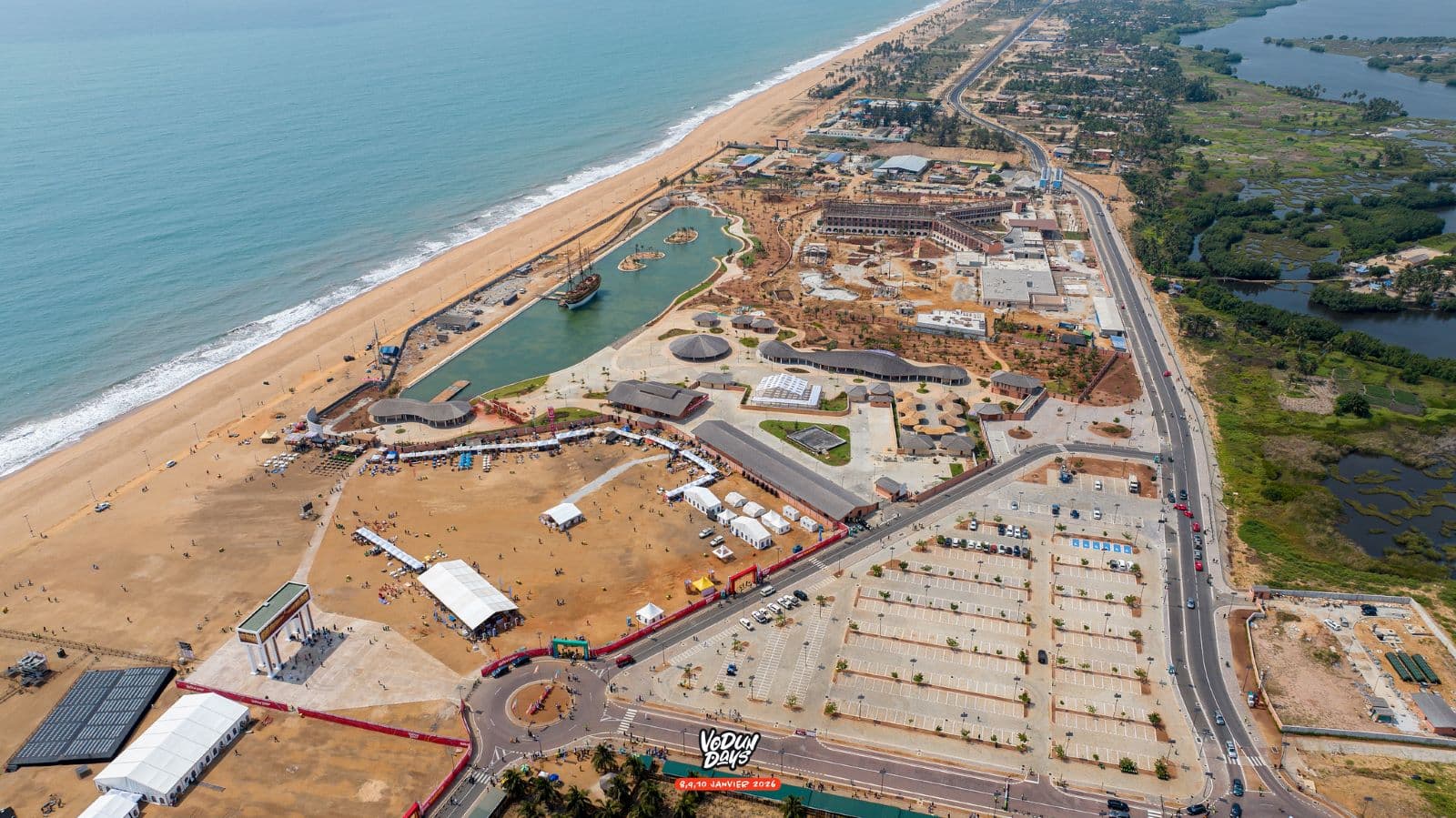
For everything covering the hour-by-hour schedule, accommodation options with prices, and transport from Cotonou airport, the complete Vodun Days practical guide covers each point in detail.
The Grand Ceremony: what you will actually experience
No guide can fully prepare you for this moment.
But here is what you need to know before you arrive.
The ceremony begins mid-morning. Vodoun dignitaries arrive in procession. Their attire is codified: the colors, the ornaments, the order of the march. Nothing is random. Every detail carries meaning that initiates read from a distance.
The Dagbo Hounon speaks in Fon. His voice passes through the microphones and spreads across the beach. Around him, high priests from convents across the region take their places. Delegations from Nigeria, Togo, Brazil, Haiti.
The drums do not stop. They shift rhythm, but they do not stop. After a while, you stop hearing them separately from the air around you.
Some worshippers enter states of trance. This is not staged. It is not performed for visitors. It happens, and the initiates around them manage it with precise, calm gestures.
For a visitor from Bahia or Port-au-Prince, some moments will be recognizable: a deity's name, a drum rhythm, a greeting gesture. Others will differ from what they practice at home. The Atlantic crossing transformed the forms without erasing the roots. Seeing both sides of the same tree, on the same day, is an experience with no equivalent.
For a visitor without a Vodoun background: do not expect to understand everything. Expect to feel. The Grand Ceremony lasts several hours and shifts in intensity in waves. It has no program in the Western sense of the word. It has a movement.
On photography
Official processions, Arena concerts, and Village activities are photographable. During ritual ceremonies, the rule is simple: never photograph without asking first. Some convents formally forbid cameras. During trance states, do not point your phone. This is not a question of tourist etiquette. It is a matter of respect toward people who are no longer in an ordinary state of consciousness.
In the city during the day
The Arena is not everything.
During the eight festival days, Ouidah changes in character. The streets of the historic center host processions. The old neighborhoods come alive at unlikely hours.
The Zangbeto come out in daylight to accompany official ceremonies. These nocturnal guardians, forms of straw that spin and seem to defy gravity, move through the old streets of Ouidah to the sound of drums. They do not greet the crowd. They move through it.
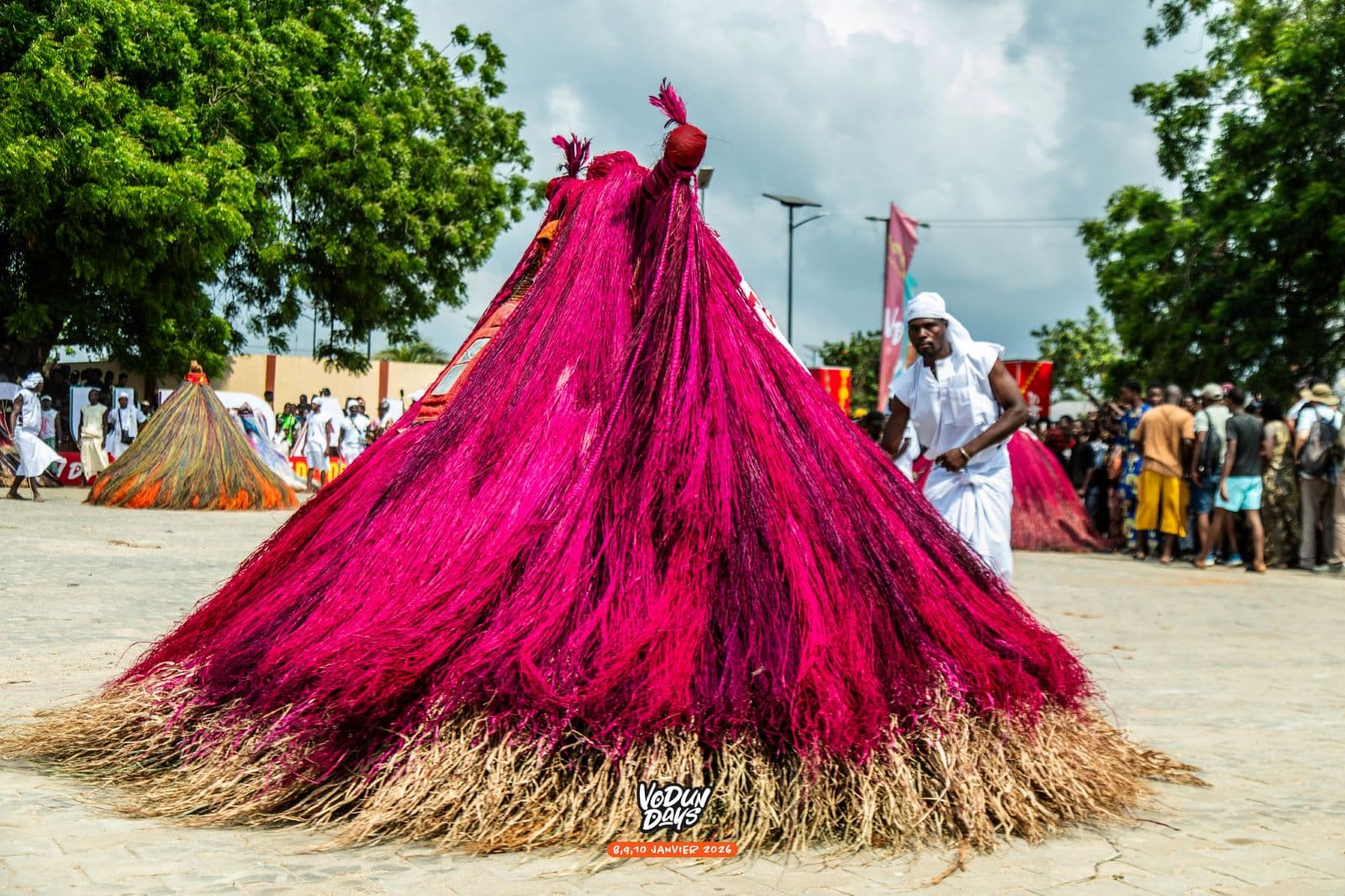
Convents partially open. Ritual exits move through neighborhoods from early in the morning. Diaspora delegations walk alongside local communities in the same processions, wearing the same colors, responding to the same calls.
These are the moments when the festival reveals what it truly is.
Away from the official stages. In an alleyway between two Brazilian colonial houses.
Arriving in early January, ahead of the January 7-9 peak weekend, gives you time to visit the Sacred Forest of Kpassè and the Python Temple without the festival crowd. It is a way of entering Ouidah before Ouidah reaches its boiling point.
The Vodun Days Village
The Village is the festival's everyday, popular face.
Dozens of stalls set up around the Arena and in the city's public spaces. Craftspeople, artists, cultural associations, Beninese institutions, regional businesses. Exhibitions sit alongside skill demonstrations. Weaving, sculpture, percussion, textiles: everything is there, in direct access.

This is where you find ritual objects made by local Vodoun communities. Ceremonial garments. Recordings of brotherhood music.
Conversations happen without intermediaries. The vendors know the history of what they sell. Often because they are part of it.
The Village is free, open during the day across the whole festival. And often more revealing than the official sequences broadcast on television.
What will be different in 2027
Three things set this edition apart from all previous ones.
The opening of the MIME. The International Museum of Memory and Slavery, built inside Ouidah's historic Portuguese fort, is scheduled to open in 2027. Its presence changes the nature of a combined trip. The day after the Grand Ceremony, a visit to the MIME becomes a natural next step. This is not one more museum. It is one of the most important memory institutions ever built in West Africa.
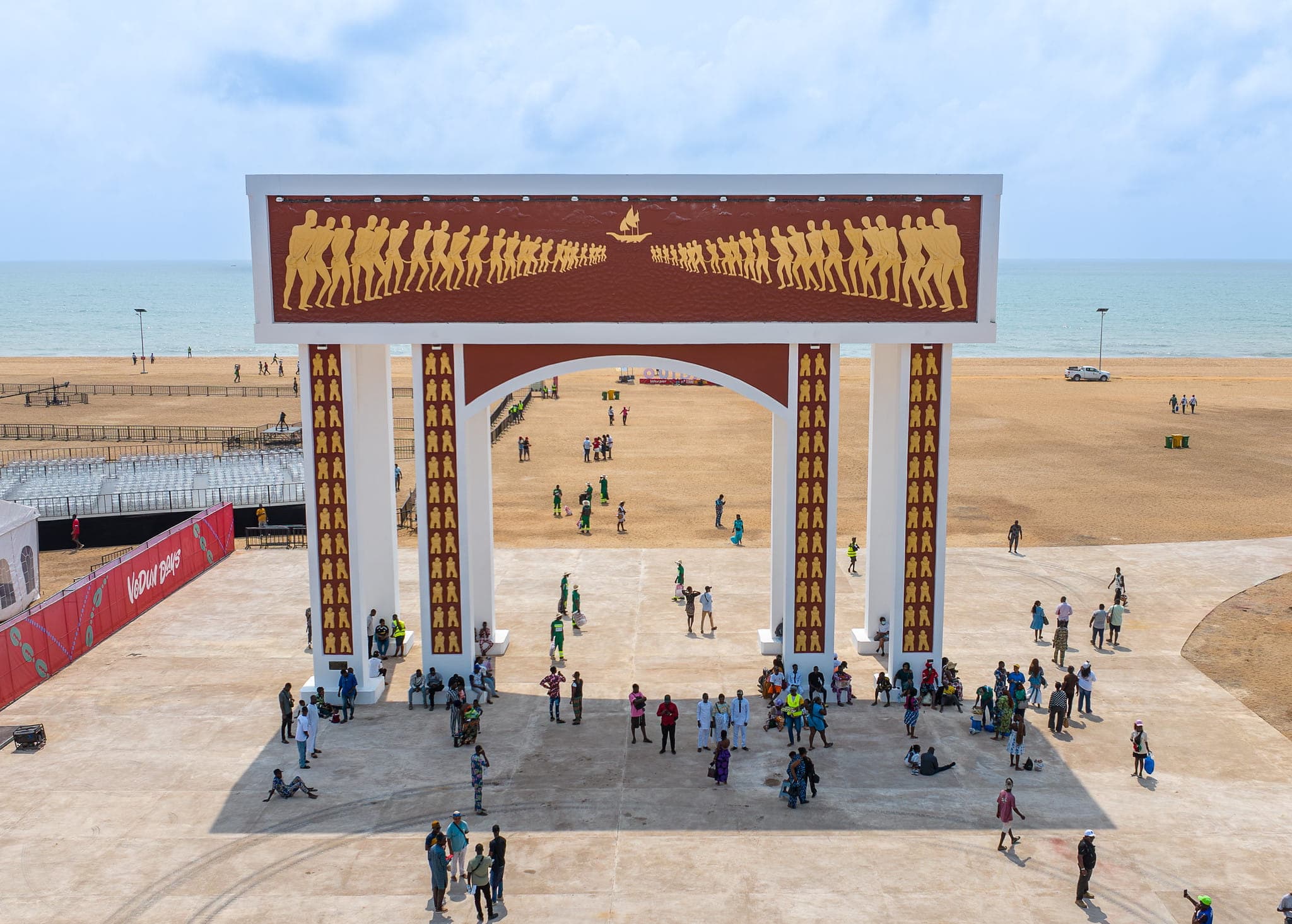
The completion of the Ouidah 2027 plan. Since 2016, Benin has invested over one trillion CFA francs in its cultural and heritage infrastructure. The renovated Slave Route, the new Door of No Return inaugurated in late 2025, the beach Arena in service since 2025. These projects form a coherent plan, and 2027 marks its visible completion. What this means concretely for Ouidah is documented elsewhere on this site.
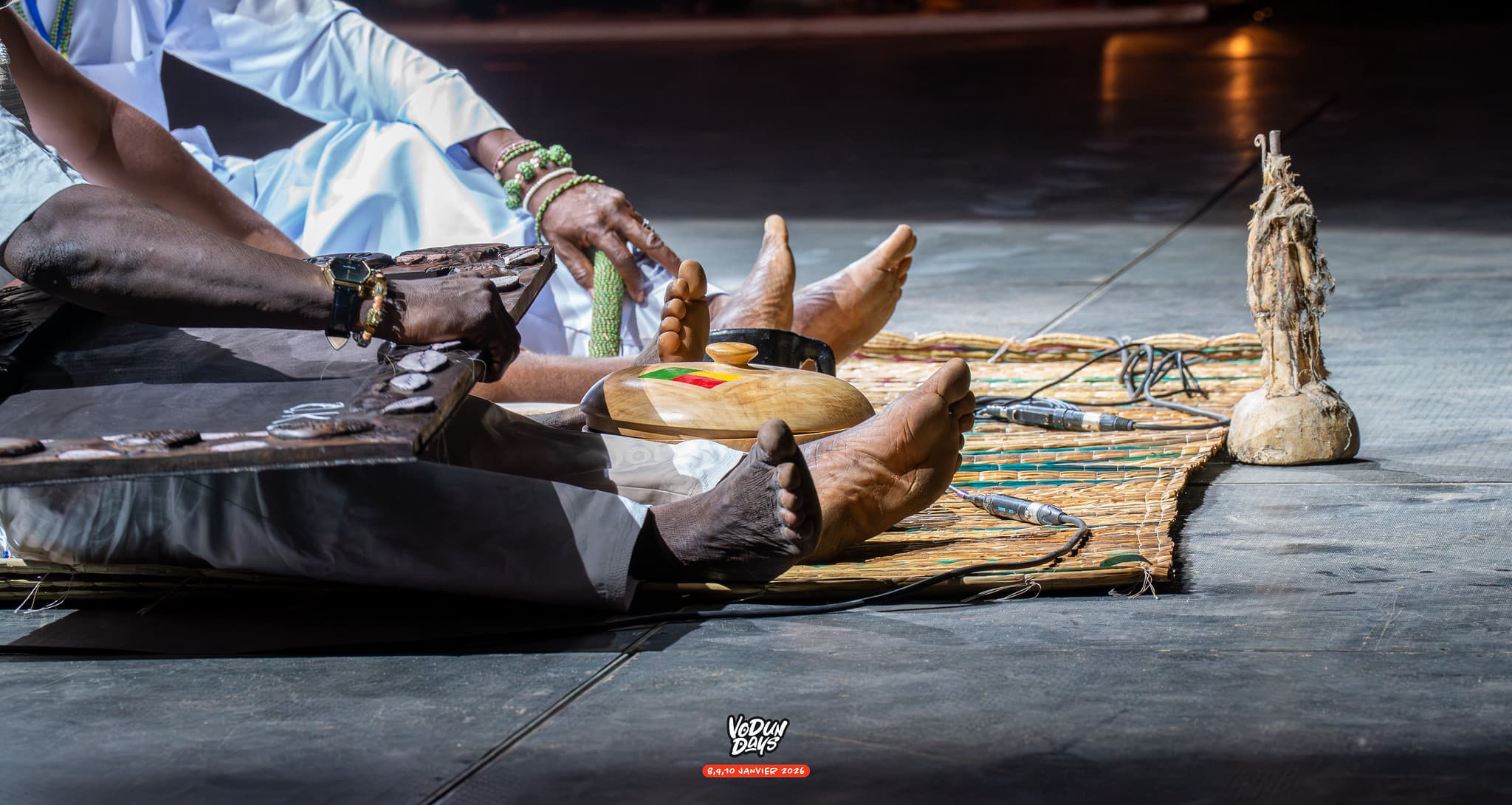
A new institutional era. Vodun Days 2027 will be the first organized under the presidency of Romuald Wadagni. An entire infrastructure has been built. A festival has been transformed. What this edition will inaugurate is the moment when the collective work of an entire decade becomes readable from the outside.
At the same time, Ouidah is drawing returns that few would have anticipated. Former president Patrice Talon has publicly expressed his wish to settle in his hometown. Members of the diaspora are organizing their first extended stays. The city is becoming what it had never quite managed to be: a place people return to not to visit, but to stay.
For the diaspora: the year of return
Ouidah is the source of several spiritual traditions that crossed the Atlantic.
Haitian Vodou, Brazilian Candomblé, Cuban Santería. Their roots run into this coastline, these convents, these deity names that the crossing transformed without erasing. Priests in Bahia and Houngans in Haiti recognize in Ouidah's Vodoun a sibling spiritual language.
A trip to Ouidah in January 2027 is not a festival trip. It is a trip into depth.
Vodun Days opens the ceremonies. The MIME opens memory. The possibility of seeing documented, contextualized, the exact history of what happened in this fort, on this route, up to this sea. The renovated Slave Route is there. The Door of No Return is there.
Since Brazil was the guest of honor in 2025, Atlantic diaspora communities have structured their presence in the official programming. Haitian, Martinican, and Brazilian delegations no longer come only to attend. They participate. This will continue in 2027.
Some travelers organize their stay around a more personal search: understanding which people, which tradition their ancestors came from before deportation. Our concierge service can support this kind of journey, from documentary preparation to introductions with relevant families and convents.
Planning your visit
Book now
Not in two months. The characterful addresses in Ouidah (Casa del Papa, Hôtel Diaspora) go first. The official Vodun Days campsite (7,000 CFA per night with your own tent, 20,000 CFA with a furnished and lit tent on site) is an immersive and economical option. Reservations at boutique.vodundays.bj.
Estimated budget from Europe or North America
| Item | Range |
|---|---|
| Round-trip flight | €500–€900 |
| Accommodation (4-5 nights) | €150–€400 |
| Local transport and meals | €80–€150 |
| Estimated total | €750–€1,500 |
Visa
ECOWAS nationals enter without a visa. For other nationalities (French, Belgian, Haitian, Brazilian, American), the e-visa is available at evisa.gouv.bj in under 10 minutes. Budget €50 to €104 depending on duration. Yellow fever vaccination is mandatory for entry into Benin.
Health
Arrange antimalarial treatment suited to your profile. Consult your doctor at least three weeks before departure. Tap water is not drinkable in Ouidah: bottled water is widely available and inexpensive. The January heat on the coast can be intense, especially in a crowd of this size in the middle of the day. Hat, hydration, and sun protection are not optional.
Recommended arrival: between January 1st and 2nd
With the festival's extension, cultural programming begins on Saturday, January 2. To catch the full week, arriving on January 1st or 2nd lets you reconnect with the rhythm of the city, visit the Sacred Forest and the Python Temple before the crowds, and settle in for the entire program through the Grand Ceremony on the 8th and the closing on the 9th.
Frequently asked questions about Vodun Days 2027
When exactly does Vodun Days 2027 take place?
From January 2 to 9, 2027, 8 days instead of the usual 3. Benin's government announced this exceptional extension on August 5, 2026, since January 1, 2027 falls on a Friday. Friday the 8th remains the main day, with the Grand Ceremony on the beach in the presence of Vodoun dignitaries and Beninese authorities; only Thursday, January 7 and Friday, January 8 are paid public holidays, with January 4, 5 and 6 remaining regular working days.
How do I book the official Vodun Days 2027 campsite?
Via boutique.vodundays.bj. Two options: 7,000 CFA per night with your own tent, or 20,000 CFA with a furnished, lit tent provided on site. Recommended for those who want to experience the festival without a daily commute from Cotonou. Spots are limited and sell out early.
What budget should I plan for Vodun Days 2027 from Europe or North America?
Between €750 and €1,500 depending on accommodation choices and flight. Excluding the airfare, €300 to €600 covers a comfortable five-day stay with accommodation and meals included. The campsite and neighborhood guesthouses allow you to come in well below that range.
Is Vodun Days 2027 accessible to non-initiates?
Yes, for the vast majority of events. Arena concerts, street processions, and Vodun Days Village activities are open to all, without tickets. Certain ritual ceremonies (convent exits, trance rites) take place in spaces where non-initiates observe from a respectful distance. A local guide from the Vodoun communities opens doors that the official program does not.
Do I need to buy tickets in advance for Vodun Days?
The main events are free and open access. Arena concerts may require a ticket depending on the 2027 programming, check vodundays.bj from autumn 2026. The campsite is paid, with limited spots. Booking the campsite as early as possible is the only truly urgent step.
January 2027 in Ouidah will be full.
Not only with visitors. With meaning.
- Vodun Days 2027 now runs from January 2 to 9, 8 days instead of 3. Announced by the government on August 5, 2026, to give diaspora visitors more time after the New Year holidays.
- Only Thursday, January 7 and Friday, January 8 remain paid public holidays (Grand Ceremony on the 8th). January 4, 5 and 6 are regular working days in Benin.
- 740,668 participants in 2026 (INStaD-certified, +70.2% vs 2025): accommodation in Ouidah for 2027 will be fully booked months in advance. Booking now is not too early.
- 2027 is the planned opening year of the MIME, the International Museum of Memory and Slavery built inside Ouidah's historic Portuguese fort.
- Estimated budget from Europe or North America: €750–€1,500 all-in (flights, 5 nights accommodation, local transport).