Ouidah's cuisine isn't African in the generic sense.
It is Creole. Specifically, it's the product of a very particular set of historical collisions: the Dahomey kingdom's coastal trading culture, the Portuguese trading posts, and - most distinctly - the Aguda families who were brought as enslaved people to Brazil and returned, generations later, to the coast of Benin. They came back with cassava. With coconut. With black beans slow-cooked on Sunday afternoons. With the specific technique of cooking fish in coconut broth.
Every dish in Ouidah carries this history in its ingredients. Eating here is, in the most literal sense, eating the Atlantic crossing.
This guide is organized by experience, not by price or category. The best food in Ouidah is almost never in a formal restaurant.
The Dish You Cannot Leave Without Eating: Dakouin
Dakouin is the soul of Ouidah on a plate.
It is a dense paste made from gari - fermented cassava flour - cooked not in water but in a rich broth of smoked fish, coconut milk, and tomatoes. It is served with the fish that perfumed the broth and a sauce that will, the first time, be hotter than you expected. Eat it with a spoon, or by hand. Both are correct.
The cassava is Brazilian in origin - it arrived on the African coast with the returning Agudas. The smoked fish is from Lake Ahémé and the coastal lagoon. The coconut milk is the trace of an Atlantic cuisine that crossed and recrossed the ocean. In a single bowl, you're eating the history of this coast.
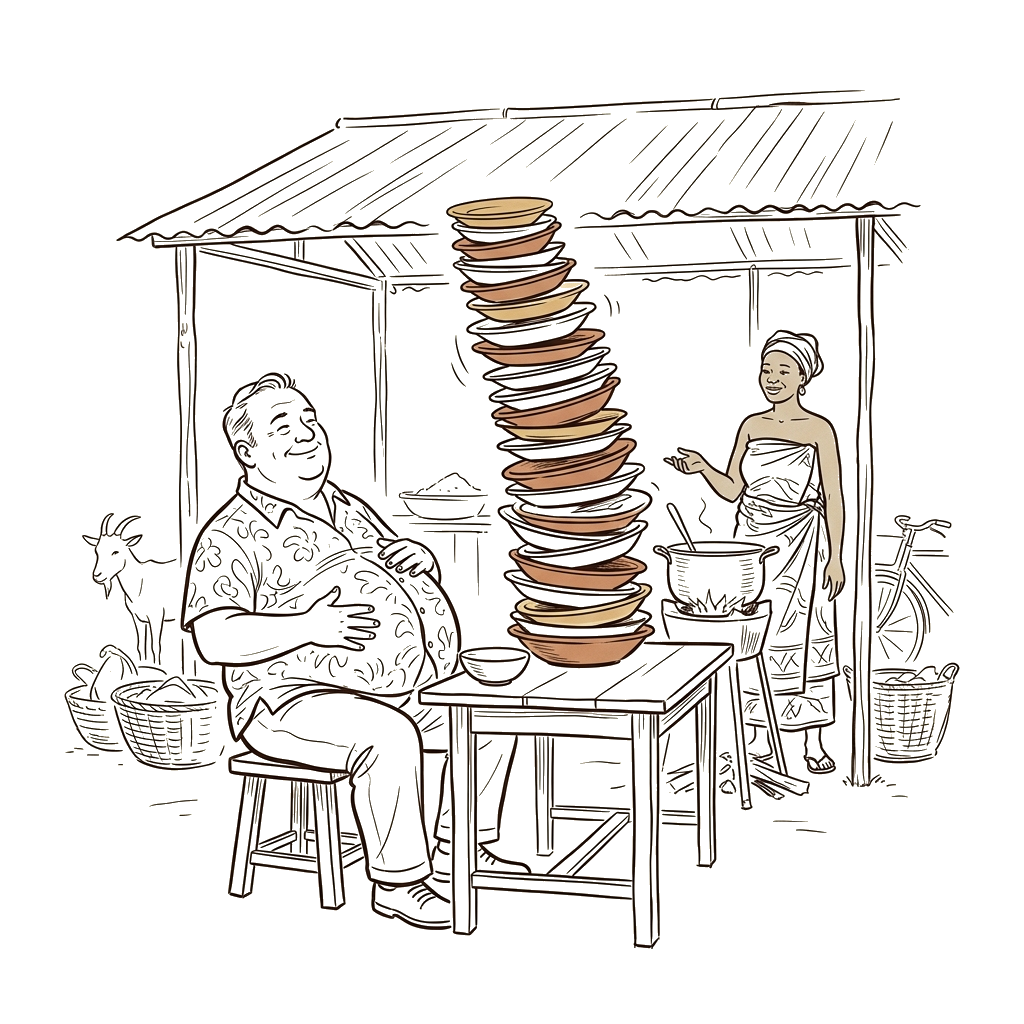
Where to find it: Not on Google Maps. Find a blue or green parasol near the Python Temple area and ask: "Who makes the best Dakouin today?" Trust the answer. Look for the pot set over a charcoal fire and the bench already occupied by zemidjan drivers and market women. That's the correct table.
Protocol: Greet the table before you sit. Say "bonne arrivée" to those already eating. A cold La Béninoise beer with the chili isn't a cliché - it's the right choice. Budget: 500 - 1500 CFA.
For a Proper Lunch: Alozo Terrasse
The essential address for a quality sit-down lunch in the historic center.
Alozo Terrasse occupies a former colonial house on the Rue de Palmistes. The setting is shaded and breezy - a good place to decompress after a morning on the Slave Route. The cuisine is a genuine hybrid: African dishes and grills, alongside a lighter European influence that reflects the city's own creolized identity.
What makes Alozo distinctive is that it is also an art gallery. The walls carry rotating exhibitions of contemporary Beninese artists. You eat well and leave with a sharper sense of what the city's creative scene looks like beyond its historical sites.
Address: Rue de Palmistes, historic district of Ouidah (Google Maps: 936P+936) Contact: +229 67 58 03 03 · alozo-art.com Budget: Mid-range · Starter + main + drink around 7,000 - 10,000 CFA
For Seafood: Hakuna Matata on the Route des Pêches
The right choice for an afternoon that extends into a sunset.
Hakuna Matata is built in bamboo on the Route des Pêches, facing the Atlantic. Everything is grilled over charcoal. The fish - barracuda, sea bream, whatever came in that day - is caught from the coast you're looking at. The prawns are large and cooked simply and are the right thing to order.
Come around 6pm. The sunset over the Atlantic from this terrace isn't incidental to the experience. It's the experience.
Address: Route des Pêches, behind the IRSP, Quartier Agondji Kpévi, Ouidah Plage Contact: +229 96 09 58 23 · Hours: 9am - 11pm daily Budget: Mid-range · Seafood grill 4,000 - 9,000 CFA
For Honest Everyday Cooking: La Manne
On the Route des Esclaves, facing the IRSP, La Manne is the restaurant where Ouidah eats on a quiet Sunday.
Simple setting. Reasonable prices. Generous portions of local cooking - fresh chicken, grilled fish, African stews, daily specials. It isn't trying to be anything other than what it is: a good, consistent table in the right part of the city.
On Sunday afternoons, the regulars gather here. The pace is slow. Ordering a second dish isn't unusual.
Address: Route des Esclaves, face IRSP 041, Ouidah (code: 83XP+MHH) Contact: +229 95 95 17 69 Budget: Accessible · Starter + main + dessert + drink around 5,000 - 7,000 CFA
The New Tables (2026)
Dhawa Ouidah - La Nonna & Alyzée: The Banyan Group's two restaurants at the Marina site are the most ambitious new dining options in the city. La Nonna is billed as a "tribal trattoria" - Italian technique with Beninese ingredients. Alyzée is a Mediterranean seafood restaurant drawing on Gulf of Guinea catch. Both are worth trying if you're staying at the Dhawa or want a special-occasion dinner near the memorial sites.
Casa Del Papa Sunday Buffet: For those staying near Avlékété, the Sunday buffet at Casa Del Papa remains a regional institution. The grilled barracuda is still the thing to order.
Street Food Worth Seeking
Klouikloui: Crunchy rings made from defatted peanut paste, sold by vendors throughout the city. The flavor is deep, nutty, slightly smoky. They are addictive in a way that is immediately apparent.
Fresh coconut: Vendors with machetes open coconuts anywhere in the city. Drink the water, then ask to have the nut split for the tender flesh inside.
Akara: Deep-fried black-eyed pea fritters, served hot from the oil. Find them near the market in the morning. They are breakfast.
On Chili
Beninese people love chili. Ouidah is no exception. The green paste - crushed fresh chili - looks innocent and isn't. The red powder is smoky and slower. Neither is optional on the table; both will exceed the expectations of first-time visitors.
The correct response to too much chili is bread or rice, not water. Water spreads capsaicin. This is information that will be useful to you.
The Afro-Brazilian Table
One of the most distinctive things about Ouidah's food is the persistence of Afro-Brazilian ingredients and techniques - the legacy of the Aguda families who returned from Brazil in the nineteenth century and brought their food with them.
The specific dishes to look for:
Feijoada: Black bean stew, slow-cooked with smoked meat. Sunday dish, in the Aguda tradition. Not every restaurant serves it - ask specifically.
Coconut-based preparations: The use of coconut milk in fish and vegetable dishes, borrowed from Bahian cooking, is now native to Ouidah's coast.
Bread: Ouidah has a stronger bread-eating culture than much of inland Benin - another Portuguese/Brazilian inheritance. The bread from the morning vendors near the market is worth seeking.
Sanctuaries & Refuges
Curated stays in Ouidah
Le Jardin Secret
A colonial guesthouse with a lush garden and a timeless, melancholic atmosphere. Perfect for historians and quiet seekers.
Casa Del Papa Resort
The premier seaside resort in Benin, nestled between the lagoon and the Atlantic. Eco-chic bungalows and a world-class spa.
Djegba Hôtel
Located 100m from the Door of No Return. A peaceful sanctuary with a pool, ideal for reflecting after visiting historic sites.
Partnering with Booking.com to support heritage preservation. (Affiliate)
Restitution 2.0
Ouidah Origins is more than a travel resource; it is an infrastructure for memory. Read our manifesto on why we believe the Slave Route is not a tourist attraction.
Read the Manifesto