


The first time Azeemã heard a Fon chant echoing through a terreiro in Brazil, she didn’t understand every word, but she recognized them.
A language carried over from the Kingdom of Dahomey more than three hundred years ago, deep in the holds of slave ships, has survived. It still lives on, carried by Brazilian voices that don’t always know exactly what they are singing, but know that it is sacred. It was from this surprise and emotion that Xwétanu was born—a research-creation project documenting the dialogue between two worlds that are, in reality, just fragments of the same history.
Who is Azeemã: Bridging Academia and Creation
Azeemã is a Beninese artist living in Brazil, in the Mosqueiro district of Belém, where she is pursuing a master's degree focused on Fon-language chants. Her work sits squarely at the crossroads of academic research and artistic creation: photography, video, musical composition, and stage performance.
Having been immersed in art from an early age, she never intended to limit herself to a traditional academic thesis to tackle a subject as dense as transatlantic spiritual memory. For her, photography, music, and performance are complementary modes of expression that allow her to break free from a single format of study.
Brazil: An Answer to Years of Frustration
Yet, choosing Brazil was not originally a planned spiritual quest. Before Xwétanu, the choice was purely pragmatic. With a background in marketing, Azeemã needed a degree in the Arts. Out of all the applications she sent, only one country accepted her dossier: Brazil.
This opening door, after multiple rejections, is described by the artist as the answer to years of pent-up frustration. A decision that seemed like a compromise ended up pointing her in the exact right direction. As she points out: you don't always choose your reconnection; sometimes, it chooses you.
The Shock of Candomblé: Recognizing What You've Never Seen
The story of her first contact with Brazilian Candomblé begins with a visual and structural realization. Azeemã describes the striking similarity between a Brazilian terreiro and a Vodun convent in Benin—spaces she has known since childhood. The ritual structures echo each other; the spiritual hierarchies are identical.
Historically, Candomblé was born in Brazil among deported African populations, notably the Yoruba, Fon, and Bantu peoples. By intertwining with the Catholicism imposed by colonizers, these beliefs gave rise to a syncretic tradition. Candomblé and Vodun share deep ties: priests of the "Jeje" nation, originally from the Dahomey region, directly contributed to the religious organizational model of several Bahian houses of worship.
What history books describe, Azeemã experienced from the inside. This encounter fueled her master's thesis, which is structured around a list of seven chants she collected and studied. The first level of her work is purely academic. The second level goes beyond analysis: she reinterprets these seven chants, documents them visually, and transforms them into artistic material.
What the Fon Language Revealed
Questioning the role of Fon in this work means getting to the heart of Xwétanu. The language acts as a marker of cultural continuity, an unbroken thread despite three centuries of forced displacement and erasure.
Azeemã clarifies that she did not formally collaborate with linguists to authenticate every term in these chants. Instead, she relies on a deep understanding of the meaning carried by these texts, acquired through her own proximity to Beninese culture. This nuance is essential: she is not documenting Fon from the outside, like a foreign researcher, but from the inside, with all the legitimacy her background provides.
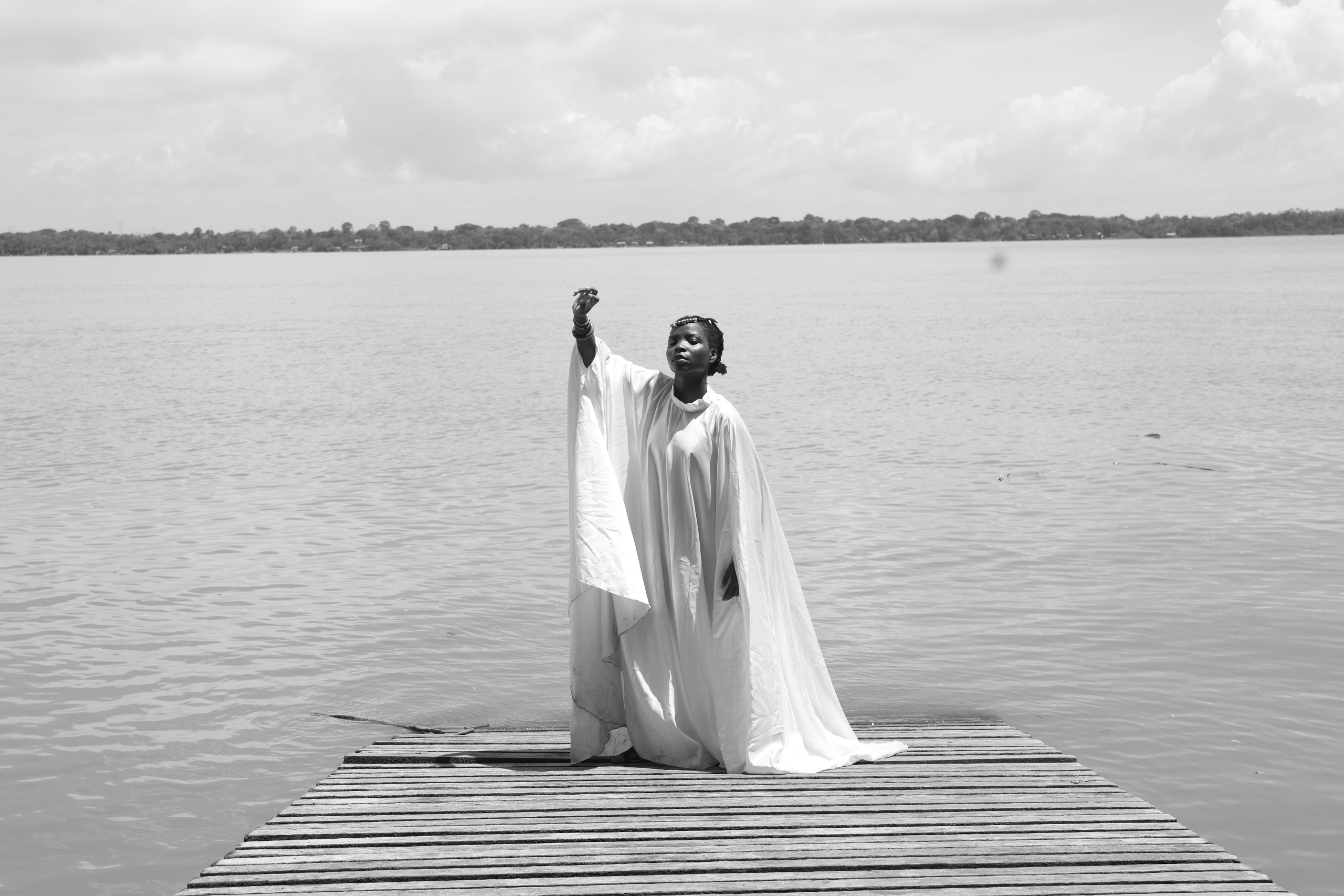
Two Imaginaries Face to Face: Africa Dreamt from Brazil
Contrary to popular belief, Belém—the city where Azeemã studies—is not immediately known as a major hub of African memory in Brazil. African contributions to the history of the Amazon have been largely erased to the detriment of local populations, even though the traces run deep.
While visiting quilombola communities (descendants of rebel enslaved people) in the region, she began to document the geographic similarities between Belém and Benin. On a map, these two points face each other across the Atlantic, like a silent echo of the Middle Passage.
But the strongest shock lies in the cultural imaginaries. Azeemã observed how Brazilian society reacted to her presence. The Brazilian imaginary of Africa and the African imaginary of itself do not overlap. For many in Brazil, Africa is a myth frozen in time—a pure place where the ancestors reside. Africans are sometimes perceived almost as gods on earth.
This idealization brings unrealistic expectations. Azeemã notes that some Beninese people have helped perpetuate this image, leveraging the credibility of their origins to sell spiritual practices in Brazil. The distorting mirror works both ways.
In the face of this, she argues for valuing what Benin truly represents today. She observes that the narrative of slavery, while essential, sometimes takes up so much space that some feel illegitimate speaking about their own heritage. Furthermore, systemic racism toward Black people in Brazil has tangibly limited their opportunities to prosper and pass on their traditions.
The Bridge Yet to be Built
Azeemã carries a clear vision for the future of relations between Benin and Brazil. Given the sheer number of shared cultural traits, she envisions concrete projects: creating a festival, or perhaps a Beninese-Brazilian artistic school centered on the performing arts (exploring religion through costume, staging, and acting).
Yet, institutionally, this bridge remains under construction. Azeemã notes that the Beninese embassy in Brazil operates slowly, and bilateral cooperation is hindered by a lack of coordination between the embassy, the Beninese Ministry of Tourism, Culture and Arts, and the Ministry of Foreign Affairs. But the movement has begun: researchers, artists, and Agudas (Brazilians who returned to Africa) are increasingly taking an interest in this connection.
After Xwétanu: Gèlèdè and Beyond
The Xwétanu project's duration is tied to her master's program. After graduation, although a Ph.D. remains a possibility, Azeemã wants to explore other territories. She is particularly interested in Gèlèdè, the Yoruba tradition of masks and ritual performances dedicated to women and mothers.
For her, research-creation is never static. She wants to release all the documented songs but leverage them elsewhere and in different ways.

Her Main Takeaway: Humility and Respect
When Azeemã talks about this work, one word constantly comes up: humility. She insists on the absolute necessity of not judging and of approaching these Brazilian traditions with respect and an open mind. She encourages anyone interested in the cultural bridge between Benin and Brazil to engage with it carefully, perhaps through authentic spiritual immersions, but without hesitation—because the need is real.
Xwétanu is therefore not an endpoint. It is the documentation of a memory that refuses to remain silent, carried by an artist who chose not to decide between analysis and creation, between what she documents and what she lives.
- Azeemã, a Beninese artist based in Brazil, uses research-creation to document the survival of Fon-language chants in Candomblé through her project Xwétanu.
- The project highlights the striking structural similarities between Vodun convents in Benin and terreiros in Brazil, bearing witness to a preserved spiritual memory.
- The initiative aims to promote living cultural heritage and build concrete bridges for the future, such as the creation of a Beninese-Brazilian artistic school or festival.