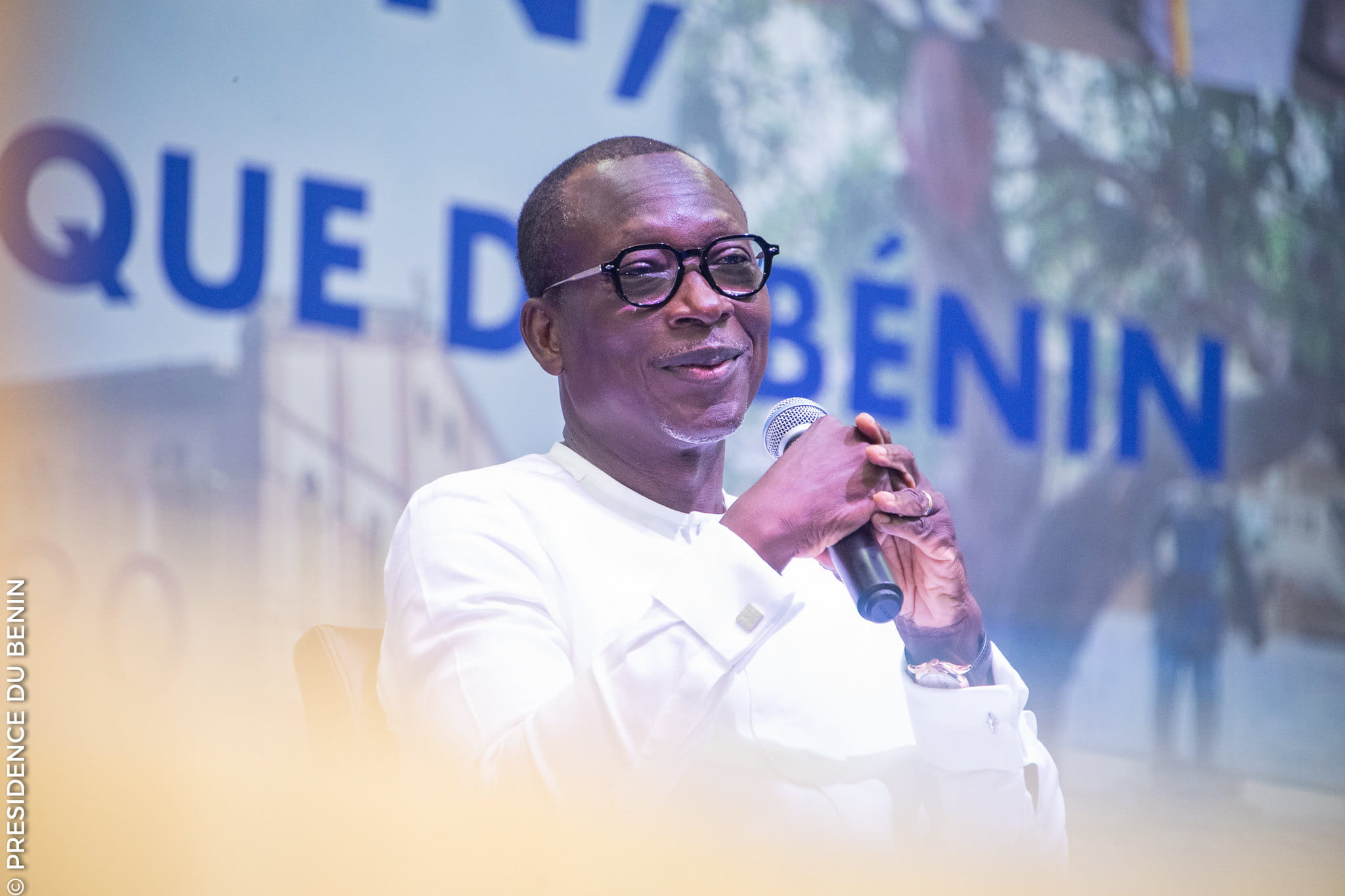
Every city has a patron. Ouidah's relationship with the presidency of Patrice Talon — now approaching its constitutionally mandated end — has been defining in ways both profound and contested.
Ten years ago, Talon came to power with a businessman's efficiency and a vision of a Benin that would leverage its uncomfortable history into something no other country could offer: a genuine site of memory, a destination of return, a spiritual homeland for the African diaspora scattered across four continents.
That vision has produced results. The new Door of Return under construction on the Ouidah coast. The International Museum of Memory and Slavery planned for the former de Souza residence. The renovation of the Route des Esclaves. The My Afro Origins citizenship program. The improved festival infrastructure for Vodoun Days. The recruitment of Spike Lee, Ciara, and international celebrities as ambassadors.
Now, with a presidential election expected in April 2026, Benin faces a transition. And Ouidah — more than perhaps any other city in the country — has the most at stake.
A Project Built Around One Man
The stakes of continuity are not abstract. Talon's Ouidah project was never just a line item in a national budget — it was driven, at every stage, by his personal relationships, his phone calls to celebrity ambassadors, his direct involvement in decisions that would normally sit several layers below a head of state. That kind of project has a strength and a weakness built into the same design.
The strength is speed: things get built when one person wants them built badly enough. The weakness is that political foundations beneath cultural ambitions are rarely as solid as the new monuments suggest. Bureaucratic momentum can sustain construction sites. It cannot sustain vision.
The Candidates and Their Silences
As Benin's electoral campaign season opens, the heritage and diaspora agenda that defined the Talon years has been notably absent from the platforms of most opposition candidates. This is not necessarily malign — it may simply reflect the electoral calculus of a country where infrastructure, security, and northern jihadist incursions from Burkina Faso occupy the foreground of voters' daily concerns.
But for the hundreds of thousands of diaspora visitors who arrived in Ouidah over the past decade believing that a new chapter was being written — and for the thousands currently applying for Beninese citizenship — the silence is troubling.
"We need to know that this project is bigger than one man. That it belongs to the country, not to a presidency." — Diaspora applicant, name withheld
What History Says
Benin has, in fact, a relatively strong tradition of democratic transition by African standards. The 1991 transition — when Mathieu Kérékou peacefully ceded power after losing elections — remains a landmark moment in the continent's political history.
But Talon's Ouidah project was deeply personal. He initiated it. He funded it through channels that relied on his relationships. He recruited its celebrity ambassadors by phone.
Successors inherit bureaucracies. They do not always inherit passions.
The Guardians' View
We do not editorialize on electoral outcomes. But we will say this plainly: whoever wins in April will inherit a city mid-transformation. The new Door is half-built. The museum is awaiting its opening. The Route is mid-renovation. The citizenship programme has 50 naturalized citizens and thousands of pending applications.
These are not abstract cultural projects. They are commitments made to real people — to Isaline Attelly in Martinique, who is now Beninese. To the Bahian families who booked flights because they finally felt invited. To the children in Ouidah who have watched their city become, slowly, somewhere the world wants to come to.
Continuity is not a given. It requires, at minimum, someone willing to pick up the phone and call back the diaspora.
We hope they do.
Restitution 2.0
Ouidah Origins is more than a travel resource; it is an infrastructure for memory. Read our manifesto on why we believe the Slave Route is not a tourist attraction.
Read the ManifestoBenin's presidential election is expected in April 2026. Ouidah Origins will continue to report on its implications for heritage and diaspora policy.
- With President Talon's term ending, Benin heads into its most consequential election in a decade
- For the diaspora, the heritage projects, citizenship programme, and Ouidah's transformation are all on the line