
In Ouidah, the salty wind of the Atlantic Ocean, the same wind that once lashed the faces of our ancestors, carries a new melody today. Mingled with the eternal crash of waves against the Djègbadji shore, the dull, steady hammering of construction cranes now resonates. There, a few dozen meters from the sand where the iconic Door of No Return stands, the earth trembles under the weight of a titanic ambition: The Marina Ouidah Project.
This is no ordinary construction site. Beneath the red dust rising into the Beninese sky, a true memorial revolution is taking shape. Scheduled for completion in 2027, this 38,000 m² complex aims to radically transform Africa's relationship with the memory of the transatlantic slave trade. Spearheaded by the National Agency for the Promotion of Heritage and Tourism (ANPT) with a colossal investment of over €257 million financed by Chinese capital, La Marina aims to become the global epicenter for Afro-descendants.
But behind the towering corrugated fences and gleaming architectural models, a burning question remains: how will the construction of a gigantic replica slave ship and luxury hotels fit into the sacred silence of pilgrimage? And what will be the true price of this concrete vertigo for the people of Ouidah, the millennial guardians of this coast?
An immersive dive into the heart of La Marina, where history bleeds and reinvents itself.
An Unprecedented Architectural and Technical Transformation
Close your eyes and remember. Until recently, arriving at the Door of No Return was a stripping away of self. You reached it at the end of the endless red laterite track, the "Slave Route," breathless, crushed by the sun and the weight of the invisible. The silence was broken only by the roar of the ocean.
The Marina Project is blowing up this landscape to erect a 38,000 m² tourist complex, weaving a web of concrete, wood, and light.
Three Sanctuaries in the City
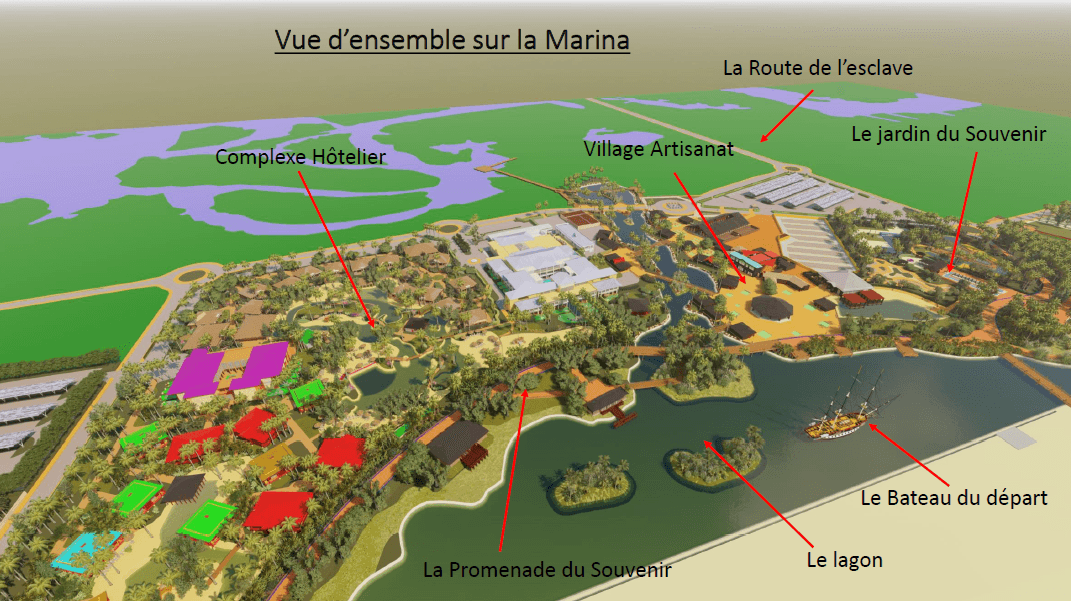
The complex does not seek to erase the emptiness, but to sculpt it. It is structured around three landscape entities:
- The Remembrance and Memorial Promenade Zone: The spirit of the ancestors demands silence. The Beninese state has thus designed "Gardens of Remembrance," true havens of dense vegetation where the wind rushes through the leaves to invite meditation. A long floating promenade on the calm waters of the Djègbadji lagoon will allow pilgrims to center themselves before the ordeal of the Door. The artisanal village Zomachi will celebrate, in a gentle buzz, the Beninese creative genius.
- The Cultural and Leisure Activities Zone: This is the beating heart of the new Ouidah. Imagine 3,500 people gathered under the starry sky in the immense open-air Vodun Arena, vibrating to the rhythm of sacred drums during the Vodun Days. Around it, a lively esplanade, bathed in the scents of local cuisine, will house restaurants and bars. And enthroned in the center, chilling the blood as much as it fascinates: the "Departure Ship."
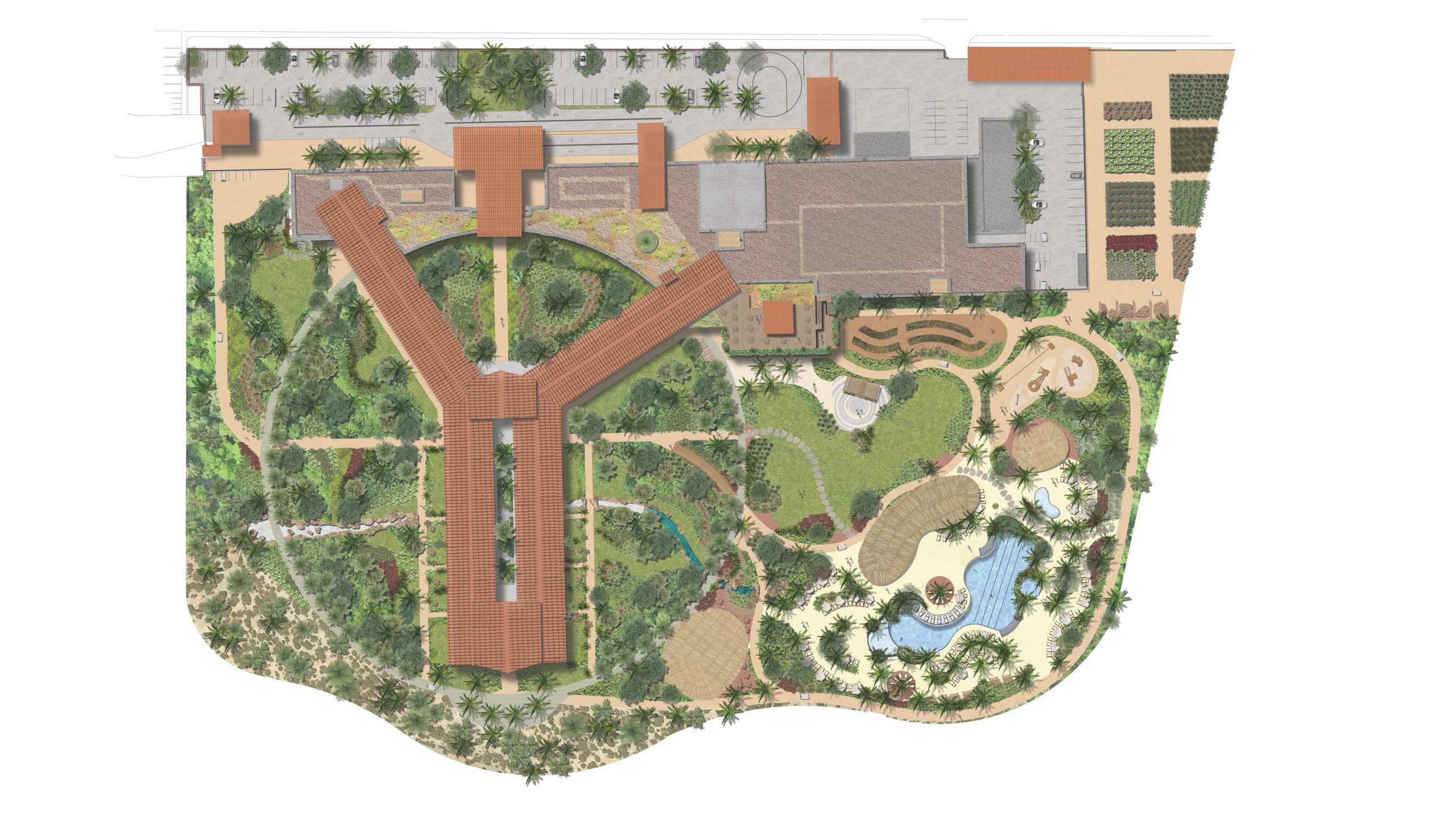
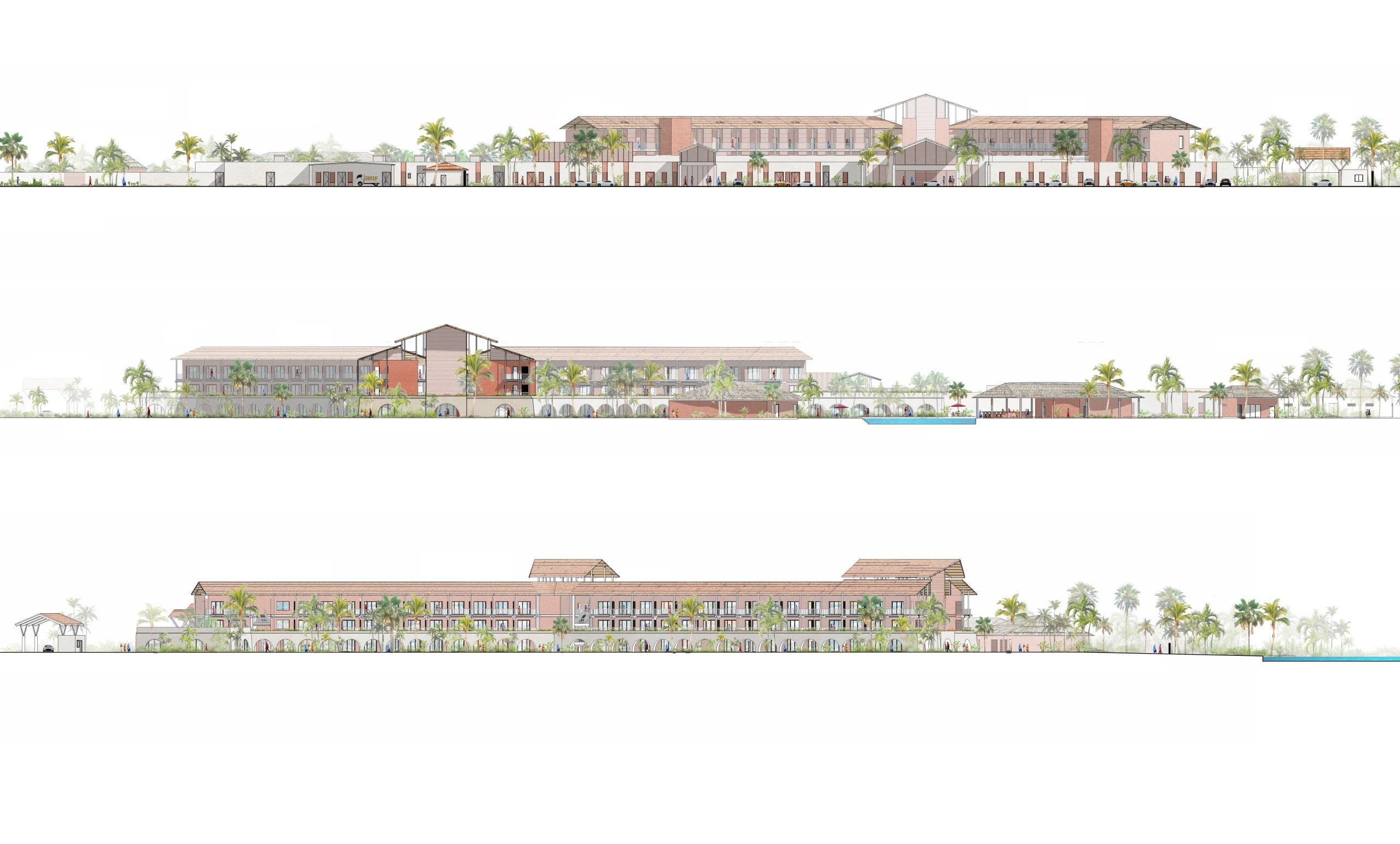
- The Accommodation and Services Zone: To accommodate the impressive flow of 3 million tourists expected each year, Ouidah is pulling out all the stops. The jewel in this crown is the Dhawa Ouidah, a sumptuous four-star hotel with 132 rooms, promising modern luxury rooted in local aesthetics.
The Invisible Armor: Underwater Breakwaters
But nature is fierce on the coast of the Gulf of Guinea. The waves break with incredible violence, devouring the sand meter by meter. To protect this colossal dream of stone, engineers are building a true submerged armor: four kilometers of underwater breakwaters. Invisible from the beach, these monsters of rock break the swell beneath the foam, stabilizing the coastline and protecting memory from the assaults of the ocean.
The "Departure Ship": Poignant Pedagogy or "Disneyfication"?
It is the shadow hovering over the project. A mass of wood and steel slicing the horizon. If there is one element of the Marina Project that causes a shudder—and controversy—it is the construction of this life-size replica of a slave ship.
This "memorial ship," frozen in the landscape, is not an empty shell. It is a dark belly, a chilling immersive journey designed to force the visitor to physically experience the asphyxiation and terror of the holds, where nearly two million Africans were crammed. The ambition is one of assumed pedagogical violence: it is no longer about reading history; it must be felt in the flesh.
The Paradox of Foreign Funding
However, the context of its creation is intriguing. This pharaonic project is fueled by two massive loans from the Bank of China and the Industrial and Commercial Bank of China (€257 million), and shaped by the hands of workers from the state-owned enterprise Yunnan Construction.
Seeing an Asian company build the sanctuary of the Black Holocaust raises a wind of skepticism. Is Ouidah becoming the new showcase of Chinese "soft power" in Africa? This outsourcing of memory questions the Pan-African intelligentsia about the true reappropriation of our own historical narrative.
The Vertigo of "Disneyfication"
On the shores of the lagoon, voices clash. How do you memorialize a trauma when you are building, just steps away, star-rated hotels and bustling terraces? The risk of "Disneyfying" the pain—turning it into an air-conditioned attraction—is on everyone's lips.
For detractors, monetizing the blood of ancestors in a "spectacle tour" is a mercantile drift. But for others, the time of whispered shame is over. Africa must equip itself with staggering monuments capable of crushing the world with their scale, much like the Holocaust Memorial in Berlin or the Gorée Memorial. Memory needs cathedrals to survive oblivion.
The Impact on the Diaspora: Finding Peace in the Noise
For Afro-descendants from Bahia, Port-au-Prince, or New Orleans, setting foot in Ouidah is anything but a tourist trip. It is a tearing open. It is ground zero, the moment you tread on the earth that drank the tears of your great-grandparents' great-grandparents.
Until now, this pilgrimage was of a poignant aridity. The walker braved the stifling heat of the Slave Route, caressed the rough bark of the Tree of Forgetting, and often collapsed in tears facing the roar of the ocean, alone with the immensity of the water.
From Intimate Pain to Collective Celebration
With La Marina, the rite of passage transforms. The pilgrim will now find comfort and security worthy of their expectations. This is not a detail; it is a political message from the Beninese state whispered in the ear of the diaspora: “You survived. You are back. And we welcome you like kings.”
Yet, it will be necessary to relearn how to navigate this place. Finding one's sanctuary of tears amidst the 3 million annual tourists will require isolating oneself in the Gardens of Remembrance at dawn. But the beauty of La Marina lies in this duality. It allows you to weep in the morning facing the ocean, and to vibrate in the evening to the rhythm of the drums in the Vodun Arena, celebrating the indestructible strength of Afro culture.
It is a historical shift: people no longer come to Ouidah merely to mourn the dead; they come to celebrate the incredible victory of the living.
The Local Impact: The Beninese Facing Ouidah's Future
While the discourse often focuses heavily on the diaspora, the shockwaves of this project will first strike the daily lives of the Beninese. For the fishermen of Djègbadji and the historic families of Ouidah, La Marina is a concrete earthquake shaking up their certainties.
An Economic Engine Under High Tension
Ouidah had lived in the shadow of its history until now, frustrated by watching tourist buses from Cotonou leave at nightfall.
Today, the scent of fresh money and opportunities hangs in the air. With its 130 hotel rooms, shopping avenues, and the Zomachi artisanal village, the site promises thousands of jobs. Catering, premium guiding, maintenance, crafts: an entire ecosystem is awakening. For Beninese youth, it is the promise of integration into the global economy without having to exile themselves to the capital.
The Triumph of Vodun Pride
But the real earthquake is one of identity. At the heart of the complex will reign a 3,500-seat Vodun Arena. For centuries, African animism was dragged through the mud, caricatured, and demonized by the colonial West.
Today, the Beninese state rehabilitates it in the most spectacular way. Having a Colosseum dedicated to Vodun in the largest tourist complex in the country is majestic revenge. The Zangbétos (the terrifying guardians of the night) and the followers of Egungun will no longer dance on the margins: they will take center stage, proud and flamboyant, offering the world the richness of their spirituality.
The Specter of Gentrification
However, the scent of success comes at a price. The construction required the painful relocation of numerous local families (Project Affected Persons). And fear is rising: how can we prevent natives from being chased off their own lands by skyrocketing real estate prices?
For La Marina to be a true success, the Beninese must not end up as mere extras or sweepers for the complex. They must be its builders, its entrepreneurs, and its rightful heirs.
Conclusion: The Bridge Between Two Worlds
The Marina Project, whose shadow is already cast upon the sand for 2027, is a titanic gamble. It is the cry of a Benin that refuses to be frozen in victimization.
By transforming the theater of its worst nightmare into a vibrant sanctuary of modernity, the country makes the radical choice of resilience. Criticisms regarding the loss of authenticity or Chinese intervention will continue to rumble, carried by the Atlantic winds. But for the child of the diaspora seeking the truth, and for the young Beninese seeking a future, this pouring of concrete and hope traces a majestic bridge over the ocean.
Soon, the tears will dry, and the Door of No Return will rise, at last, as the triumphant Door of the Great Return.
Restitution 2.0
Ouidah Origins is more than a travel resource; it is an infrastructure for memory. Read our manifesto on why we believe the Slave Route is not a tourist attraction.
Read the ManifestoEditorial transparency
This content was developed with the assistance of our AI agents.