Key Takeaways
- Francisco Félix de Souza was born on 5 October 1754 in Salvador de Bahia, Brazil, and arrived in Ouidah around 1788. He died there on 8 May 1849, aged 94 — a life spanning nearly the entire height of the Atlantic slave trade.
- The title 'Chacha' derives from his Portuguese catchphrase 'já, já' — 'right away, right away' — the words he used to reassure clients their orders would be fulfilled. The Fon phonetic rendering became the title conferred by King Ghezo after the 1818 coup.
- His personal fortune at death was estimated at the equivalent of US$120 million — ranking him among the wealthiest individuals in the world in the mid-19th century. At his death, he held 12,000 enslaved individuals on his own account.
- He helped King Ghezo overthrow his brother Adandozan in 1818 — while being held in Adandozan's prison. He organized the coup from inside his cell. When Ghezo won, he made de Souza the Chacha of Ouidah and gave him exclusive trading rights on the coast.
- Bruce Chatwin spent years researching de Souza before writing The Viceroy of Ouidah (1980); Werner Herzog adapted it as Cobra Verde (1987). The de Souza family lineage continues with Chacha IX, whose family still holds the title and organizes annual commemorative ceremonies.
In the center of Ouidah, there's a square named after a slave trader.
Place Chacha. It isn't hidden in a corner of the city, not marked with an asterisk of apology. It's the main square - the beating commercial heart of Ouidah's historic center, a few hundred meters from the Cathedral, a few hundred meters from the Python Temple, and precisely at the start of the Slave Route that runs south to the Door of No Return. The square is named for Francisco Félix de Souza, known as the Chacha - the man who, for three decades, made the deportation of human beings from this city the most efficiently organized commercial operation on the Atlantic coast.
His name is on the square. His descendants still live in this city. The cathedral he helped build still stands across the road from the Python Temple.
Ouidah doesn't apologize for him. It doesn't celebrate him. It simply acknowledges that he was here, that what he built is still standing, and that the question of what to do with a history like his isn't one that admits of a clean answer.
This is perhaps the most honest position any city has ever taken on one of its most complicated citizens.
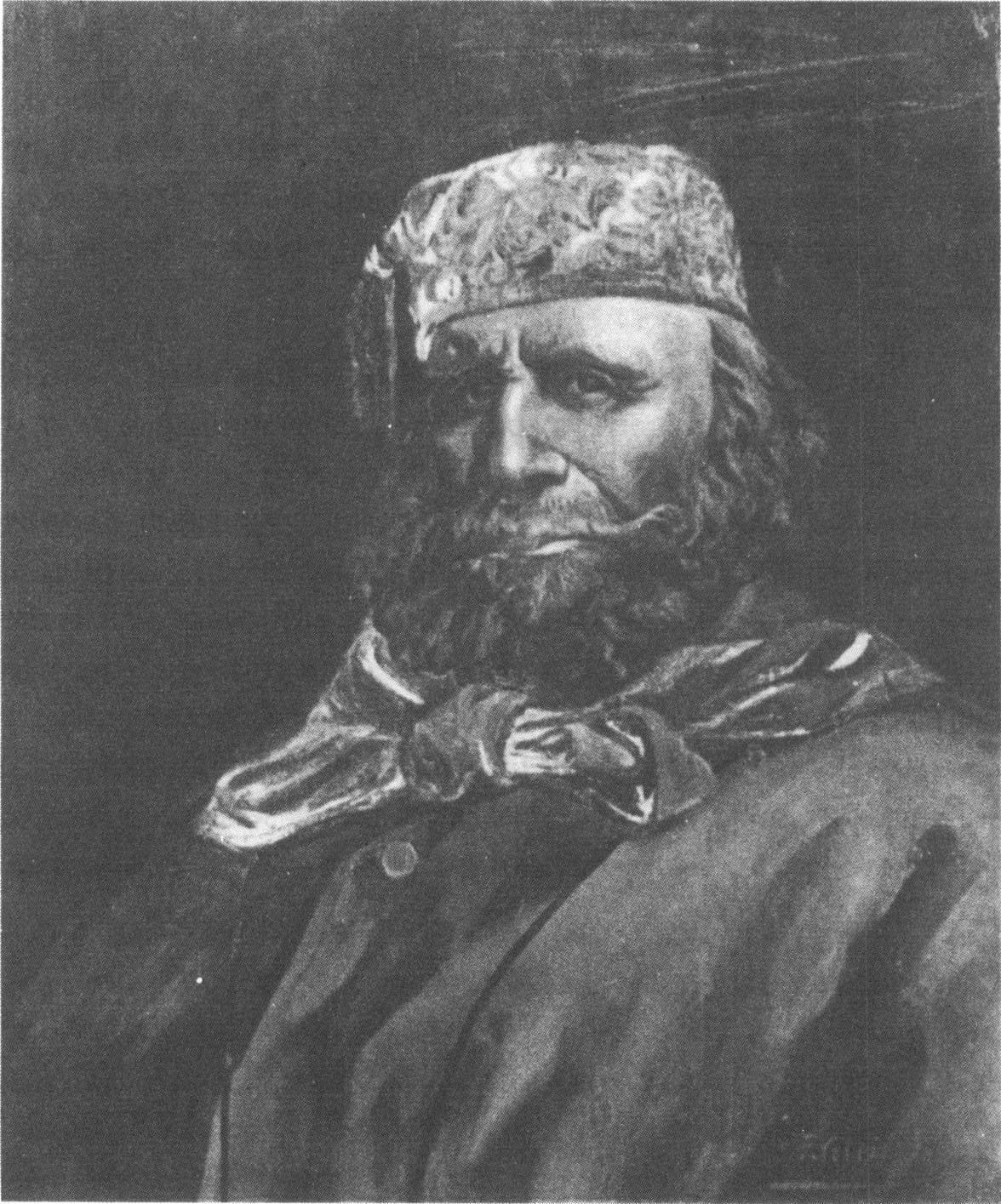
Who Francisco Félix de Souza really was
Before we can reckon with him, we need to see him clearly - which requires resisting two opposite impulses: the impulse to reduce him to a monster, and the impulse to rehabilitate him as a builder.
He was both. Neither reduction is adequate.
Francisco Félix de Souza (born 5 October 1754 in Salvador de Bahia, Brazil; died 8 May 1849 in Ouidah) was, at the height of his career, one of the three or four wealthiest individuals in the world. His personal fortune at death was estimated at the equivalent of US$120 million in contemporary terms - a fortune built entirely on the organized deportation of human beings. At his death, he personally held 12,000 enslaved individuals on his own account.
He was also a city-builder. He funded the construction of what would become the Basilique de l'Immaculée Conception - the Afro-Brazilian cathedral that today stands as one of the most architecturally remarkable buildings in West Africa. He supported local artisans, maintained a household of hundreds, and created the commercial infrastructure around which a significant portion of Ouidah's current urban identity was built.
He was the organizational center of the Aguda community - the Afro-Brazilian returnees who brought Brazilian architecture, cuisine, and syncretic faith back to Ouidah in the 19th century. He was the man Bruce Chatwin spent years trying to understand before writing The Viceroy of Ouidah (1980). He was, simultaneously, one of the greatest criminals in history and one of the most consequential individuals in the making of this city.
The question Ouidah asks, by naming its main square after him, is: what do you do with someone like that?
The deep history
The Brazilian in Africa (1754–1818)
Francisco Félix de Souza was born in Salvador de Bahia on 5 October 1754 - then the capital of Portuguese America, and the most African city in the Americas. Bahia's economy ran on enslaved labor, and Salvador was its commercial center: a port city where the traffic in human beings was as ordinary as the traffic in sugar or tobacco.
The de Souza family claimed descent from Tomé de Sousa (1503 - 1579), the first governor-general of the Portuguese colony of Brazil - which, if accurate, would make Francisco a distant scion of Portuguese nobility. Whether that lineage was real or aspirational, it gave the family a certain self-conception that would shape Francisco's ambitions throughout his life.
He arrived in Ouidah around 1788 - one of many Brazilian merchants drawn to the Gulf of Guinea by the vast profits of the slave trade. The coast was already organized around the trade: the French, Portuguese, and British had maintained forts at Ouidah since the 17th century, and the Kingdom of Dahomey, which had controlled the coast since 1727, had established the slave trade as the economic foundation of its power.
De Souza came as a commercial agent. He brought credit, Brazilian commercial connections, and the organizational instincts of a man raised in one of the world's most commercially sophisticated slave-trading cultures. He quickly established himself as a significant figure in the trade - not yet dominant, but capable and increasingly well-connected.
Then King Adandozan put him in prison.
The coup from inside the cell (1818)
The details of the imprisonment are murky - the most likely cause was a dispute over trade debts and the terms of commercial arrangements that Adandozan regarded as unfavorable to the Kingdom. De Souza, from the king's perspective, was a useful foreign merchant who had overreached. Adandozan had him arrested.
What happened next is one of the most remarkable episodes in the history of the Atlantic slave trade.
While imprisoned - according to the accounts that the de Souza family and Dahomean oral tradition both preserve - de Souza made contact with Prince Ghezo, King Adandozan's younger brother and a man with both the ambition and the claim to dispute the throne. De Souza, from inside Adandozan's prison, offered Ghezo a proposition: financing, weapons, and the commercial networks of the Brazilian Atlantic merchants in exchange for the throne - and, once Ghezo prevailed, for the title of Chacha and exclusive coastal trading rights.
Ghezo accepted. De Souza organized the coup from his cell. When Ghezo's faction moved in 1818 and prevailed, de Souza was released. Within weeks, he was the Chacha of Ouidah - viceroy of the city, exclusive commercial agent of the new king, and the single most powerful non-African figure on the Bight of Benin.
The origin of the title
The word "Chacha" has a history that most accounts of de Souza's life miss.
It derives, according to historical sources, from de Souza's own Portuguese catchphrase. When partners, clients, or the king's representatives asked whether their orders would be fulfilled - whether the ships would be loaded, whether the captives would be ready, whether the trade goods would arrive - de Souza's habitual response was "já, já": "right away, right away" in Portuguese. It was a merchant's reassurance, the promise of immediate service.
The Fon phonetic rendering of "já, já" became Chacha. The nickname stuck. And when Ghezo formalized de Souza's status after the coup, the nickname became the title - the word for viceroy in Ouidah.
The most powerful title in the city's commercial history was born from a Brazilian merchant's impatient reassurance to his clients.
The empire at its peak (1818–1849)
In the three decades between the coup and his death, de Souza constructed an empire that had no equivalent on the African coast.
His physical base was a vast compound in the Singbomey quarter of Ouidah - a complex of houses, warehouses, courtyards, and gardens that occupied a significant portion of the city's center. At its height, the compound housed hundreds of people: wives, children, servants, clerks, guards, and the business apparatus of the most sophisticated slave-trading operation in the Atlantic world.
At the peak of his operations in the 1830s and 1840s, de Souza's network handled an estimated 10,000 to 15,000 captives per year. The captives arrived from the interior, supplied by the military campaigns of King Ghezo's army - including the Agojie. They were processed at Place Chacha: inspected, branded with the hot iron marks of the purchasing companies, priced in trade goods (cowries, textiles, gunpowder, alcohol), and walked south along the Slave Route to the barracoons and eventually to the ships offshore.
De Souza was the logistical intelligence behind this system. He knew which European captains were in port, what prices the Brazilian and Cuban markets were paying, when to sell and when to hold, how to negotiate with the Kingdom's political apparatus, and how to manage the financial relationships across three continents that kept the trade functioning. He wasn't a brutal man in the everyday sense - he had a reputation for commercial reliability and personal generosity that made him useful to everyone in the system. He freed some enslaved people. He supported artisans. He helped fund the cathedral.
He also organized the systematic deportation of hundreds of thousands of human beings. Both things were true simultaneously and without apparent contradiction on his part.
He died in Ouidah on 8 May 1849, aged 94. He had lived through the entire height of the Atlantic slave trade, organized more of it than perhaps any single individual, and built a city in the process.
De Souza today
Place Chacha
Stand in Place Chacha on a weekday morning and watch it function: motorcycle taxis queuing, vendors selling phone credit and grilled corn, schoolchildren crossing to the market, the ordinary pulse of a West African city. The square is named for a man who processed human beings on this ground as cargo. It carries his name the way a street carries any old name - by habit, by history, by the city's characteristic refusal to pretend that its past was something other than what it was.
The name isn't a monument. It isn't an endorsement. It is Ouidah's version of an honest accounting: this happened here, this man made it happen, and the city he built still functions on the foundations he laid.
The family house
The de Souza family house in the Singbomey quarter still stands. It's an inhabited family home - not a museum - as it has been for nearly two centuries. The family heads the Aguda community of Ouidah, the Afro-Brazilian returnees who came back from Salvador da Bahia in the 19th century and whose architectural, culinary, and cultural legacy is visible throughout the historic center.
The current title-holder is Chacha IX, who oversees the family's annual commemorative ceremonies. These ceremonies blend Brazilian Catholicism with local Vodun culture - a syncretism that perfectly embodies the doubled identity of the man whose line they continue: Catholic and Vodun, Brazilian and Beninese, builder and slave trader, honored and unresolved.
The mausoleum of Francisco Félix de Souza is also visitable in Ouidah, near the family compound. It's a modest, maintained structure that receives visitors who come to stand before the grave of one of history's most consequential and troubling figures.
In literature and film
Bruce Chatwin spent years researching de Souza before writing The Viceroy of Ouidah (1980) - a hallucinatory account of a life that resisted moral reduction. The novel isn't a biography; it's a meditation on the man's impossibility. Chatwin understood that the facts of de Souza's life couldn't be organized into a coherent moral narrative without falsifying them.
Werner Herzog adapted the novel as Cobra Verde (1987), with Klaus Kinski - perhaps the only actor capable of conveying the specific combination of charisma, instability, and moral vacancy that de Souza required - in the title role. The film is as disorienting as its subject.
Neither work flatters de Souza. Neither condemns him simply. Both are honest about the difficulty of his case.
The diaspora dimension
The contradiction carried across the ocean
De Souza's relationship to the African diaspora runs in two directions simultaneously - and the contradiction between them is the most compressed version of Ouidah's entire historical paradox.
In the first direction: De Souza was one of the principal architects of the forced migration that created the African diaspora. His networks organized the departure of hundreds of thousands of people from this coast to Brazil, Cuba, and the Caribbean. He is, in genealogical terms, partly responsible for the crossing that separated millions of people from the continent their descendants now search to reconnect with.
In the second direction: His family name - de Souza, but also da Silva, Paraíso, d'Almeida through the Aguda networks he anchored - is carried today by prominent families across coastal West Africa and throughout the Brazilian diaspora. The Afro-Brazilians who returned to Ouidah in the 19th century, many of them navigating commercial networks de Souza had established, chose to identify themselves through names that connected to his legacy. And many Afro-Brazilians who arrive in Ouidah today, searching for their roots, carry the name de Souza in their passports.
To arrive in Ouidah bearing that surname is to encounter the most concentrated possible form of diaspora irony: the name of the man who organized your ancestors' deportation is also the name your ancestors chose to carry when they came back.
This is what Ouidah does to history: it refuses to let it be simple. De Souza can't be placed in the villain's column and forgotten. He can't be placed in the hero's column and celebrated. He stands at the center of the city's main square - literally - and asks every visitor who knows his story to sit with the discomfort of a past that doesn't resolve.
The moral dimension
What made de Souza possible - what made him not an aberration but a representative figure - was the world that formed him.
He was born into a society in which the enslavement of Africans wasn't merely legal but economically foundational. Salvador da Bahia ran on enslaved labor. The Portuguese empire that made Bahia possible ran on it. The Kingdom of Dahomey that de Souza allied himself with ran on it. The Brazilian and Cuban plantation economies that purchased his captives ran on it. De Souza didn't invent a system. He optimized one that already existed and was maintained by governments, legal systems, religious institutions, and the daily choices of millions of ordinary people across three continents.
This isn't a mitigating argument. It's a claim about scale. The system that made de Souza possible was much larger than de Souza, and the moral reckoning his name invites shouldn't end with him - it should extend to every institution, government, and economy that participated.
Ouidah understands this. That's why the square isn't called something else. To rename Place Chacha would be to suggest that de Souza was the aberration - the bad actor in an otherwise clean story. He wasn't. He was the logical expression of a system that operated globally. Keeping his name on the square is Ouidah's way of keeping the whole system visible.
His contradictions - the cathedral and the barracoons, the freed enslaved people and the 12,000 he personally held - weren't the contradictions of a troubled conscience. They were the contradictions of a man who found ways to be generous within a system he profited from. That is precisely what makes him historically representative rather than unique. He was, in this specific way, like most powerful people in slave-trading societies.
The question he leaves is: what do we owe the people he traded? And who shares that debt with him?
How to visit
Place Chacha
The square is a public space - open, active, ordinary. The most powerful way to experience it is to stand in its center, understand whose name it carries, watch the city function around you, and hold both realities simultaneously: this is a living city, and this is the site where its worst chapter was administered.
The Slave Route begins here, at the southern edge of the square. Walking it from Place Chacha to the Door of No Return is the most direct physical encounter with the consequences of de Souza's work.
The family house and mausoleum
The de Souza family house in Singbomey is an inhabited family home. It can be visited with a guide who has a relationship with the family - don't arrive unannounced. The mausoleum is accessible through local guides and is included in most historically-focused walking tours of Ouidah.
The museum of history (Portuguese Fort)
The Ouidah Museum of History, inside the Portuguese Fort, contains documentation of de Souza's commercial operations - trade ledger replicas, the physical infrastructure of the trade - and is the best context for understanding his role within the larger system.
What few people know
The title "Chacha" came from his catchphrase
The most powerful commercial title in Ouidah's history wasn't a Dahomean invention. It was a Fon phonetic rendering of a Brazilian merchant's reassurance to impatient clients.
When asked whether orders would be fulfilled, de Souza's habitual reply was "já, já" - Portuguese for "right away, right away." The phrase was so characteristic that it became his nickname. When Ghezo formalized de Souza's status as viceroy of Ouidah after the 1818 coup, the nickname became the title.
Já, já - ' Chacha.
The viceroy of Ouidah was named for a salesman's impatience.
He organized the coup from inside prison
The standard account of de Souza's rise presents him as a merchant who allied with Ghezo to overthrow Adandozan. What that account underemphasizes is the specific circumstance: de Souza organized the coup while being held in King Adandozan's prison.
He wasn't a free man who chose to back the winning faction. He was a prisoner who, from inside his cell, financed and structured a regime change using his external commercial networks. The operational complexity of doing this - coordinating with Ghezo's faction, mobilizing Brazilian credit lines, managing the political timing of a palace coup - from a position of imprisonment is remarkable by any historical standard.
When Ghezo prevailed and released him, de Souza walked out of Adandozan's prison and directly into the role of viceroy of Ouidah. The transition from prisoner to the most powerful commercial figure on the coast took less than a year.
He was one of the world's richest men
At his death in 1849, de Souza's personal fortune was estimated at the equivalent of US$120 million in contemporary terms. This placed him among the wealthiest individuals in the world at that time. He held 12,000 enslaved individuals on his personal account - not through his trading networks but as personal property.
He had at least 80 children with women in his household. By the time he died, his direct descendants numbered over 300 - establishing branches that extended into Togo and Nigeria in addition to Benin.
Ouidah wasn't a secondary concern for a man whose primary interests lay elsewhere. It was his life's work. He arrived as a commercial agent and spent 61 years transforming this city into the most efficient slave-trade port in the Atlantic world - and then died here, in the compound he had built, surrounded by the evidence of everything he had done.
If you want to go deeper
Francisco Félix de Souza is the figure through whom every strand of Ouidah's history passes. Understanding him - honestly, without reduction - is the prerequisite for understanding the city. The Slave Route, the Aguda community, the cathedral, the Agojie, the diaspora: all of it connects back to this man and the system he served and extended.
OuidahOrigins' Concierge service offers historically grounded visits to the de Souza family sites - the compound, the mausoleum, and the square - with cultural guides who can hold the full complexity of his legacy without simplifying it in either direction.
Plan your visit with our Concierge →
Everything in Ouidah connects to de Souza. The Agojie served the king he put on the throne. The Slave Route begins at the square that bears his name. The Afro-Brazilian Cathedral exists partly because of his patronage. The Aguda community worked through the networks he built. He is the hinge on which Ouidah's history turns.
Sources & further reading
- Francisco Félix de Souza — Wikipedia - broad biographical documentation with primary source references.
- De Souza Family — Wikipedia - The extended family's history across Benin, Togo, and Nigeria.
- The First Chacha of Whydah — Smithsonian Institution - Smithsonian documentation of de Souza's role and legacy.
- The Legacy of Francisco Félix de Souza — Ana Lucia Araujo (PDF) - Academic analysis of de Souza's Atlantic commercial networks and their diaspora implications.
- SlaveVoyages Database - Primary vessel-by-vessel records of the trade de Souza administered; search "Ouidah" for documentation.
- Chacha IX — Official Site - The current title-holder's family documentation and ceremonial role.
- Kingdom of Dahomey — Wikipedia - The political structure that de Souza served and helped sustain.
Editorial transparency
This content was developed with the assistance of our AI agents.
Frequently Asked Questions
Lire aussi
The Agojie
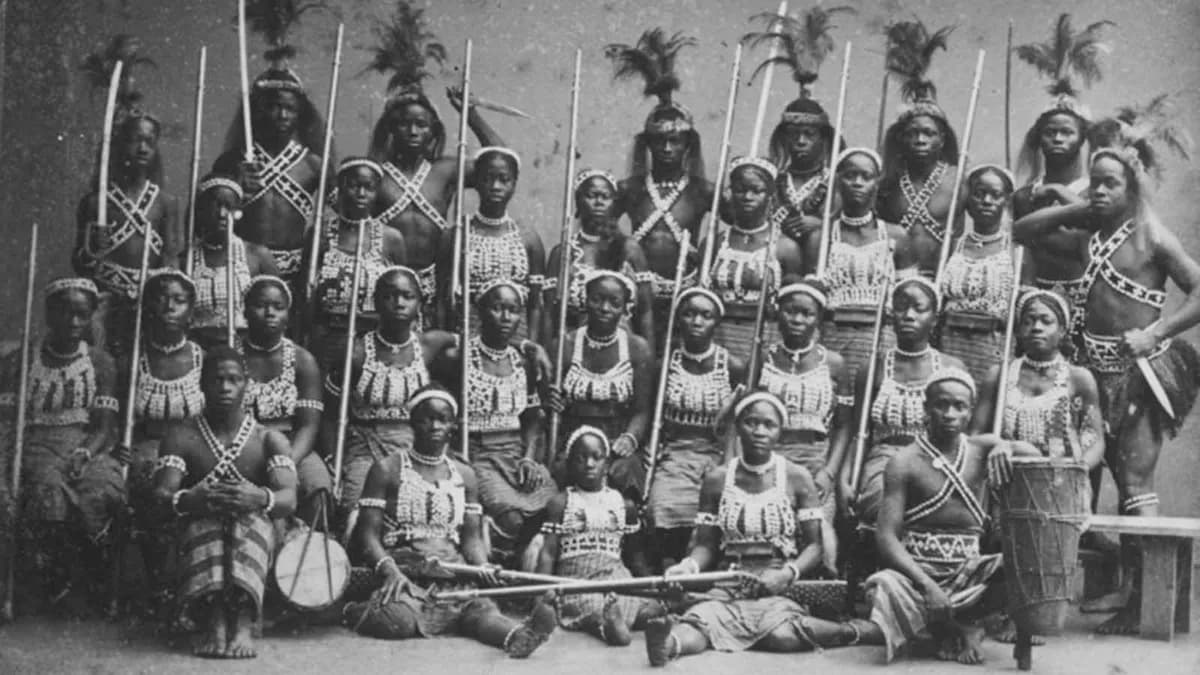
Encountering the Agojie in 1892, the French Foreign Legion met a formidable force. These women were not just warriors; they were a documented army that defied norms and shaped history.

Amulets of the Amazons
The amulets of the Amazons of Ouidah transcend their status as museum artifacts. They testify to a struggle for restitution and an identity renaissance.
Places of Memory and Vodun
Far from being mere attractions, the memory sites in Ouidah are witnesses to a poignant history, where vodun and memory intertwine.
Reading paths
The Slave Route
From the Atlantic slave trade to contemporary memory
Vodoun & Diaspora
How an African religion crossed the Atlantic
- Step 1· 12 minLe Temple des Pythons
Les origines du vodoun à Ouidah