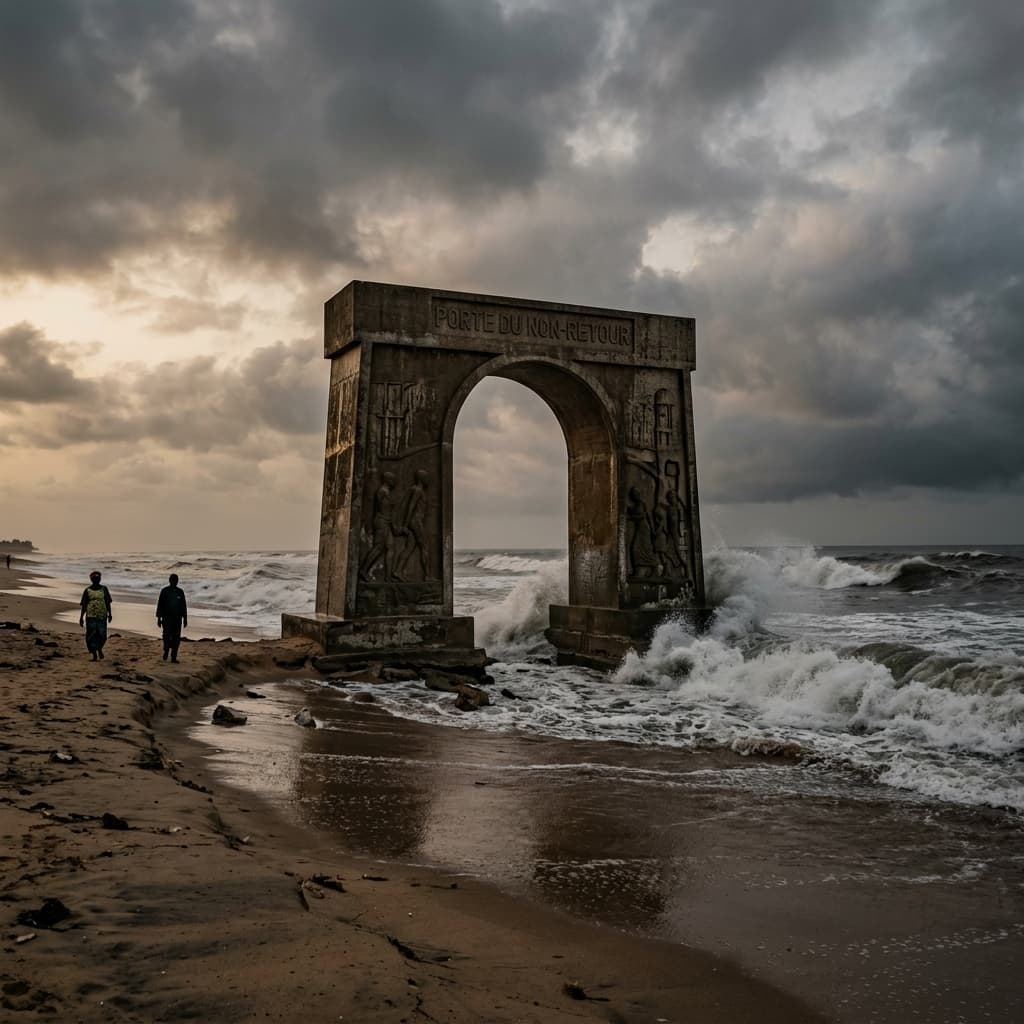
The Slave Route ends at the sea. Four kilometres of walking from Ouidah's historic centre — four kilometres that millions of captives once covered in the opposite direction, in chains, toward the slave ships. At the end: the beach. The Atlantic. And Avlekete.
This is no ordinary beach.
The Domain of Mami Wata
Avlekete is the vernacular name for Ouidah's coastline, and also the name of a Vodun deity — one of the manifestations of Mami Wata, the great goddess of the waters. In the Vodun pantheon, Mami Wata reigns over fresh and salt water, over the boundaries between worlds, over journeys and crossings.
It is no accident that the Slave Route ends precisely here. In Vodun cosmology, the sea is a border between the world of the living and the world of the ancestors. The captives who crossed the Atlantic did not disappear — they crossed that boundary. Avlekete is the crossing point.
A Living Temple
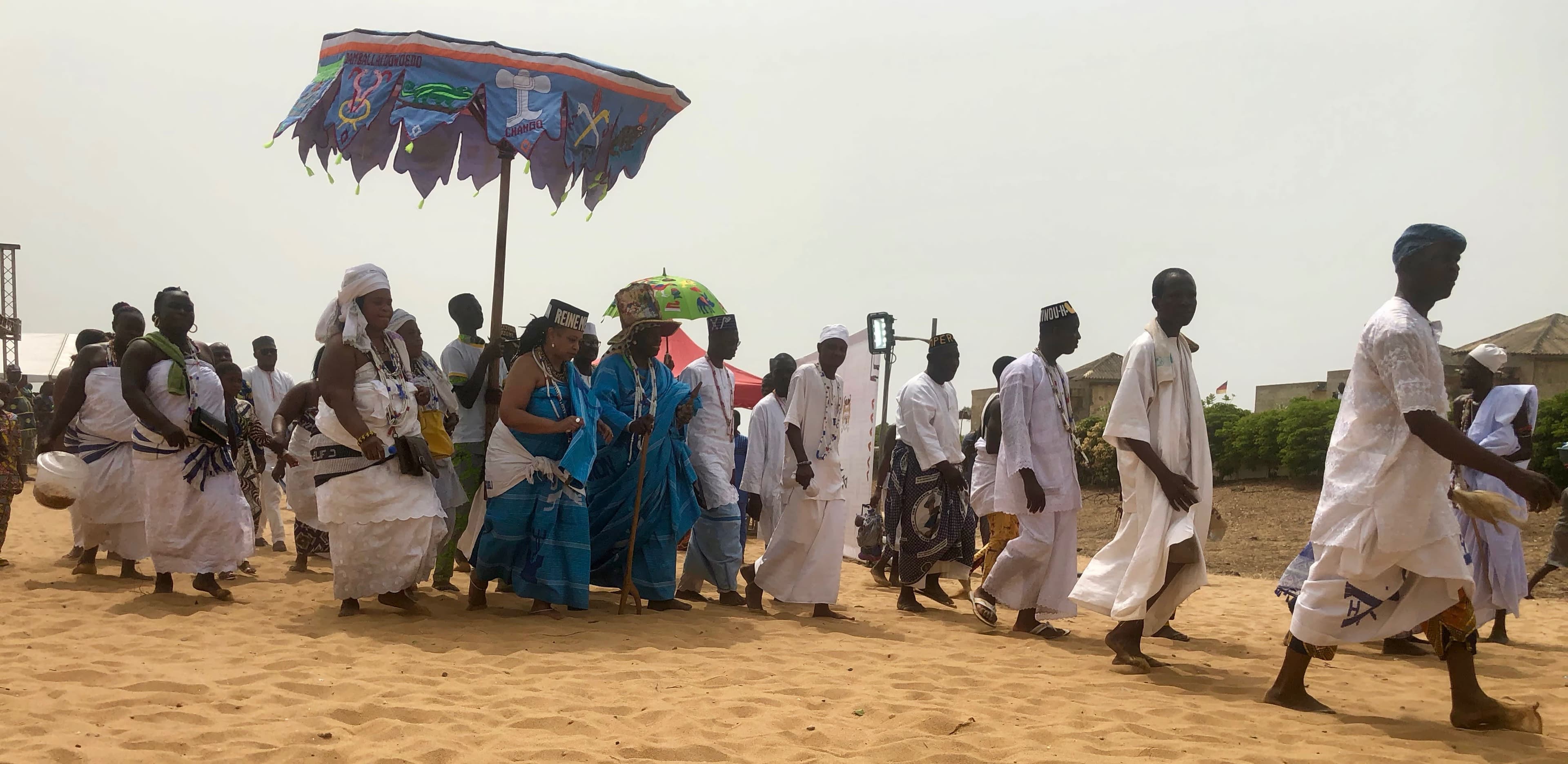
On the beach stands the Mami-Plage Temple — an active place of worship where devotees and initiates regularly come to perform rituals of offerings to the sea. Shells, flowers, perfumes, colourful fabrics: the offerings vary according to requests and occasions. Some come seeking healing, protection or fertility. Others come simply to give thanks.
The temple is a permanent space, active throughout the year — not only during major ceremonies like the Vodun Days. It is one of the few places in West Africa where Vodun is practised in the open air, facing the ocean, in all its authenticity.
Every January: The Grand Ceremony
The annual high point of Avlekete is the Grand Vodun Ceremony, held each January as part of the Vodun Days. On 9 January 2026, tens of thousands of devotees gathered on the beach for a night-time procession, the reading of Vodun theology, the consultation of the Tofa, and the blessing of the waters.
It is one of the most powerful and rarely documented moments in Benin's spiritual calendar. A ceremony where deep contemplation and collective energy coexist, where the boundaries between past and present dissolve.
The Beach as a Space of Reconciliation
For visitors from the African diaspora — African Americans, Afro-Brazilians, Afro-Caribbeans — the beach of Avlekete carries additional meaning. This is where the ancestors departed. This is where some choose to return to find them.
Since the unveiling of the new Door of No Return in December 2025, the space has gained even greater symbolic power. The Door marks the threshold. The beach is the beyond.
Avlekete is not a tourist destination. It is a place of living spirituality. But for those who make the journey with an open heart, it is one of the most emotionally and symbolically charged places that Ouidah has to offer.
Dive into the history of the Sacred Forest and the Python Temple in our Pillars section.
Experience History
Beyond words, Ouidah is a physical experience. Contact us to organize a private immersion behind the scenes of our chronicles.