Key Takeaways
- Vodun Day became a national holiday in Benin in 1996, growing from 'Ouidah 92' — an international cultural event actually held in February 1993, initiated by President Nicéphore Soglo and sponsored by UNESCO to bridge the history of slavery and Vodun culture.
- Since 2024, the festival has expanded from a single day into Vodun Days — a three-day program running January 8–10, with official ceremonies, open-air concerts, and processions through Ouidah's emblematic sites: Place Maro, the Sacred Forest, the Slave Route, and Avlekete beach.
- The festival draws tens of thousands of visitors annually including diaspora pilgrims from Brazil, Haiti, Cuba, and the United States — many participating through Benin's 'Voyage de Retour' ancestral citizenship program.
- The evening of January 9th features the Zangbeto night patrols — the spiritual police marking that the sacred period has formally begun. The beach ceremonies on January 10th include Mami Wata devotees dressed in white entering the ocean in trance.
- During the festival, the boundary between the two sacred spaces facing each other at the heart of Ouidah — the Python Temple and the Afro-Brazilian Cathedral — dissolves entirely: the same crowd moves between both.
There's a moment, early in the morning of January 10th in Ouidah, before the crowds have fully assembled, when the city is in transition between two states.
The normal world hasn't yet yielded. Motorcycles still move through the sandy streets. Vendors are setting up their stalls. The Basilique de l'Immaculée Conception rings the seven o'clock hour. But something is different - a quality in the air, a purposefulness in how people are moving, a sense of collective intention gathering. By the time the procession forms at the city center and begins its slow march toward the sea, it will be unmistakable: Ouidah has become, for these three days, the spiritual capital of the Vodun world.
The population of the city, normally around 90,000, will swell to several times that. They have come in buses from Cotonou, on motorcycles from Porto-Novo, on flights from Paris and São Paulo and Port-au-Prince and New York. They have come because the gods return to the streets on January 10th - not as symbols, not as memories, but as presences that walk in human bodies, speak in altered voices, and answer questions that ordinary human authority can't address.
This is the Vodun Days festival. And calling it a festival is, at best, a polite and insufficient simplification of what actually happens here.
Vodun days festival Ouidah Benin: what this gathering really is
Most international visitors arrive in Ouidah for the Vodun Days expecting something between a cultural performance and a religious ceremony. What they find is something their categories aren't designed to hold.
The Vodun Days isn't a festival in the sense of a cultural show. It's an annual reaffirmation of a living covenant - between the Vodun deities and the community that houses them, between the living and the dead, between the Beninese coast and the diaspora communities that carry modified versions of the same tradition across the Atlantic.
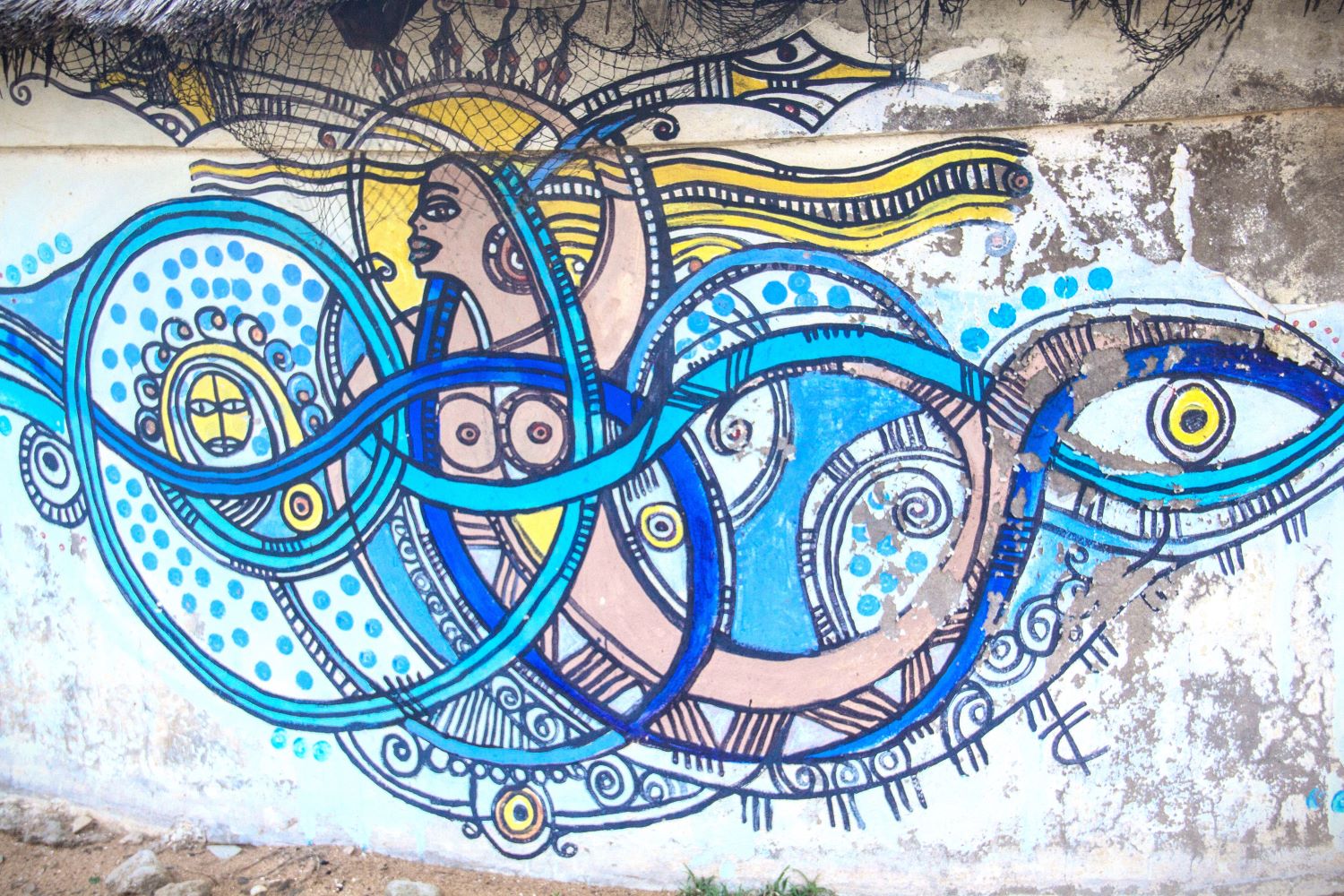
The deities (Vodun) are understood, in this tradition, not as abstract divine forces but as specific presences that enter specific human bodies - their "horses" - during ceremony. When a woman falls into trance on the beach at Avlekete and her voice changes and her body moves in ways that her body doesn't ordinarily move, the people around her don't see a psychiatric episode or a theatrical performance. They see Mami Wata, the goddess of the waters, speaking through her devotee. This is a consultation, not a spectacle. Questions can be asked. Healing can be requested. The answer comes through a human voice that is temporarily not entirely human.
This is what Ouidah's January is for. The rest of the year is preparation for and recovery from these three days.
The deep history
The origin: suppression and reclamation
To understand what the Vodun Days means, you must first understand what it reversed.
In 1972, General Mathieu Kérékou seized power in Benin in a military coup. By 1975, he had officially declared the country Marxist-Leninist, renaming it the People's Republic of Benin. Within this ideological framework, Vodun was classified as superstition - incompatible with scientific materialism and with the project of building a modern African socialist state. Traditional priests lost official status. Initiations were driven underground. Sacred sites fell into disrepair or were repurposed. The Hounon - the high priests whose authority structured Ouidah's spiritual life - practised their traditions in reduced visibility, their ceremonies quieter, their timing more carefully chosen.
This suppression lasted nearly eighteen years. The Marxist-Leninist regime collapsed in 1989 - 1990 under the weight of economic failure and popular pressure. In 1991, democratic elections brought Nicéphore Soglo to the presidency - the first democratically elected president of Benin, and a man born in Ouidah.
Ouidah 92 and the creation of the holiday
Soglo's decision to formalize Vodun as a legitimate national religion wasn't merely symbolic. It was a strategic reclamation of cultural identity after nearly two decades of state-sponsored erasure.
In 1993, an international cultural event called "Ouidah 92" - its name referring to the year it was planned, though it took place in February 1993 - was held in Ouidah under UNESCO sponsorship. It brought together Vodun practitioners, diaspora delegations from Brazil, Haiti, Cuba, and the United States, and international scholars and artists. Its explicit purpose was to bridge the suppressed history of slavery and the Vodun culture that had survived it - on both sides of the Atlantic.
Out of this event grew the national holiday. January 10th was declared a national public holiday in 1996, formally recognizing Vodun as a pillar of Beninese national identity and establishing Ouidah as the permanent epicenter of its annual celebration.
The choice of Ouidah wasn't arbitrary. It was the city where the slave trade had concentrated its worst operations. It was the city where the Slave Route ended at the sea. It was the city where the Python Temple had stood for three centuries. Making Ouidah the spiritual capital of the national Vodun holiday was an act of historical restitution as much as cultural policy.
The expansion to three days (2024)
In 2024, the format evolved. What had been a single-day holiday became Vodun Days - an officially designated three-day program running January 8, 9, and 10, with a structured programme of ceremonies, processions, open-air concerts, and international cultural events. The expansion reflected both the festival's growing global significance and the Beninese government's investment in spiritual and diaspora tourism as a national economic priority.
The three-day arc
January 8–9: the approach
The two days before the main ceremony aren't preamble - they are part of the ritual. Initiates and community members make preparations that aren't visible to visitors but are understood locally as the essential groundwork for what is to come: the opening of sacred spaces, the feeding of altars, the summoning of ancestral presences.
On the evening of January 9th, the Zangbeto appear. These towering raffia entities - the traditional night guardians of the Gun people - patrol Ouidah's streets in the dark, signaling that the sacred period has formally begun. The ordinary rules of the city are suspended. Something different is now in charge of the night.
Seeing a Zangbeto spin through a dark alleyway on the eve of January 10th, with the drums echoing off the walls and the crowd parting around it in practiced reflex - this is one of the experiences that visitors who have attended the festival remember longest. It isn't what they came to photograph. It is something that arrives before they're ready.
January 10th: the day the gods walk
Before dawn, private prayers take place in household shrines across the city. Then the public gathering begins.
At the Python Temple, the High Priest - the Hounon-Guèdèhounguè - performs the first public libations of the festival, formally opening the ritual season and inviting the deities to manifest. The python temple grounds fill with white-clad devotees. The pythons themselves are brought into the courtyard. The festival has begun.
The main procession then forms and moves from the city center down the Slave Route toward the sea - three and a half kilometres of red-earth road lined with tens of thousands of people, moving in the same direction as the million captives who made this walk in chains in the opposite direction of meaning. The procession reaches Avlekete beach, where a stage is set near the Door of No Return.
But the true ceremony isn't on the stage.
Circles of drummers form spontaneously in the sand. Around 40 Mami Wata devotees - dressed in white cloth, adorned with pearl strings - form a semi-circle facing the ocean. Some enter the water in states of possession trance, Mami Wata speaking through their bodies in the presence of the same Atlantic that carried enslaved people away. For the diaspora visitors standing on the shore, watching this - the encounter between a spiritual tradition that crossed the ocean and the ocean it crossed - is often described as the most powerful moment of their time in Ouidah.
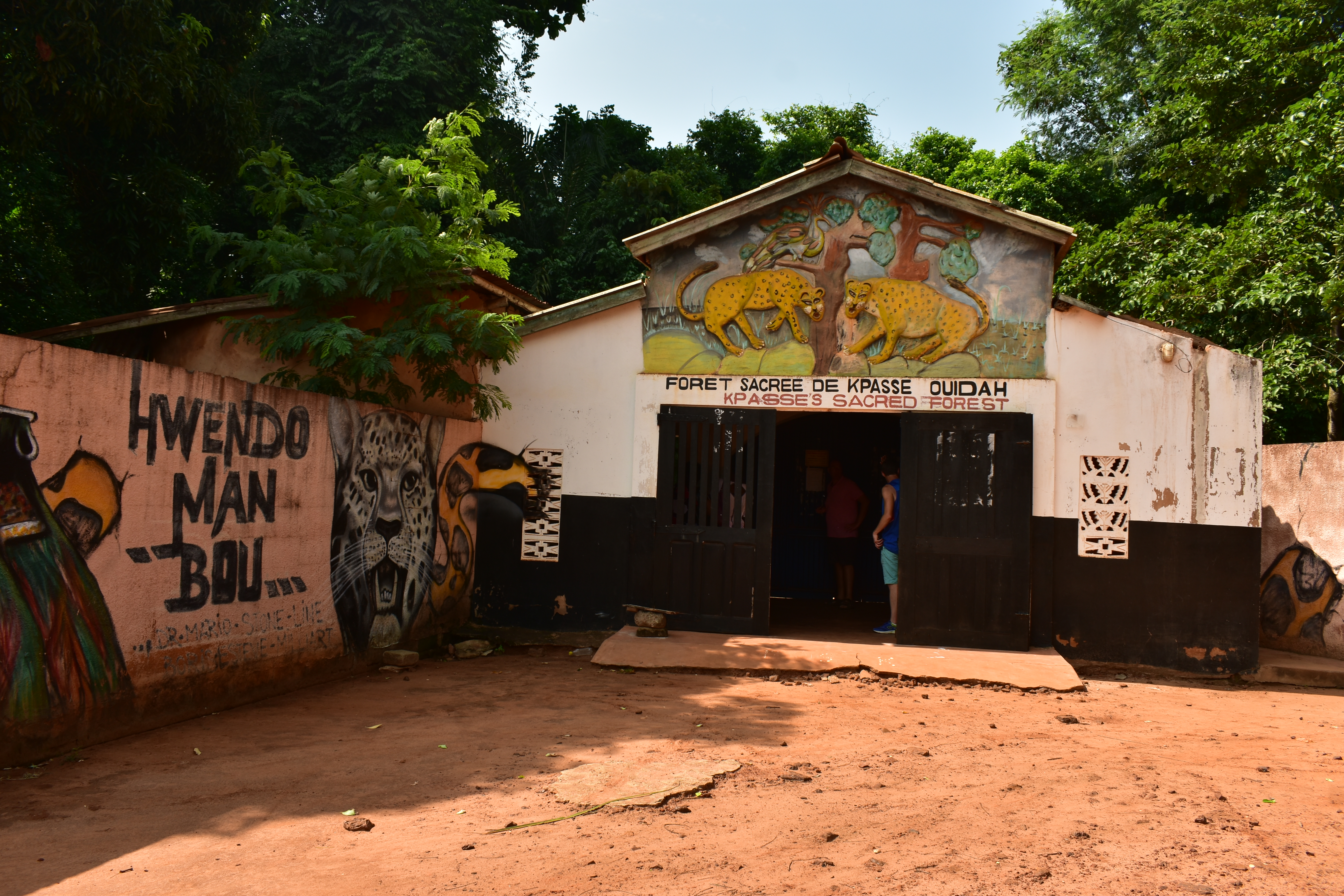
At Place Maro, Egungun ancestor masquerades appear - the embodied dead returning in layered textile costumes to bless and judge the living. On the Esplanade du Fort Français, more Zangbeto appear in daylight - a rarer sighting. At the Sacred Forest of Kpassè, consecration ceremonies reaffirm the covenant between the city and its founding king.
Throughout the day and well into the night, possession trance spreads through the crowd. In Vodun, the gods are said to "mount" their devotees - who become, for the duration, the god's vehicle in the human world. The physical signs are unmistakable to the community: a sudden shift in posture, a change in the timbre of the voice, a quality of movement that the person's own body doesn't produce in daily life. People who have known each other for years approach a possessed devotee differently - addressing the deity, asking for what they need, receiving the deity's response through the human vessel.
This isn't spectacle for visitors. It's a community consulting its gods.
The closing day
By January 11th - 12th, the intensity begins to settle. The final rituals are about closing the gates - thanking the deities, encouraging them to return to their sanctuaries, and reestablishing the boundary between ordinary and sacred time. The ceremony is one of completion, not sorrow. What was opened has been used. What was summoned has spoken. The city will carry what it heard for another year.
The diaspora dimension
The Vodun Days festival has become, since its formalization in the 1990s, one of the most significant diaspora reunion events in the world.
For people of African descent arriving from Brazil, Haiti, Cuba, and the United States, January 10th in Ouidah isn't primarily a tourism experience. It's a spiritual homecoming. The Candomblé houses of Bahia trace their theological lineages to the same Fon-Yoruba coast that the Vodun Days celebrates. The lwa of Haitian Vodou - Legba, Ogou, Erzulie, Danbala - are the same forces as the Vodun deities present at the ceremonies, differently named after five centuries of Atlantic transformation.
Some diaspora visitors who arrive in Ouidah for the festival have never practiced any African traditional religion. They come through genealogical curiosity, through academic research, through family stories. They stand on Avlekete beach on January 10th and feel something they can't easily name - a recognition that precedes knowledge, a sense that whatever this is, some part of them has been waiting to encounter it.
Benin's "Voyage de Retour" program has formalized this spiritual return into a civic one: diaspora members who demonstrate genealogical or DNA connections to Benin can obtain ancestral citizenship. The Vodun Days festival has become the symbolic inauguration ceremony for this process - the moment at which the administrative act of "returning" acquires spiritual meaning. Arriving in Ouidah on January 10th, on the day the city's covenant with its gods is publicly renewed, is understood by many participants as arriving on the day that best explains why any of this exists - the festival, the slavery memorial sites, the diaspora programs, the whole architecture of return. The guns and the chains and the ships are documented in history. January 10th in Ouidah is where their meaning is processed in real time, in a living community, in bodies that move and voices that change when something older than the Atlantic enters them.
The Beninese government has formalized this dimension through the "Voyage de Retour" program, which offers ancestral citizenship to diaspora members who can demonstrate genealogical or DNA-based connections to Benin. The Vodun Days serve as the spiritual and symbolic inauguration of this return: arriving in Ouidah on January 10th, for a diaspora member completing the program, is an act that inverts the historical direction of departure.
The spiritual geography
Understanding the Vodun Days requires understanding that it doesn't happen in a single place - it happens across an entire city simultaneously, moving between sacred sites that each carry a specific function in the festival's theological structure.
The Python Temple opens the festival - the oldest surviving Vodun sanctuary in Ouidah, where the first libations of the day take place and where the serpent deity Dan is present to receive the morning's intentions.
The Sacred Forest of Kpassè is where the ancestors dwell - four hectares of living Vodun theology at the city's heart, where the spirit of the founding king Kpassè is reawakened each January in a ceremony that hasn't been interrupted since the 18th century.
The Slave Route is the processional axis - the path that connects the city's interior to the sea, now walked in the opposite direction from its historic use, inverting the departure of enslaved people into a communal act of restitution.
Avlekete beach and the Door of No Return are where the ceremony meets the ocean - where Mami Wata's devotees enter the same water that took their ancestors away, and where the festival's connection to the diaspora becomes physically, geographically undeniable.
The Afro-Brazilian Cathedral stands throughout as silent witness - its doors open, its congregation moving in and out, the boundary between Catholic and Vodun practice dissolving in the January heat as it dissolves every year in this city.
Ethics and visitor protocol
The Vodun Days isn't ticketed, not staged, and not designed for tourists. It's a living religious ceremony that receives visitors who choose to attend with respect. The distinction matters.
Photography: General shots of the procession and beach gatherings are generally permitted. Photographing someone in deep possession trance isn't - it is believed that a camera flash can disrupt the spirit's presence in a way that may harm the devotee. Ask a local guide before pointing a camera at any ceremony.
Dress: Wear white if possible. White signals peaceful intent and respect for the ancestors. The crowd will register it and treat you accordingly.
Animal sacrifice: Animal offerings are part of Vodun ceremony. In the Western ethical framework, this is often misrepresented as cruelty. In Ouidah, it's a consecrated offering of life for life, followed by communal sharing of meat - an act of reciprocity with the divine, not a spectacle. Visitors who find this difficult to witness can choose which ceremonies to attend; guides can advise.
Possession trance: Don't touch, photograph, or attempt to communicate with someone in trance without guidance. The person you see is, in this context, a vehicle for a force that isn't their ordinary self. Approach through their guide or through a priest who is supervising.
How to prepare
Logistics
- Book accommodation six months in advance. Ouidah sells out completely for the festival. Cotonou (30km away) is the overflow option, but commuting during the festival adds complexity.
- The official program is published in advance at vodundays.bj - consult it for the specific ceremony locations and times each year.
- Guided access is essential. The ceremony schedule isn't fixed - it responds to spiritual conditions, not Swiss watches. An event announced for 10am may begin at 2pm when the energy is right. A guide who understands the community's timing isn't a luxury.
On the ground
- Arrive on January 9th, not January 10th. The Zangbeto patrol on the evening of the 9th is one of the festival's most extraordinary experiences and is often overlooked by visitors who fly in on the 10th.
- The beach ceremony is the emotional peak - but get there early. By 10am on January 10th, the procession from the city is already underway; by noon, Avlekete beach is full.
- Leave time for the Sacred Forest. The forest ceremonies on the 10th are less photographed and less crowded than the beach, but they are where the festival's theological depth is most accessible.
- Watch the Python Temple on the morning of January 10th, before the procession leaves. The first libations of the festival take place there, and the quality of attention in the courtyard - early, quiet, before the crowds arrive - is unlike anything else the day offers. The pythons themselves seem to respond to the ceremonial energy; the courtyard is more active, the priests more focused. It's the festival's beginning, and it has a different weight than what comes after.
What few people know
The Vodun Days festival was born from a political act - Soglo's reversal of Kérékou's suppression - but it became something that no political act could have designed. The gathering of diaspora practitioners from Brazil, Haiti, and Cuba alongside Ouidah's own Vodun community has produced, over thirty years of the holiday, a live re-convergence of traditions that had been separated for centuries.
Candomblé priests from Bahia have, at Vodun Days ceremonies, recognized specific ritual protocols - the sequence of invocations, the arrangement of offerings, the timing of drum patterns - that their own tradition had preserved without knowing where they came from. Haitian practitioners have encountered Ouidah deities whose diaspora names they knew without knowing they were meeting the source. These convergences don't happen everywhere. They happen in Ouidah in January, because this is where the thread leads back to.
Concierge access
The Vodun Days is one of the most logistically complex events to attend meaningfully. The difference between a visitor who walks through the crowds and takes photographs and a visitor who actually understands what they're witnessing is almost entirely a function of preparation and accompaniment.
OuidahOrigins organizes Vodun Days access that goes beyond the public ceremony programme: introductions to specific Hounon houses, access to pre-festival preparations that aren't open to the general public, diaspora-specific programming for visitors who want to make the genealogical and spiritual connections explicit, and guided walks that link each ceremony site to its theological and historical meaning.
January fills up fast. Plan ahead.
Practical details
- Dates: January 8 - 10 (Vodun Days format since 2024); the official national holiday falls on January 10th each year
- Main ceremony sites: Place Maro · Sacred Forest of Kpassè · Slave Route · Avlekete beach · Door of No Return · Python Temple
- Accommodation: Book by June for January travel - Ouidah accommodations sell out completely
- Official programme: vodundays.bj
Further reading
- Wikipedia: Fête du Vodoun - Historical documentation of the national holiday.
- Wikipedia: Nicéphore Soglo - The president who established the holiday, born in Ouidah.
- Wikipedia: People's Republic of Benin - The Kérékou era during which Vodun was suppressed.
- Wikipedia: West African Vodún - The broader spiritual tradition behind the festival.
- Vodun Days official site - Programme, registration, and logistics for each year.
- Related articles: The Sacred Forest · The Python Temple · The Slave Route · The Door of No Return · The Zangbeto · The Egungun