The Ouidah Market
Commerce, Memory, and the Sacred in One Square
The Grand Marché de Ouidah occupies part of the historic Place Chacha — once a slave auction block, now the city's living economic heart. The overlap of commerce and memory is absolute.
Index
Key Takeaways
- The Grand Marché de Ouidah occupies part of the historic Place Chacha — the same square that once served as a slave auction block for the de Souza network — making every commercial transaction a layered act on contested ground.
- The market has a dedicated Vodun ritual section, one of the most comprehensive in West Africa: fresh and dried herbs, cowrie shells, iron tools for Gu, animal skulls, and powders prescribed by Fa oracle consultations that morning.
- The market's largest trading days are Wednesday and Saturday; early morning is when herbalists, ritual specialists, and produce sellers are all simultaneously active.
- Textiles at the market are heavily influenced by Aguda and Brazilian patterns — the printed wax fabrics and kita strips carry design lineages traceable to the returnee community.
- The physical journey from the market to the Door of No Return begins here: 3.5 km south along the Route des Esclaves (Slave Route), making the market the involuntary starting point of the most significant memorial walk in Benin.
The City That Lives
Ouidah is not an open-air museum. It is a city. And like all living cities, it has a market — a place where the city's true pulse is felt, far from monuments and tourist circuits.
But the Grand Marché de Ouidah is not just any market. It occupies part of the Place Chacha — the historic central square named after Francisco Félix de Souza, known as "Cha-cha," the title bestowed on him by the King of Dahomey. This was the administrative heart of the most efficient slave-trading network on the Atlantic coast. The square where hundreds of thousands of human beings were processed, priced, and loaded toward the Door of No Return.
Today it is also where women sell fresh grilled fish. Where herbalists debate the properties of dried roots. Where a teenager buys phone credit next to a Vodun initiate purchasing cowries prescribed by the Fa oracle that morning. The overlap of commerce and memory here is not symbolic — it is structural.
A Crossroads of Everything
What strikes you about the Ouidah market is the compression of worlds — the density of different economies and spiritual registers operating simultaneously within a few hundred meters.
- Weavers working kita, the traditional Aguda striped fabric whose patterns carry design lineages from the returnee community of the 1830s
- Wax vendors — the printed fabrics iconic to West Africa, many featuring Brazilian-influenced geometric patterns adapted over generations
- Spice sellers: Guinea pepper, grains of selim, kola nuts, dried chillies — the same spices that traveled across the Atlantic twice
- Medicinal and Vodun plant stalls: roots, bark, powders, dried animals for rituals — some sellers have been in the same spot for three generations, inherited knowledge passed orally
- Artisans in bronze, wood, and beads perpetuating techniques from the Kingdom of Dahomey, some selling to tourists, others selling to local families equipping shrines
- The Mamas: the women who offer cooked dishes — akassa, gbègbè, rice and sauce, grilled fish, acloui (acarajé fritters) — who are the economic backbone of daily Ouidah life
The Plants That Bridge the Living and the Gods
One of the most singular aspects of the Ouidah market is the presence of vendors specializing in Vodun ritual ingredients. This section of the market — one of the most comprehensive in all of West Africa — is not exotic theater for visitors. It is a functional pharmacy for a living spiritual system.
An initiate can receive a consultation from the Fa oracle in the morning — a reading of the destiny signs that prescribes specific ritual actions and their material components — and come to the market within the hour to purchase everything needed: a specific combination of leaves, a cowrie configuration, iron tools for Gu, a particular powder, animal remains. The herbalists and ritual vendors here know the pharmacopeia of Vodun intimately. Some diagnose ailments, spiritual and physical, from behind their stalls.
This porousness between the everyday and the sacred is one of Ouidah's most profound cultural characteristics, and the market is its most concentrated expression.
The Place Chacha: Memory Beneath Commerce
To understand the market fully, you must understand what the ground remembers.
Place Chacha was the nerve center of Francisco Félix de Souza's operation — the Brazilian-born slave trader who, from the 1810s to the 1840s, handled the export of more enslaved people from the Bight of Benin than any other single merchant in history. The square bears his nickname: Cha-cha, the title the King of Dahomey gave him as recognition of his commercial supremacy.
Transactions happened here. The classification, examination, and branding of human beings who had been walked from the interior in coffles. This was not a distant event in the city's history — it happened on the same stones where today's vendors spread their cloth.
The market's proximity to the beginning of the Route des Esclaves is not incidental. The Door of No Return is 3.5 km to the south. The slave route ran directly past what is now the commercial heart of the city. Walking from the market toward the beach today, you are walking the same direction they were forced to walk.
Textiles: The Aguda Thread
The fabrics sold in the Ouidah market carry a visual history that most buyers take for granted but that rewards attention. The kita fabric — striped, colorful, traditionally woven — was introduced to Ouidah by the Aguda returnees in the 19th century, adapted from Brazilian weaving traditions. The colors and stripe patterns of different families' kita are still recognized by older residents of Zomachi.
The printed wax fabrics, while globally associated with West Africa, contain design lineages that were shaped by the Atlantic exchange: Dutch and British manufacturers produced these textiles for West African markets, but the patterns themselves were influenced by the tastes of Afro-Brazilian returnees who introduced new visual vocabularies to the region.
To buy fabric in this market is to make a purchase with historical depth.
Money Changers, Herbalists, the Full Ecology
Beyond its most visible layers, the Ouidah market contains the complete ecology of a functioning city:
- Money changers who manage the currency flows between the CFA franc, the naira, and the occasional dollar — remnants of a coast that has always been a cross-currency zone
- Fabric sellers who can read a customer's family affiliation, occasion, and budget in three questions
- Herbalists who are simultaneously botanists, spiritual advisors, and community memory holders — the knowledge they hold is not written anywhere
- Tool merchants selling the iron implements used both in daily construction and in Vodun ceremonies for Gu, the god of iron
The Modern Tension: Open Air vs. Covered Market
The market's current form — organic, sprawling, following the contours of old paths — is under pressure. A government proposal for a new covered market structure would rationalize the space, create uniform stalls, and add drainage and electricity. On paper, it is an upgrade.
In practice, it would destroy the spatial logic that makes the market what it is: the organic accumulation of generations of vendor placement, the adjacencies between ritual and commercial, the accidental architecture of a city's economic memory. The Vodun ritual section, which requires proximity to other vendors for cultural and practical reasons, would be difficult to reconstitute in a rationalized grid.
The debate is ongoing. Ouidah Origins documents this tension because it is not unique to Ouidah — it is the central urban question facing every historic African city trying to modernize without erasing.
For the Visitor
The Ouidah market is often absent from tourist itineraries — which makes it one of the most authentic places to visit. To go there early in the morning is to see Ouidah in its most ordinary and most alive truth.
- Go early: Wednesday and Saturday mornings are the fullest. Arrive before 8am to see the market at its most active.
- Walk the whole market: Do not stop at the first fabric stall. The Vodun section is deeper in, past the produce stalls.
- Ask permission before photographing: The ritual stalls in particular are not displays for visitors. Ask first, always.
- Taste the acloui: The bean fritters sold by the market Mamas are the same dish — same recipe, same oil, same technique — as the acarajé of Salvador da Bahia. Eat one and think about what that means.
Walk south from the market for 3.5 km along the Route des Esclaves to reach the Door of No Return. Explore the Zomachi Quarter to understand the Aguda fabric traditions visible in the market stalls.
Frequently Asked Questions
Lire aussi
Tracing Your Roots in Ouidah: A Diaspora Guide to Ancestral Memory and Return
For many in the diaspora, Ouidah is where the story begins. Genealogical research, emotional return, and ancestral ceremonies are becoming bridges to healing and identity for Afro-descendants visiting Benin.
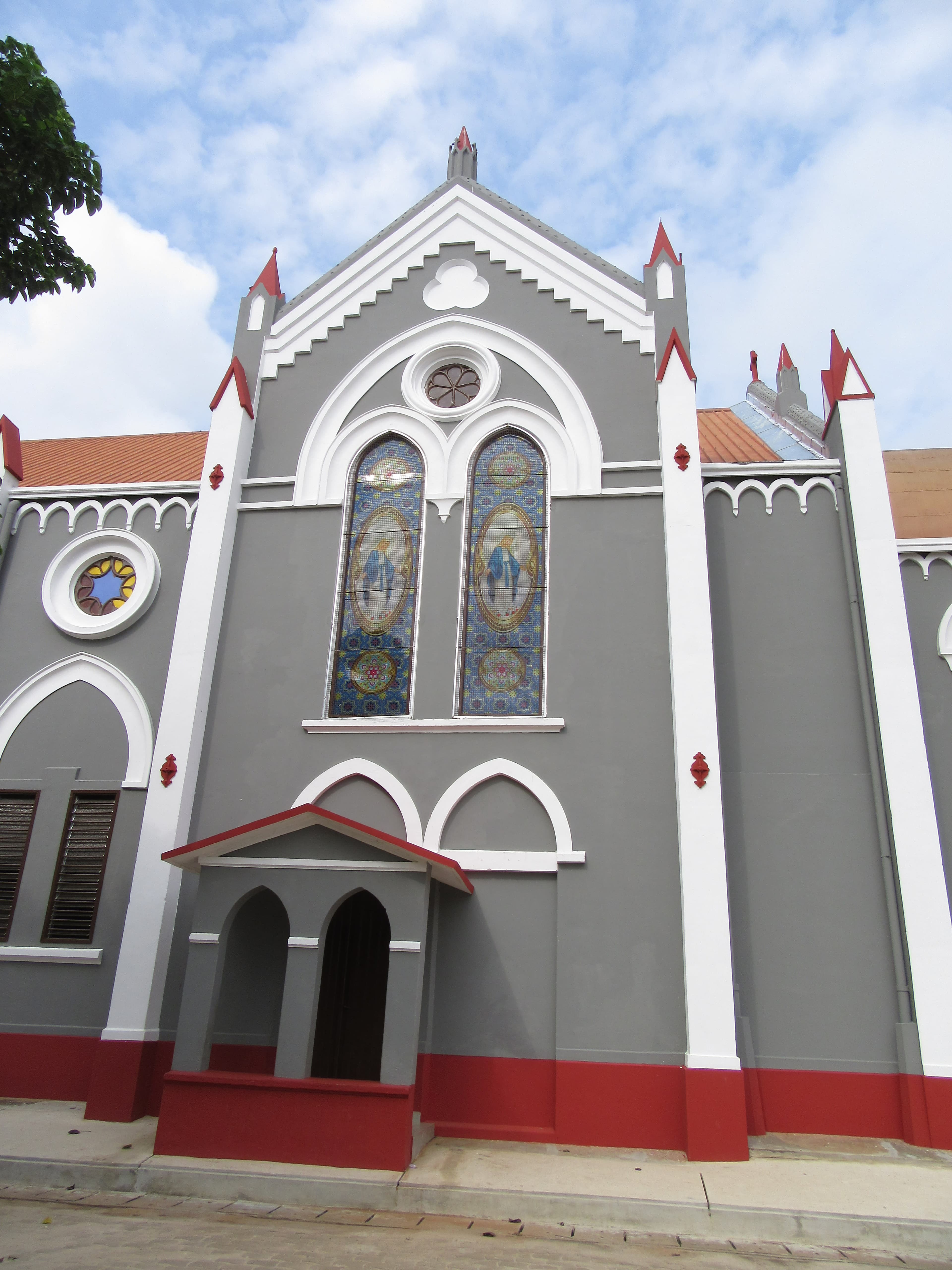
The Afro-Brazilian Cathedral
Built by freed Africans returned from Brazil, the Basilique de l'Immaculée Conception is Ouidah's most defiant monument — Catholic in stone, Vodun in its bones.
How to Research Ancestors in Benin | Genealogy Guide for the African Diaspora
A complete guide to tracing your African ancestry to Benin and Ouidah — DNA tests, local archives, Aguda family records, and what to realistically expect from a roots research visit.
Reading paths
The Slave Route
From the Atlantic slave trade to contemporary memory
Vodoun & Diaspora
How an African religion crossed the Atlantic
- Step 1· 12 minLe Temple des Pythons
Les origines du vodoun à Ouidah