Mami Wata | Goddess of the Waters: Atlantic Rituals and Mysteries
The Sacred Beach — Where the Slave Route Meets the Divine Sea
At the end of the Slave Route, Avlekete beach is the domain of Mami Wata — where slave trade memory, Vodun spirituality, and Atlantic ritual converge on the same shore.
Index
Key Takeaways
- Avlekete beach is the terminus of the 4km Slave Route — the same shore from which over one million enslaved Africans were loaded onto ships, making it one of the most spiritually and historically charged sites on earth.
- Mami Wata's name derives from African-English Pidgin ('Mami Water') but the deity herself is pre-colonial, rooted in West African cosmology centuries before European ships appeared on the horizon.
- Her iconography is unmistakable: half-human, half-serpent or fish, holding snakes, combing long hair before a mirror — that mirror is the portal between the world of the living and the realm beneath the waters.
- Mami Wata is venerated across West and Central Africa (Nigeria, Benin, Togo, Ghana, Cameroon, Congo) and throughout the diaspora: Lasirèn in Haiti, Yemayá in Cuban Santería, Iemanjá in Brazilian Candomblé, La Diablesse in Trinidad.
- Offerings at the water's edge include perfume, mirrors, combs, white cloth, cowrie shells, and gin — gifts honouring her love of beauty and her dangerous power over human desire.
Where the Land Ends
The Slave Route has an end. After four kilometres from Ouidah's historic centre — past the Tree of Forgetfulness, the Tree of Return, the Zomai enclosure, the Gate of No Return — there is the beach. The Atlantic. The smell of salt and sacrifice. And the domain of Mami Wata.
The beach of Avlekete is not a resort. It is one of the most spiritually charged places in West Africa — a site where the memory of the greatest forced migration in human history intersects with the living veneration of a deity whose cult spans three continents and five centuries.
Mami Wata: The Goddess of Both Shores
Mami Wata is one of the most widespread Vodun deities in West Africa and the diaspora. Her name is African-English Pidgin — Mami Water — but the deity herself is ancient, rooted in the cosmologies of the Fon, Ewe, Yoruba, and coastal peoples long before any European ship appeared on the horizon.
She is unmistakable in her iconography: half-human, half-serpent or fish, holding snakes in her hands, combing long straight hair before a hand mirror. That mirror is not vanity — it is the portal between worlds. To look into it is to look through the surface of the water into the realm of the dead.
She reigns over waters both fresh and salt, over the boundaries between worlds, over beauty, wealth, fertility, and the dangerous unpredictability of desire. She is not a goddess of peace. She is a goddess of desire, wealth, and the terrifying depths. Devotees say: she gives everything, and she takes it back without warning.
In Ouidah's local pantheon, one of her primary manifestations is Mami-Dan — the water deity whose presence on Avlekete beach predates any recorded history of the city. The Mami-Plage Temple on the sand is an active place of worship, not a museum.
The Offering at the Water's Edge
At Avlekete, offerings are brought to the edge of the surf at dusk. Perfume — French brands are favoured, their foreign excess pleasing to a deity who loves what is rare and beautiful. Hand mirrors. Combs. White cloth laid flat on the sand. Cowrie shells that once served as currency along the entire Atlantic coast. Gin poured into the sand, into the foam.
The vodunsi — the initiated priestesses of Mami Wata — undergo their rites at this water. During possession ceremonies, they are said to be taken under: drawn beneath the surface of consciousness into Mami Wata's realm. They may remain in this altered state for hours, sometimes days. When they return, they may carry gifts — clairvoyance, healing ability — or they may carry new afflictions, new demands from the deity. The relationship with Mami Wata is never without consequence.
The Beach as a Cosmological Boundary
In Vodun cosmology, the sea is the boundary between the world of the living and the world of the dead. Avlekete is exactly that crossing point.
It is no accident that the Slave Route ends here. The captives who crossed this beach did not simply cross the Atlantic — they crossed the cosmological boundary. In Vodun memory, they did not die and disappear: they passed to the other side of the water. And Mami Wata, mistress of waters and boundaries, is the guardian of that passage. She was here when they left. She was present on the other shore when they arrived, wearing different names.
This is the weight that Avlekete carries. The same sand that soaked the tears of the enslaved is the sand where offerings are placed for the goddess. The same waves that carried millions away still carry the prayers of their descendants back. To stand here is to stand at the intersection of two histories that almost never speak to each other — the history of atrocity and the history of the sacred — and to find that here, inseparably, they are one.
A Cult That Crossed the Atlantic
As with the Fa and the Egungun, the cult of Mami Wata travelled with the deported across the Middle Passage. The Atlantic did not erase her — it multiplied her.
In Brazil, she is Iemanjá — the sea goddess venerated on 2 February in Salvador de Bahia, when devotees wade into the ocean carrying flowers and gifts on small boats. In Cuba, she is Yemayá in Santería, clothed in blue and white, mother of all living waters. In Haiti, she is Lasirèn, the mermaid spirit of Vodou, whose possession is the deepest in the tradition. In Trinidad, her echo lives in La Diablesse, the beautiful woman of the crossroads.
These are not metaphors or parallels. They are the same deity, carried in human bodies across one of the most violent displacements in history. Avlekete is the point of origin of all of this.
The Spiritual Geography
For members of the diaspora who make the pilgrimage to Ouidah — and thousands do, each year, many during the Vodoun Days — standing at Avlekete is the beginning and the end of the same journey. They come to find where their ancestors stood last before crossing. They find not absence, not silence, but an active, inhabited sacred space. Mami Wata was watching when they left. She is watching still.
Understand the full geography of loss and meaning: The Door of No Return · The Slave Route · The Vodoun Days
Further Reading
- Mami Wata — Wikipedia — Origins, iconography, and diaspora manifestations.
- Iemanjá — Wikipedia — The Brazilian manifestation of Mami Wata in Candomblé.
- West African Vodún — Wikipedia — Theological and cultural context for Vodun practice.
Frequently Asked Questions
Lire aussi
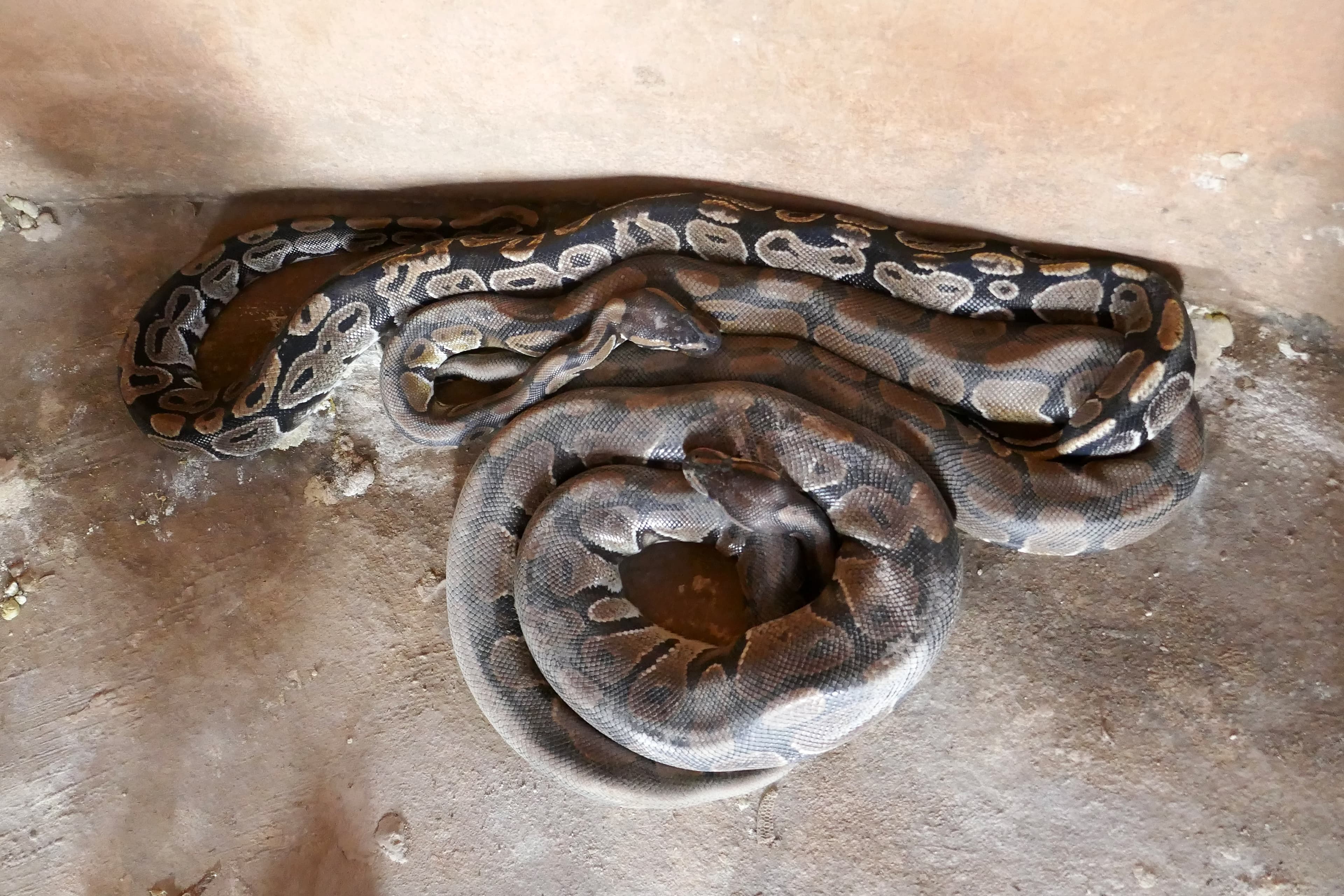
The Python Temple
In Ouidah, the serpent does not crawl in the dust—it guides the spirit. Built in 1717, the Python Temple is a living Vodun sanctuary, not a zoo.
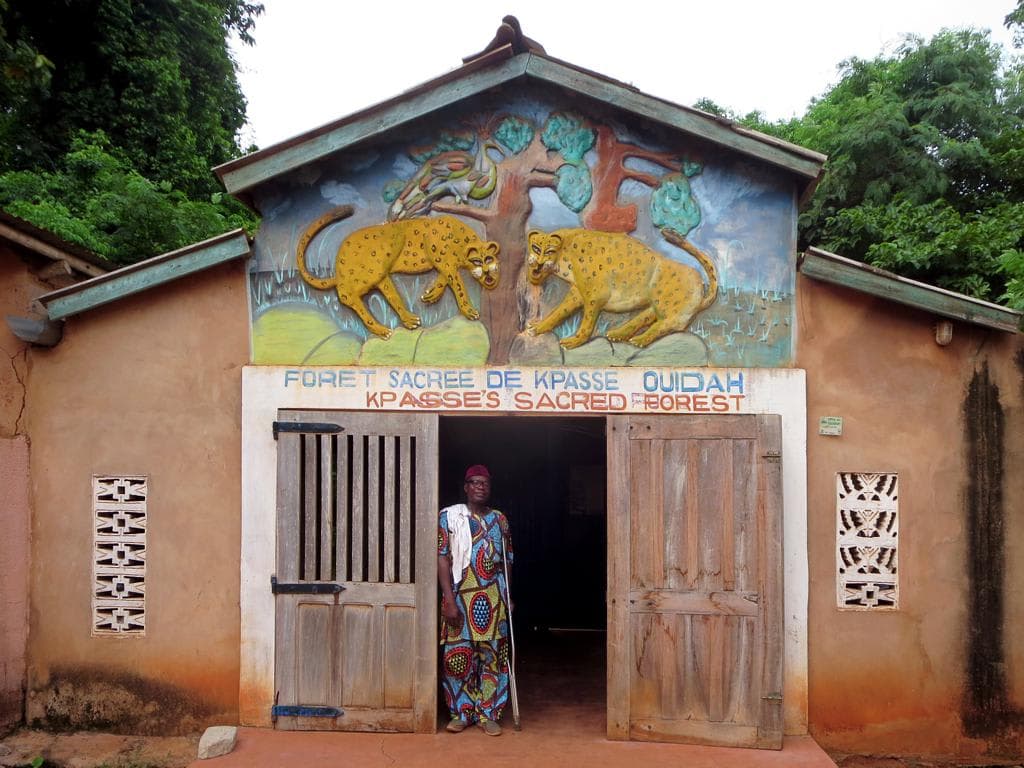
The Sacred Forest of Kpassè
In the heart of Ouidah, a forest breathes with spirits. This is not a museum. This is a living temple, older than memory.
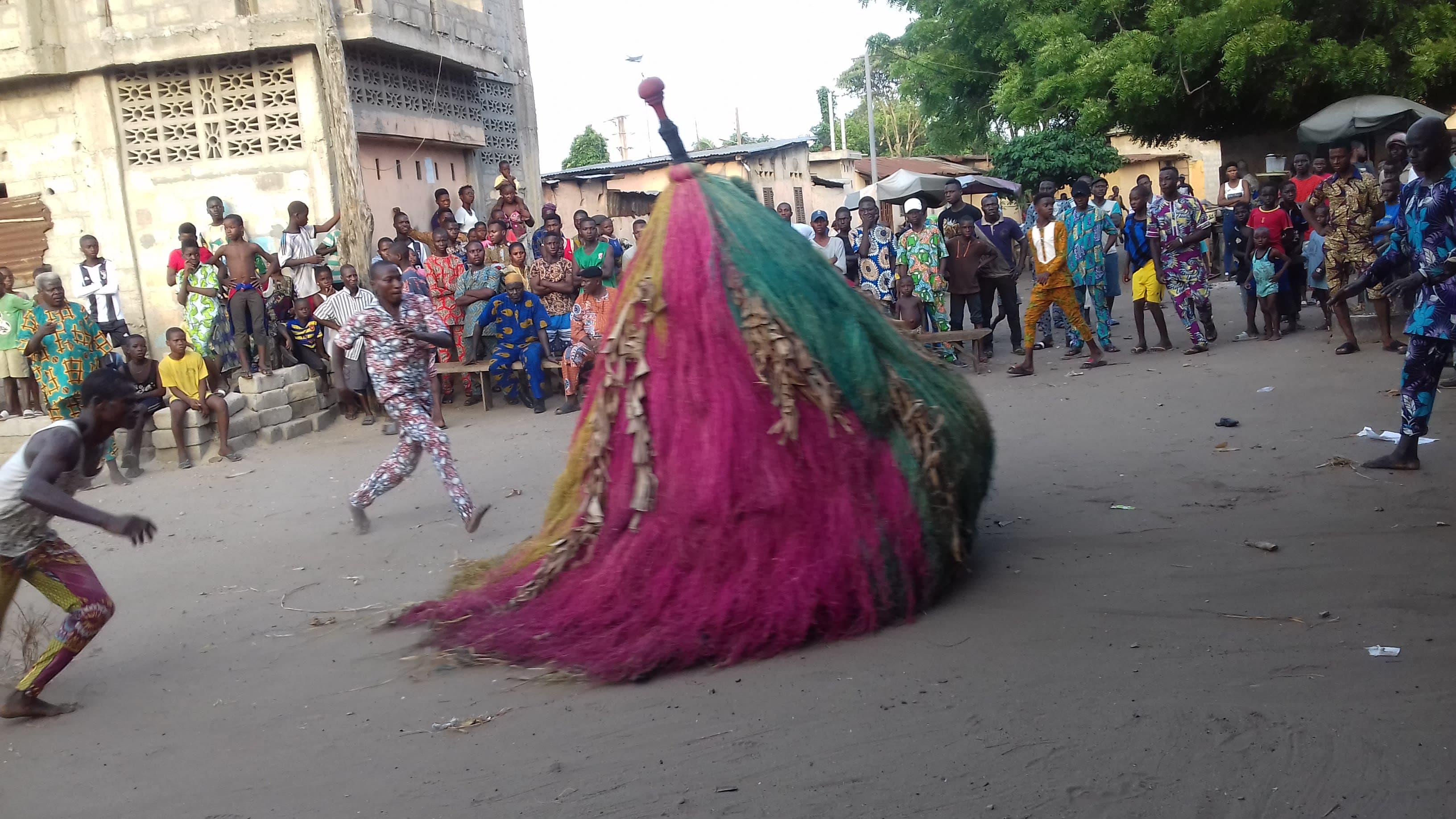
Zangbeto | Guardians of the Night: Justice and Mystery in Ouidah
When night falls on Ouidah, the Zangbeto patrol. These Vodun creatures shaped like giant spinning haystacks are forces of justice and mystery that have governed Beninese nights for centuries.
Reading paths
The Slave Route
From the Atlantic slave trade to contemporary memory
Vodoun & Diaspora
How an African religion crossed the Atlantic
- Step 1· 12 minLe Temple des Pythons
Les origines du vodoun à Ouidah